Scheduled article — publishes on December 1, 2026. Not yet visible on the public blog feed.
Roof Leaks and Mold in Hollywood, Florida Homes: What to Watch For
Hollywood's older beach bungalows and low-lying inland homes face roof leaks from aging materials and storm exposure. Here is how roof leaks create mold and when to test.
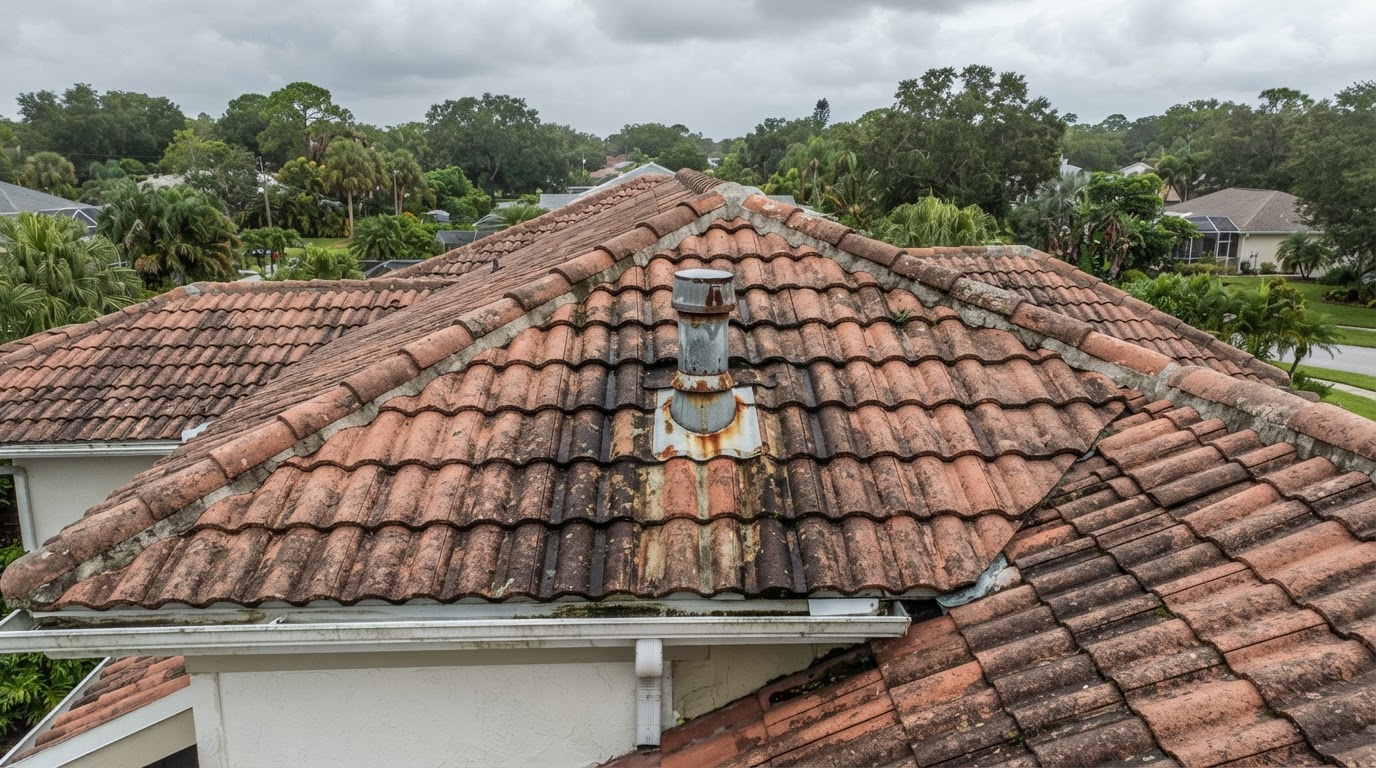
Hollywood's housing spans historic beachside bungalows built in the 1920s–60s and western single-family homes from the 1970s–90s. Both groups share a common mold trigger: roof leaks. Older roofs leak as materials age, and storm exposure tests every roof in the city. This article explains how a roof leak becomes a mold problem and when testing makes sense for a Hollywood homeowner.
Why Hollywood roofs are vulnerable
The historic beach bungalow district has roofs well past their design life, often with original or once-replaced shingle and flat roofing. Western Hollywood's 1970s–90s homes have aging shingle and tile roofs that leak at flashing, vents, and valleys long before they look failed. Coastal salt air and humidity accelerate the aging of roofing materials and metal flashing.
How a roof leak creates mold
Water that enters through a roof rarely stays where it lands. It travels down rafters and along the top plates of walls, wetting the inside of wall cavities, insulation, and the back of drywall — all out of sight. By the time a brown stain appears on a ceiling, the materials above it have often been wet for days or weeks.
- Water runs down roof decking and rafters to the top of a wall, wetting the cavity from the inside.
- Insulation in the attic or wall absorbs water and stays damp long after the surface dries.
- Drywall ceilings and walls wick water, growing mold on the paper facing inside the cavity first.
- A slow leak around a vent or flashing can wet the same materials repeatedly over months.
Warning signs of a roof-leak mold problem
- Brown or yellow stains on ceilings, especially near vents, skylights, or exterior walls.
- A musty odor in the attic or in rooms below the roof line.
- Soft or sagging drywall on a ceiling.
- Peeling paint on an exterior-facing wall or ceiling.
- Visible dark growth in an attic, on rafters, or on the underside of the roof deck.
What to do after you find a roof leak
Stop the water first — repair the roof. Then dry everything that got wet, including the inside of the wall or ceiling cavity, within 48 hours. If the leak was slow or went unnoticed for weeks, assume materials inside the cavity stayed damp long enough for mold to colonize, and test before closing anything back up.
A roof leak is a two-part problem: the water source and the moisture it left behind. Fixing the roof without drying and testing the cavity is how hidden mold starts.
How testing finds roof-leak mold
An independent assessor uses moisture meters to map damp materials in the attic and walls, thermal imaging to detect trapped moisture and missing insulation, and air or surface samples to confirm whether mold has colonized the wet materials. This finds growth a visual inspection alone would miss, especially inside wall cavities and behind ceiling drywall.
Hollywood neighborhoods and roof risk
Hollywood's mold risk from roofs varies by neighborhood and era. Understanding your home's construction helps you anticipate where a roof leak will travel and how fast.
- The historic beach bungalow district near the Broadwalk has the oldest roofs in the city — many past their design life and exposed to salt air that corrodes flashing faster.
- Lakes and Hollywood Hills homes from the 1970s–90s typically have aging shingle and tile roofs that leak at valleys and vent flashing long before the whole roof looks failed.
- Western Hollywood's newer planned communities have younger roofs but tighter envelopes that trap any moisture that does get in, raising the stakes of even a small leak.
- Low-lying areas near the Intracoastal and North Lake face higher ambient humidity, so materials stay damp longer after a leak and mold colonizes faster.
The difference between a roof leak and condensation
Not every ceiling stain is a roof leak. In a humid Hollywood home, condensation on a cool ceiling surface — especially in a room with poor airflow or an uninsulated duct run overhead — can leave a stain that looks like a leak but is not. A moisture inspection distinguishes the two: a roof leak shows active moisture in the attic above the stain, while condensation shows a dry attic and a damp ceiling surface only. Treating condensation as a leak leads to unnecessary roof work that never solves the stain.
When to test in a Hollywood home
- After any roof leak that wet a ceiling, wall, or attic, especially if it was slow or long-running.
- Before buying an older Hollywood home with an aging roof.
- When a musty odor or ceiling stain appears and you cannot confirm the roof is sound.
- After storm-related roof damage, before any repairs are closed up.
Frequently asked questions
Can mold grow inside a wall from a roof leak even if the wall looks fine?+
Yes. Water from a roof leak often travels down the inside of a wall cavity, wetting insulation and the back of the drywall. The finished side can look completely normal while mold grows behind it.
I fixed my roof. Do I still need to test for mold?+
If the leak was slow or lasted more than a day or two, the materials inside the cavity may have stayed damp long enough for mold to colonize. Testing confirms whether growth started before you close up any repairs.
How do I know if my Hollywood home's roof is too old?+
Most South Florida shingle roofs last 15–20 years and flat roofs 10–15 years. If your roof is in that range or older, have it inspected before each hurricane season, especially around vents and flashing.
Does insurance cover mold from a roof leak?+
It depends on the source and your policy. Sudden storm damage is more likely to be covered than a slow, long-running leak. Document the leak and the roof condition thoroughly.
Related resources
If a roof leak has affected your Hollywood home, connect with our recommended local mold testing provider for an assessment that checks the attic and wall cavities, not just the visible stain.
Need professional mold testing in South Florida?
Connect with our recommended local mold testing provider, MoldXperts, for an independent assessment.
Looking for professional mold testing in Fort Lauderdale? Connect with our recommended local mold testing provider. We may receive compensation when you contact our featured provider.
About this article
This article is published by Best Mold Testing Fort Lauderdale as an independent educational resource. It is reviewed for accuracy and reflects publicly available guidance from agencies including the EPA, CDC, and Florida DBPR. It is not a substitute for professional advice specific to your property.
Get mold prevention tips in your inbox
The South Florida Mold & Healthy Home Newsletter — practical, no spam.


