AC Condensation and Mold in Pompano Beach Condominiums: What Owners Should Know
Shared walls, stacked plumbing, and coastal humidity make Pompano Beach condos especially vulnerable to AC condensation mold. Here is what to watch for and when to test.
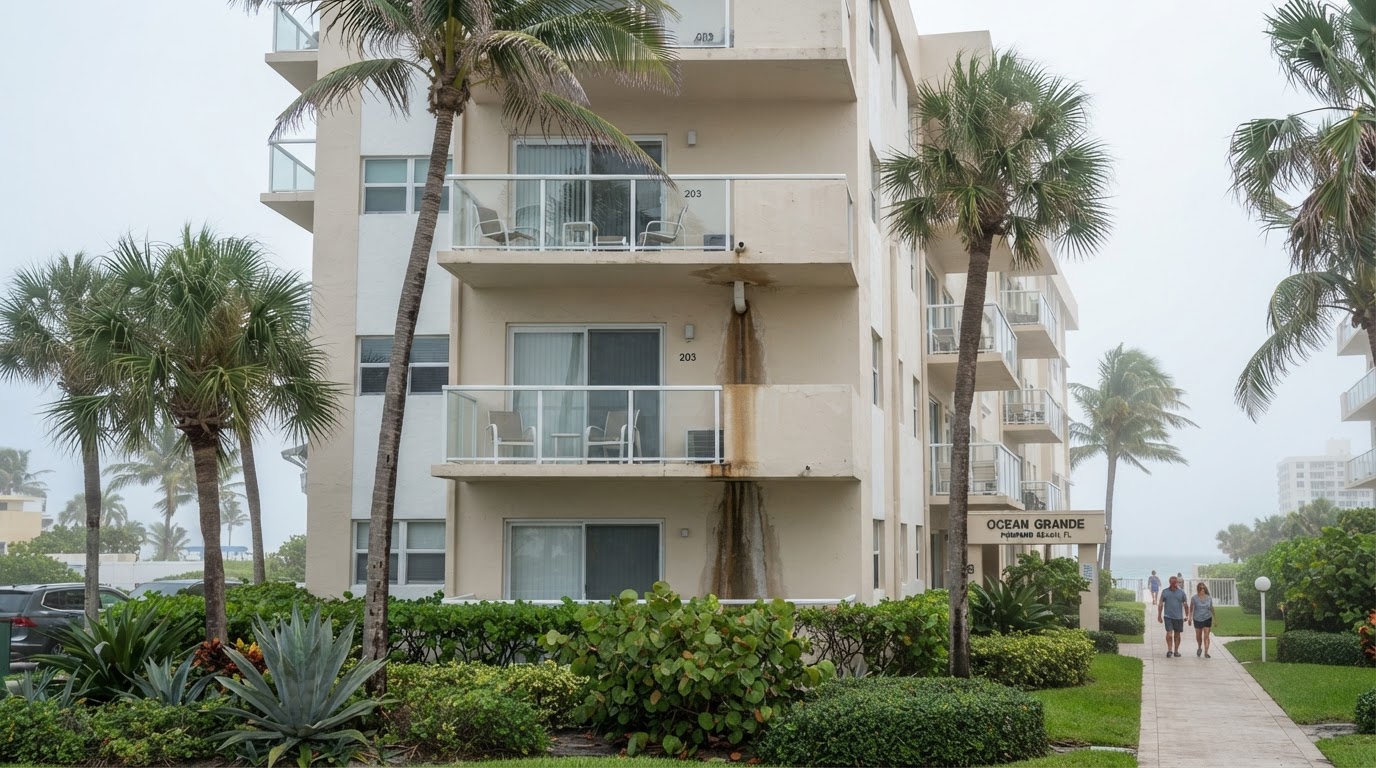
Pompano Beach condominiums sit in a sweet spot for mold risk: coastal humidity, shared mechanical systems, and stacked plumbing all in one building. One of the most common — and most overlooked — moisture sources in these buildings is the air conditioning system itself. This article explains how AC condensation creates mold in Pompano Beach condos, where it hides, and when testing makes sense.
Why Pompano Beach condos are vulnerable
Condominium living multiplies mold risk in two ways. First, you share walls, floors, and ceilings with neighbors — a leak in the unit above can become a mold problem in your ceiling without you ever knowing the source. Second, the air conditioning that every unit depends on is also a dehumidifier, and when its condensation is not managed, the AC itself becomes a mold source. Pompano Beach's position on the Atlantic keeps ambient humidity high for most of the year, so the AC runs constantly and produces condensation constantly.
How AC condensation creates moisture
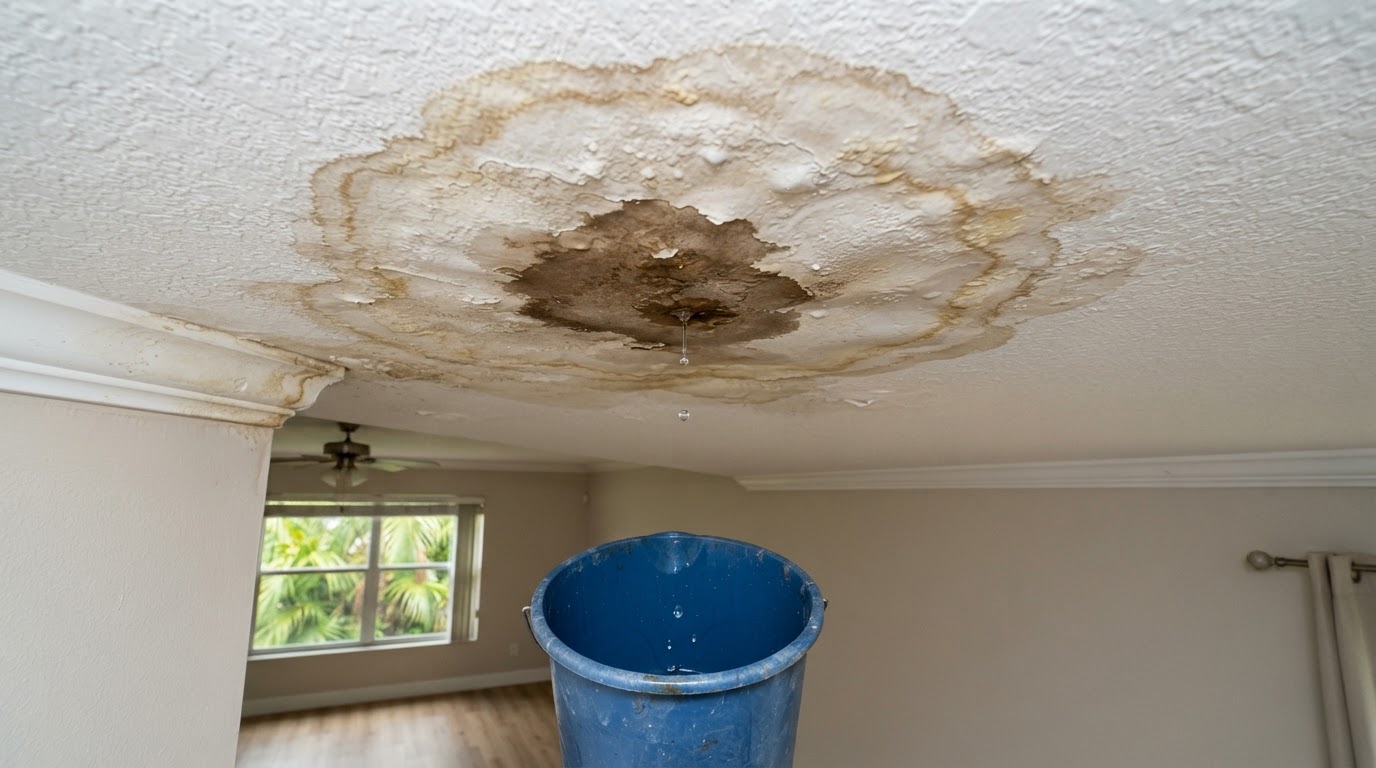
Warm, humid indoor air passes over the cold evaporator coil inside your air handler. The coil chills the air, and moisture condenses on it the way water beads on a cold glass. That water is supposed to drip into a drain pan and flow outside through a condensate line. When any part of that path fails — a clogged line, a cracked pan, a poorly sealed duct joint — water ends up where it should not, and mold follows within 24 to 48 hours.
Where AC-related mold grows in condos
- The drain pan: if the condensate line clogs, the pan overflows and soaks the drywall and insulation around the air handler — often inside a closet.
- The evaporator coil and cabinet: dust and moisture on the coil support microbial growth that spreads into the airstream and reaches every room.
- Supply ductwork: cold air meeting warm, humid air at a poorly sealed duct joint causes condensation inside the duct, where it is never seen.
- Around supply vents: condensation on a cold vent register in a humid room can stain and grow mold on the surrounding ceiling.
- The unit above: a neighbor's overflowing drain pan can soak through the shared floor/ceiling assembly into your ceiling.
Warning signs specific to condo owners
- A musty smell that is strongest when the AC first turns on.
- Water stains on the ceiling below your air handler or below the unit above.
- A soft or discolored patch of ceiling drywall near a supply vent.
- Visible dark growth on or around a vent register.
- An AC that cools but leaves the air feeling damp or clammy.
Prevention steps for condo owners
Most AC condensation problems are preventable with routine maintenance. Because condos share infrastructure, some steps are an owner's responsibility and some fall to the association — know which is which before a problem starts.
- Keep the condensate line clear — pour a small amount of vinegar through it regularly and watch for overflow signs.
- Change filters on schedule so the evaporator coil stays clean and drains properly.
- Ask your AC technician to check the drain pan and line at every service visit.
- Report ceiling stains to the association promptly — a slow leak from above is easier to fix early.
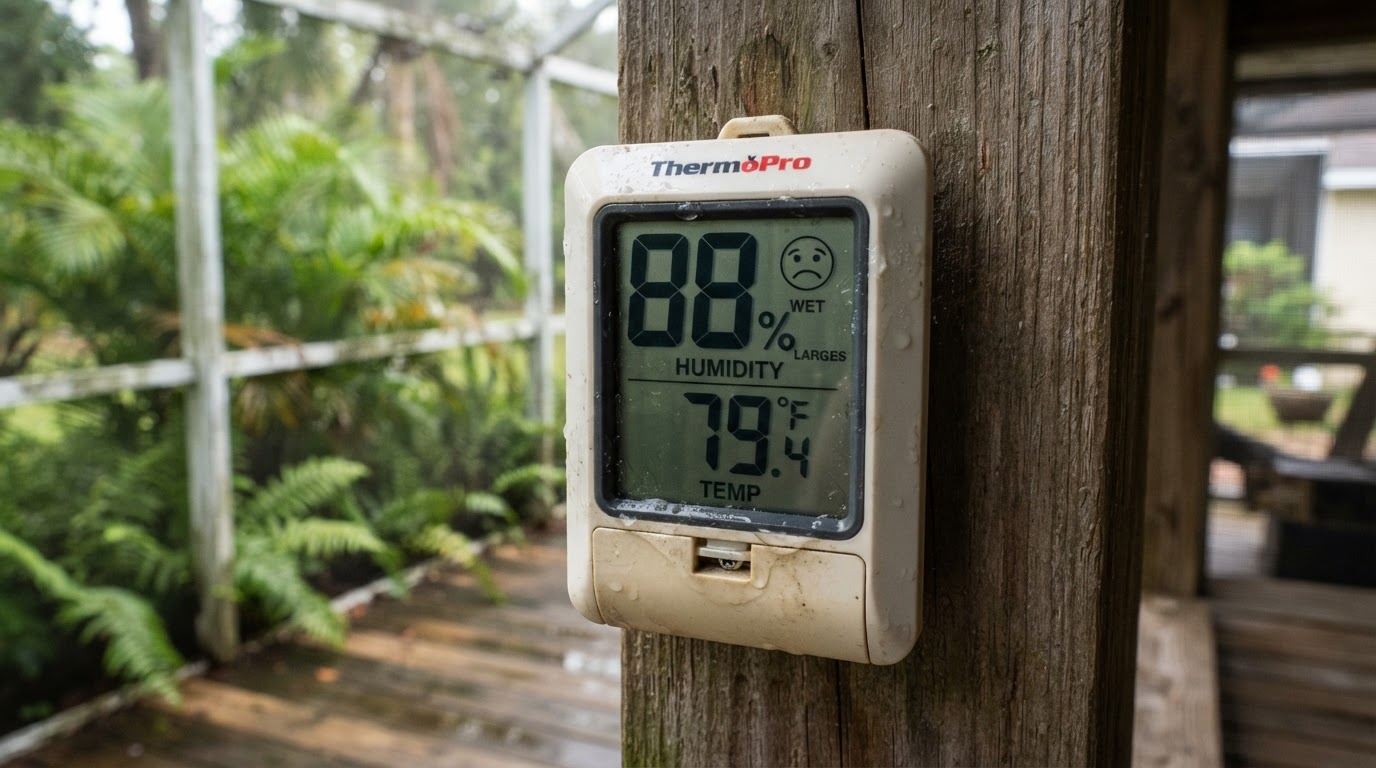
- Keep indoor humidity below 50% with the AC and, if needed, a portable dehumidifier.
The EPA recommends keeping indoor relative humidity between 30% and 50%. Above 60%, mold has everything it needs to thrive — and in a Pompano Beach condo, the AC is what keeps you there.
When to test for mold
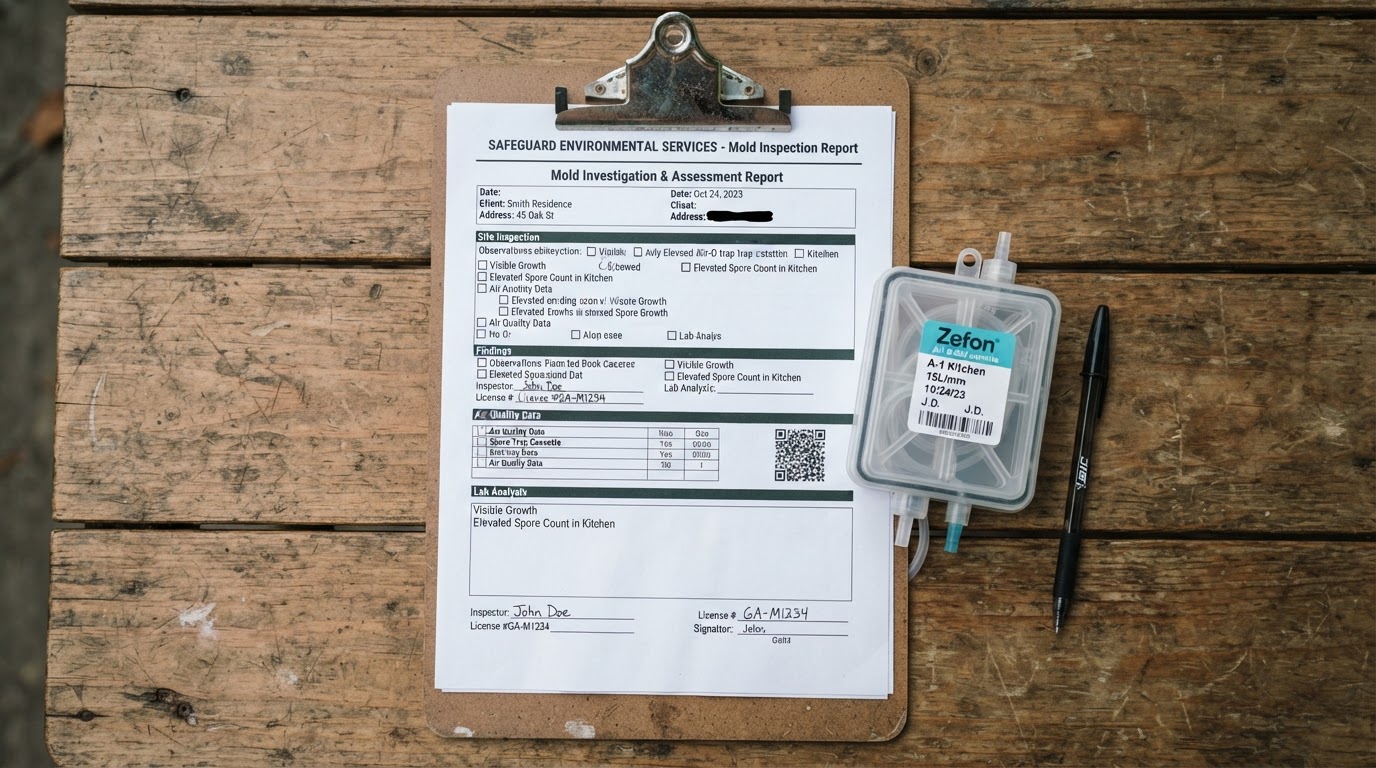
If you have had a condensate overflow, if a ceiling stain appeared and you cannot confirm its source, or if a musty smell persists after the AC has been serviced, professional testing is worth it. An independent assessor can use moisture meters and thermal imaging to find damp materials behind the ceiling, and take air or surface samples to confirm whether mold has begun to grow inside the wall or duct system — places a visual inspection alone cannot reach.
Frequently asked questions
Can mold from my neighbor's AC leak affect my condo?+
Yes. Water from an overflowing drain pan in the unit above can soak through the shared floor/ceiling assembly and grow mold in your ceiling, even though the source is not yours. A moisture inspection can trace the water path.
How quickly can mold grow after an AC condensate leak?+
Under the right conditions — which South Florida supplies almost year-round — visible growth can begin within 24 to 48 hours of a leak. Drying wet materials within that window is the single most effective prevention step.
Can mold grow inside the AC ductwork itself?+
Yes. Condensation inside a poorly sealed duct joint creates a damp surface where mold can colonize. Because it is hidden, it often goes unnoticed until a musty smell appears when the system runs.
Will a home air freshener or duct cleaning fix musty AC smells?+
A duct cleaning can remove accumulated dust and debris, but if the moisture source is not fixed, mold will return. The condensate line, drain pan, and coil must be addressed first.
Related resources
If you suspect your Pompano Beach condo has an AC-related mold problem, connect with our recommended local mold testing provider for an independent assessment that includes the air handler and ductwork.
Need professional mold testing in South Florida?
Connect with our recommended local mold testing provider, MoldXperts, for an independent assessment.
Looking for professional mold testing in Fort Lauderdale? Connect with our recommended local mold testing provider. We may receive compensation when you contact our featured provider.
About this article
This article is published by Best Mold Testing Fort Lauderdale as an independent educational resource. It is reviewed for accuracy and reflects publicly available guidance from agencies including the EPA, CDC, and Florida DBPR. It is not a substitute for professional advice specific to your property.
Get mold prevention tips in your inbox
The South Florida Mold & Healthy Home Newsletter — practical, no spam.