Why AC Condensation Feeds Mold in Florida Homes
Your air conditioner is also a dehumidifier — but when condensation goes wrong, the same system that cools your home can quietly grow mold.
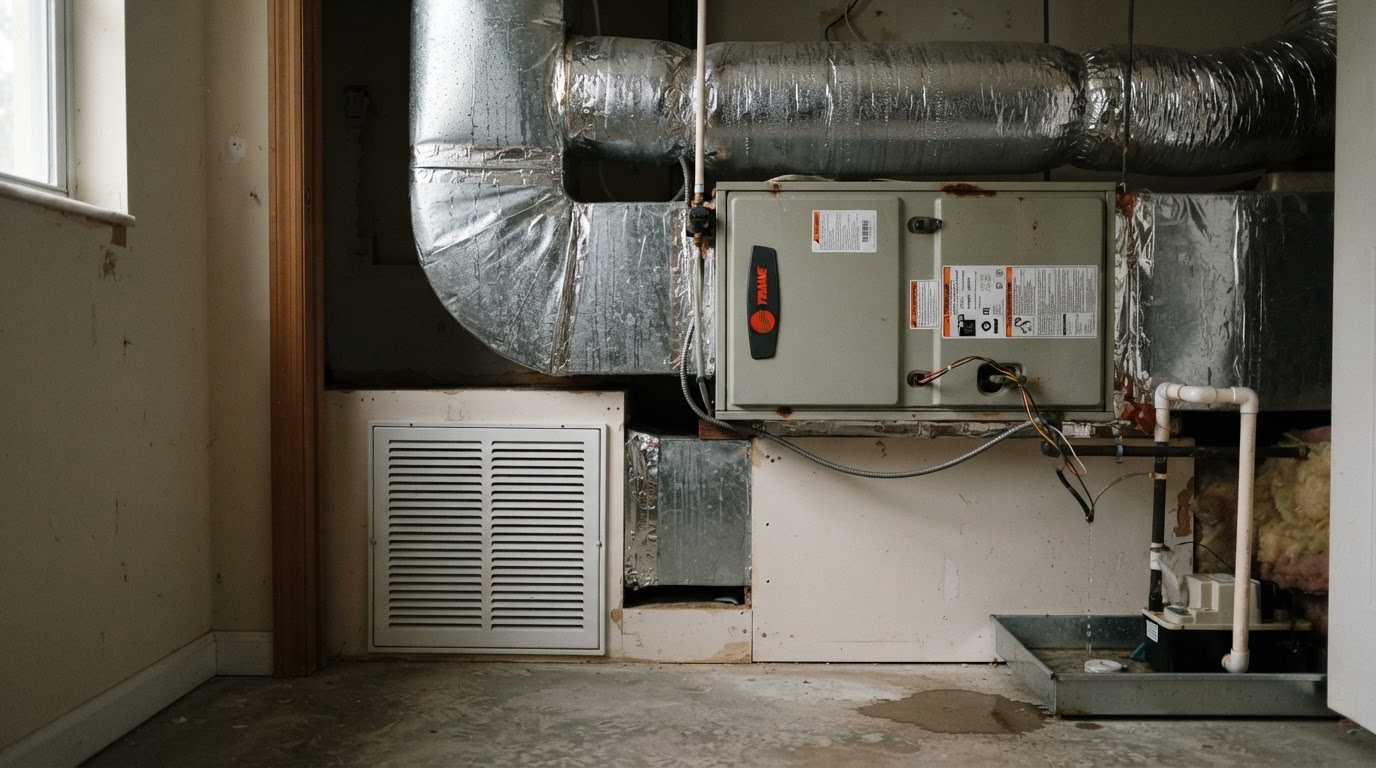
Air conditioning is essential in South Florida, and it is also your home's main defense against mold — because it removes moisture from the air. But the same process that dehumidifies also creates condensation, and when that condensation is not managed, the AC itself becomes a mold source.
How condensation happens
Warm, humid indoor air passes over the cold evaporator coil inside your air handler. The coil chills the air, and moisture condenses on the coil the way water beads on a cold glass. That water is supposed to drip into a drain pan and flow outside through a condensate line. When any part of that path fails, water ends up where it should not.
Where AC-related mold grows
- The drain pan: if the drain line clogs, the pan overflows and soaks the surrounding drywall and insulation.
- The evaporator coil and surrounding cabinet: dust and moisture on the coil support microbial growth that spreads into the airstream.
- The supply ductwork: cold air meeting warm, humid air at a poorly sealed duct joint causes condensation inside the duct.
- Around supply vents: condensation on a cold vent in a humid room can stain and grow mold on the surrounding ceiling.
Warning signs
- A musty smell that is strongest when the AC first turns on.
- Water stains around an indoor air handler or below a supply vent.
- Visible dark growth on or around a vent register.
- An AC that cools but leaves the air feeling damp.
Prevention
Keep the condensate line clear, change filters so the coil stays clean, and make sure duct joints are sealed. If you suspect growth inside the system, a professional can inspect the air handler and ductwork and take air samples upstream and downstream of the coil to determine whether the AC is distributing mold.
Concerned your AC may be the source? Connect with our recommended local mold testing provider for an inspection that includes the air handler and ductwork.
Need professional mold testing in South Florida?
Connect with our recommended local mold testing provider, MoldXperts, for an independent assessment.
Looking for professional mold testing in Fort Lauderdale? Connect with our recommended local mold testing provider. We may receive compensation when you contact our featured provider.
About this article
This article is published by Best Mold Testing Fort Lauderdale as an independent educational resource. It is reviewed for accuracy and reflects publicly available guidance from agencies including the EPA, CDC, and Florida DBPR. It is not a substitute for professional advice specific to your property.
Get mold prevention tips in your inbox
The South Florida Mold & Healthy Home Newsletter — practical, no spam.