Scheduled article — publishes on March 22, 2027. Not yet visible on the public blog feed.
Mold Testing in Plantation: Landscaped Suburbs and Canal-Adjacent Homes
Plantation's heavily landscaped suburbs and canal network create specific moisture paths. Here is what local homeowners should watch for.
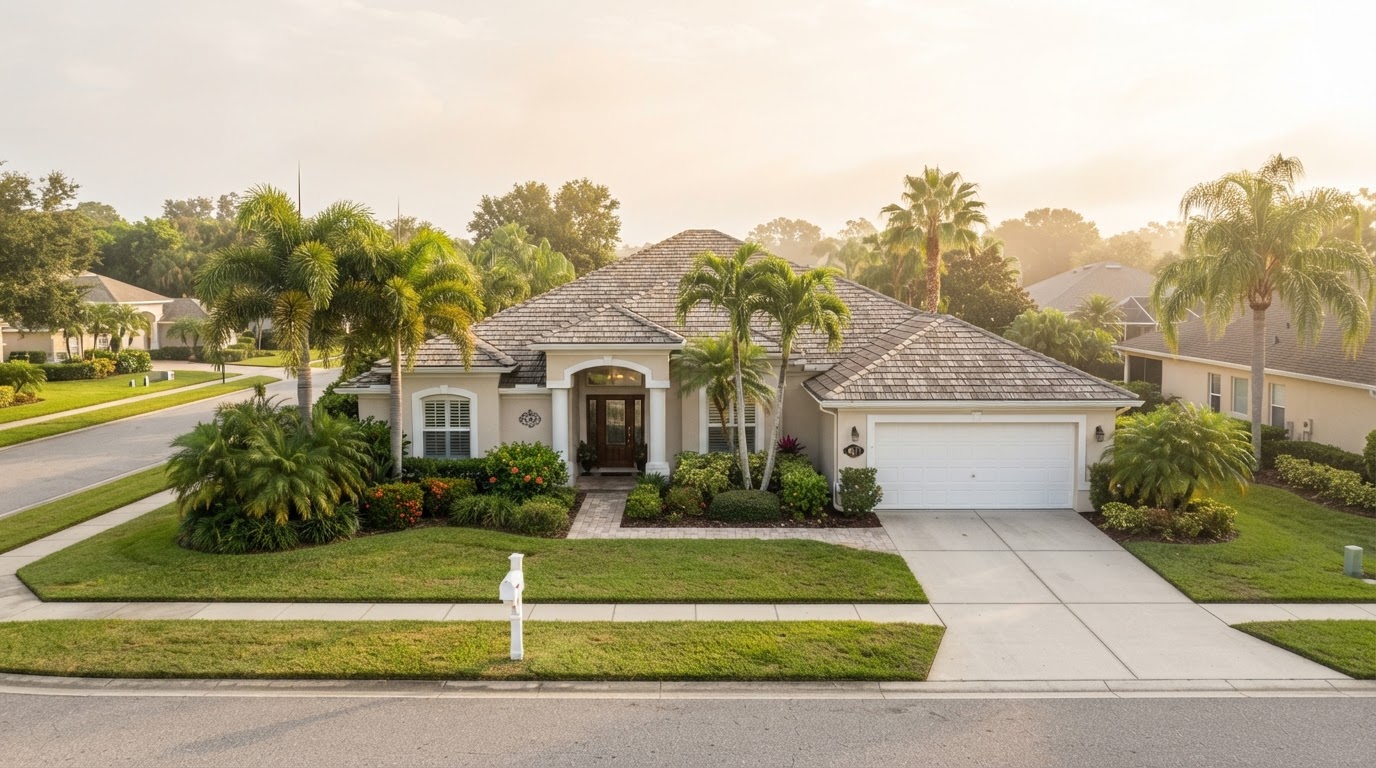
Plantation is known for its heavily landscaped suburbs, mature tree canopy, and canal network threading through the city. That combination creates moisture paths most homeowners never consider — irrigation against walls, planting beds holding moisture, and canal-adjacent water tables. This article explains what is specific about mold risk in Plantation and when testing makes sense.
Irrigation and planting beds against walls
Sprinkler overspray and planting beds built against exterior walls keep walls permanently damp. That moisture wicks into the wall cavity, keeping the back of the drywall damp enough for mold to grow — out of sight. It is one of the most common hidden moisture sources in landscaped suburbs.
Tree canopy and shaded roofs
Mature trees shade roofs so they stay damp longer and drop debris that clogs gutters and valleys. A shaded, debris-filled roof is a leak waiting to happen, and the resulting moisture travels down wall cavities out of sight.
Canal-adjacent water tables
Plantation's canal network manages stormwater but keeps water tables high. Homes backing onto canals or in lower-lying areas face seepage toward foundations in heavy rain, keeping lower walls and slabs damp longer.
Warning signs for Plantation homeowners
- Discoloration or mold growth on walls adjacent to planting beds.
- A musty smell in rooms with exterior walls near irrigation.
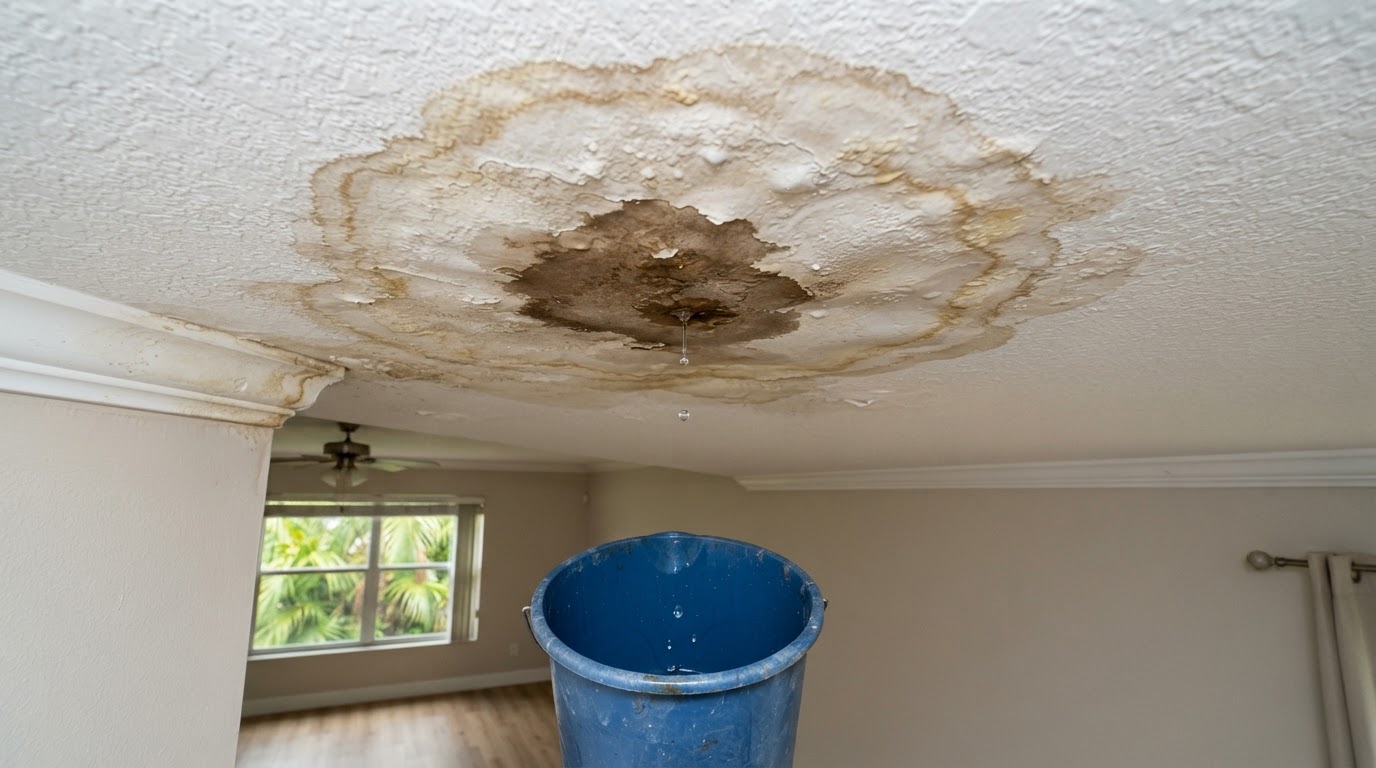
- Water stains on ceilings, especially under tree canopy.
- Damp or discolored baseboards and lower walls, especially near canals.
- A musty smell when the AC turns on.
The landscaping and canopy that make Plantation beautiful also keep walls and roofs damp. Irrigation, planting beds, and shaded roofs are hidden moisture sources worth checking.
Plantation's canal grid and the seepage line
Plantation has one of the most extensive residential canal networks in central Broward, and the homes along those canals sit with the water table close to the slab for much of the year. During the rainy season the canal grid rises with storm runoff, and if the water level stays high between storms the soil against the foundation stays saturated. That water seeps through the slab and wicks up into the bottom plates and lower drywall — no roof leak required. The pattern in canal-adjacent Plantation homes is baseboard and lower-wall discoloration that appears when the rains start and recurs in the same location every year. If your home backs onto a canal and the lower walls dampen every summer, the source is likely the water table, not a leak. The fix is grading, downspout management, and dehumidification rather than roof repair, and testing can confirm the source is the slab before you spend on the wrong fix.
- Plantation's canal grid keeps the water table close to the slab — check lower walls each rainy season.
- Recurring lower-wall dampness in the same location each summer often points to canal-level seepage, not a leak.
- Regrade low spots and direct downspouts away from the slab to reduce the seepage load.
- If the canal is the source, the fix is drainage and dehumidification — not roof repair.
HOA-managed irrigation and the overnight wall
Many Plantation neighborhoods are HOA-managed, and the irrigation that keeps the community's lush landscaping green runs on a set schedule — typically in the early morning hours before anyone is awake. The schedule is set for the community as a whole, not adjusted for each home's orientation, and sprinkler heads that have shifted or been knocked by a mower can spray the same section of wall every night through the growing season. A wall that gets wet at 4 a.m. and never fully dries before the humidity settles in has a damp cavity — and that is where hidden mold grows. The pattern is a room-specific musty smell that does not respond to AC service or interior cleaning, because the source is outside the wall. Walk the perimeter at irrigation time and check whether any heads are hitting the wall near the room that smells musty, and report misdirected heads to the HOA.
Prevention for Plantation homeowners
- Redirect any sprinkler heads that hit the home.
- Keep planting beds at least 12 inches from exterior walls.
- Keep gutters and roof valleys clear of tree debris.
- Check baseboards and lower walls for dampness after heavy rain.
- Keep indoor humidity below 50% and monitor with a hygrometer.
When to test
- When discoloration appears on walls near planting beds or irrigation.
- After any roof leak, especially under tree canopy.
- When lower walls feel damp, especially near canals.
- Before buying a Plantation home.
Frequently asked questions
Can irrigation cause mold inside my home?+
Yes. Sprinkler overspray or misdirected heads keep exterior walls damp, and that moisture wicks into the wall cavity where mold grows out of sight.
How far should planting beds be from exterior walls?+
At least 12 inches, with airflow between the plantings and the wall. Beds built against walls hold moisture against the wall and block drying.
Does tree canopy increase mold risk?+
Indirectly, yes. Shaded roofs stay damp longer and debris clogs gutters and valleys, increasing leak risk that feeds hidden wall-cavity mold.
Should I test a Plantation home before buying it?+
Yes. Irrigation, tree canopy, and canal-adjacent water tables all add moisture paths. A pre-purchase inspection can confirm moisture is managed before you close.
Related resources
If your Plantation home has discoloration near landscaping or a musty room, connect with our recommended local mold testing provider for an assessment that includes exterior wall and roof moisture checks.
Need professional mold testing in South Florida?
Connect with our recommended local mold testing provider, MoldXperts, for an independent assessment.
Looking for professional mold testing in Fort Lauderdale? Connect with our recommended local mold testing provider. We may receive compensation when you contact our featured provider.
About this article
This article is published by Best Mold Testing Fort Lauderdale as an independent educational resource. It is reviewed for accuracy and reflects publicly available guidance from agencies including the EPA, CDC, and Florida DBPR. It is not a substitute for professional advice specific to your property.
Get mold prevention tips in your inbox
The South Florida Mold & Healthy Home Newsletter — practical, no spam.