Scheduled article — publishes on February 20, 2027. Not yet visible on the public blog feed.
Mold Testing in Coconut Creek: Planned Communities and Landscaped Moisture
Coconut Creek's heavily landscaped planned communities create moisture paths against the home. Here is what local homeowners should watch for.

Coconut Creek brands itself the "Butterfly Capital of the World," and its planned communities are heavily landscaped — with irrigation, planting beds, and mature trees close to homes. That landscaping is a mold risk factor most homeowners never consider. This article explains what is specific about mold risk in Coconut Creek and when testing makes sense.
Irrigation against the home
Sprinkler heads aimed at walls, misdirected irrigation, and overspray keep exterior walls damp. Over time, that moisture wicks into the wall cavity, keeping the back of the drywall damp enough for mold to grow — out of sight. Irrigation against the home is one of the most common hidden moisture sources in landscaped communities.
Planting beds against walls
Planting beds built against exterior walls hold moisture against the wall and block airflow that would otherwise dry it. Mulch retains water, and dense plantings shade the wall so it never dries. The result is a permanently damp wall section — an ideal mold environment.
Summer AC load
Like the rest of Broward, Coconut Creek homes run AC nearly continuously in summer. Condensate failures are the most common indoor moisture source, and an overflow in an air handler closet can soak drywall for weeks before anyone notices.
Warning signs for Coconut Creek homeowners
- Discoloration or mold growth on walls adjacent to planting beds.
- A musty smell in rooms with exterior walls near irrigation.
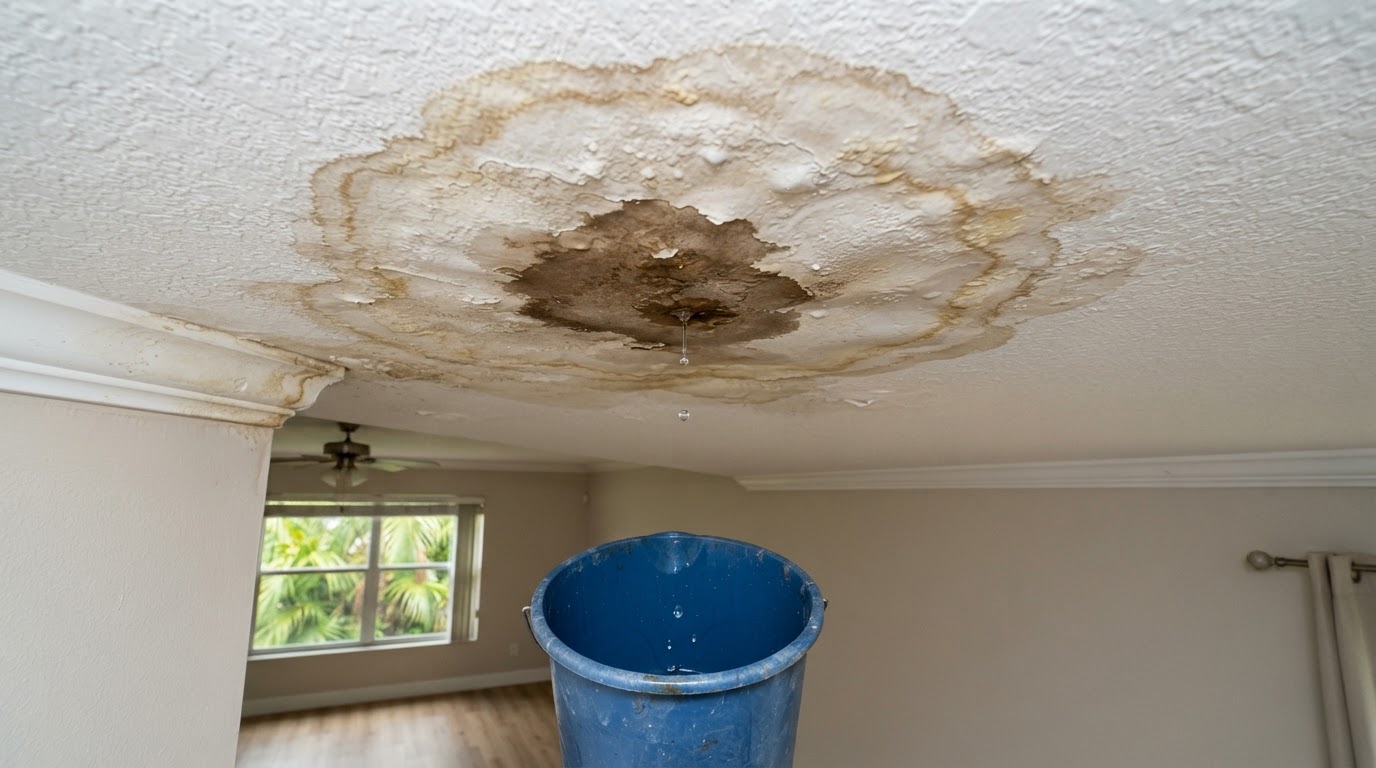
- Water stains on ceilings after storms.
- A musty smell when the AC turns on.
- Indoor humidity reads above 55–60% on a hygrometer.
The landscaping that makes a planned community beautiful can also keep a wall permanently damp. Irrigation and planting beds against the home are hidden moisture sources worth checking.
HOA-managed irrigation and overnight wall wetting
In Coconut Creek's planned communities, irrigation is often managed by the HOA and runs on a set schedule — typically in the early morning hours. The problem is that those schedules are set for the community as a whole, not adjusted for each home's orientation, and sprinkler heads that have shifted or been knocked by a mower can spray the home's exterior walls night after night. Because the irrigation runs before dawn, the homeowner is asleep and never sees the overspray. The wall gets wet at 4 a.m., the sun rises, the humidity keeps the wall from drying fully, and by the time the AC starts pulling hard the wall is still holding moisture. Over weeks and months, the wall cavity behind that section of drywall stays damp enough for mold to colonize. If your home is in an HOA-managed community and a particular room has a persistent musty smell, walk the perimeter at irrigation time and check whether any heads are hitting the wall in that area.
- Walk the perimeter at irrigation time to check for heads spraying the home's walls.
- HOA irrigation schedules are set community-wide and rarely adjusted for individual homes — report misdirected heads to the association.
- A room-specific musty smell in a landscaped community often traces to a wall that gets hit by irrigation every night.
- Redirecting a sprinkler head is usually the HOA's responsibility, but documenting the overspray is yours.
The butterfly garden and the pollinator bed
Coconut Creek's identity as the butterfly capital means many homes and community entrances feature pollinator gardens — dense, nectar-rich plantings designed to attract butterflies. Those beds are beautiful, but they are also dense, watered frequently, and often placed against a wall or fence near the home's entry. A pollinator bed against an exterior wall creates the same moisture-trapping dynamic as any planting bed, but the frequent watering that butterfly-attracting plants require makes it worse. If your home has a butterfly garden against an exterior wall, keep the bed at least 12 inches from the wall, trim the plantings to allow airflow, and check the wall behind it for discoloration each season.
Mature canopy and the shaded wall
The mature trees that make Coconut Creek's communities established and attractive also shade exterior walls so they stay damp longer after rain or irrigation. A wall in full sun dries within hours; a wall under a mature oak may stay damp for a day or more, which is long enough for moisture to wick into the cavity. The walls most at risk are those on the north side of the home, where the sun never directly hits, and those under heavy canopy. If a wall in your home is shaded by mature landscaping and shows recurring discoloration or a musty smell inside, the tree is part of the moisture equation — and thinning the canopy over that wall may be as effective as any interior fix.
Prevention for Coconut Creek homeowners
- Redirect any sprinkler heads that hit the home — report HOA-managed heads to the association.
- Keep planting beds at least 12 inches from exterior walls.
- Trim dense plantings and pollinator beds to allow airflow around the home.
- Keep indoor humidity below 50% and monitor with a hygrometer.
- Keep the condensate line clear and filters changed.
- Check shaded walls under mature canopy for dampness after rain.
When to test
- When discoloration appears on walls near planting beds or irrigation.
- After a condensate overflow or any leak.
- When a musty odor persists in a specific room, especially near an irrigated wall.
- Before buying a home in a heavily landscaped community.
Frequently asked questions
Can irrigation cause mold inside my home?+
Yes. Sprinkler overspray or misdirected heads keep exterior walls damp, and that moisture wicks into the wall cavity where mold grows out of sight.
How far should planting beds be from exterior walls?+
At least 12 inches, with airflow between the plantings and the wall. Beds built against walls hold moisture against the wall and block drying.
Why does one room smell musty but not the rest?+
A localized odor often points to a localized moisture source — an exterior wall near irrigation, a planting bed, or a condensate issue in that zone. Check whether a sprinkler head hits that wall.
Does the butterfly garden increase mold risk?+
It can. Pollinator beds are dense and watered frequently, and when placed against a wall they trap moisture. Keep them 12 inches from the wall and trimmed for airflow.
Should I test a home in a landscaped community before buying it?+
Yes. Irrigation and planting beds against the home are worth checking. A pre-purchase inspection can confirm moisture is managed before you close.
Related resources
If your Coconut Creek home has discoloration near landscaping or a musty room, connect with our recommended local mold testing provider for an assessment that includes exterior wall and irrigation-related moisture checks.
Need professional mold testing in South Florida?
Connect with our recommended local mold testing provider, MoldXperts, for an independent assessment.
Looking for professional mold testing in Fort Lauderdale? Connect with our recommended local mold testing provider. We may receive compensation when you contact our featured provider.
About this article
This article is published by Best Mold Testing Fort Lauderdale as an independent educational resource. It is reviewed for accuracy and reflects publicly available guidance from agencies including the EPA, CDC, and Florida DBPR. It is not a substitute for professional advice specific to your property.
Get mold prevention tips in your inbox
The South Florida Mold & Healthy Home Newsletter — practical, no spam.