Scheduled article — publishes on January 9, 2027. Not yet visible on the public blog feed.
Mold Testing in Pembroke Pines: Canal Homes, Tile Roofs, and First-Generation AC
Pembroke Pines' 1990s housing is reaching the age where first-generation AC systems and tile roofs fail. Here is what local homeowners should watch for.
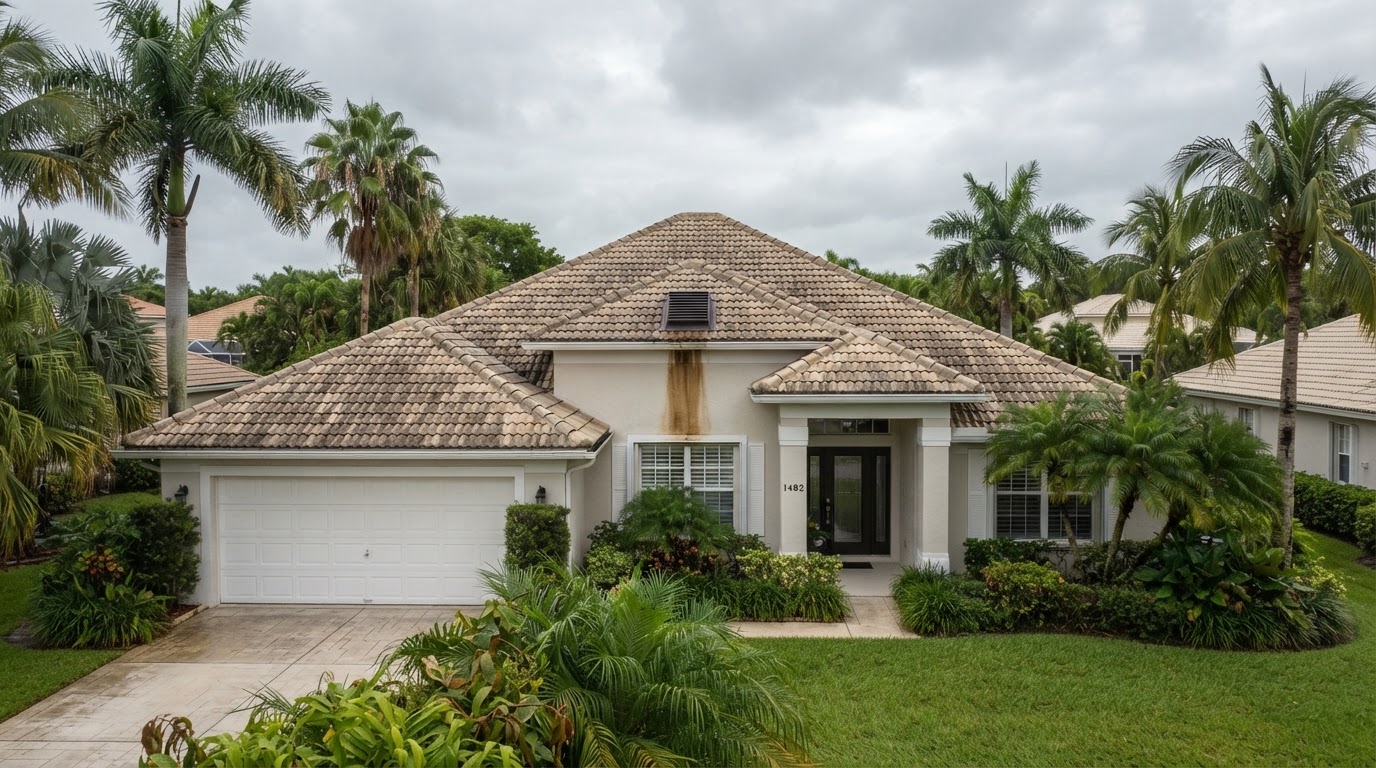
Pembroke Pines is one of Broward's largest communities, with housing largely from the 1990s and 2000s. That generation of homes is now reaching the age where first-generation AC systems and tile roofs fail — and the community's canal network adds a water-table factor. This article explains what is specific about mold risk in Pembroke Pines and when testing makes sense.
The canal water-table factor
Pembroke Pines is laced with canals that manage stormwater but raise local water tables. Homes near canals face seepage toward slab foundations in heavy rain, keeping lower walls and baseboards damp longer than in higher areas.
Tile roof leaks
Tile roofs common in this era leak under cracked tiles and at flashing long before they look failed. Water enters at a cracked tile or failed flashing, wets the underlayment and decking, and travels down wall cavities. Because the tile itself looks fine from the street, these leaks often go unnoticed for months.
First-generation AC failure
Original AC systems from the 1990s are reaching end of life across the community at roughly the same time. Clogged condensate lines, cracked drain pans, and dirty coils put water where it should not, and mold follows within 24 to 48 hours.
Warning signs for Pembroke Pines homeowners
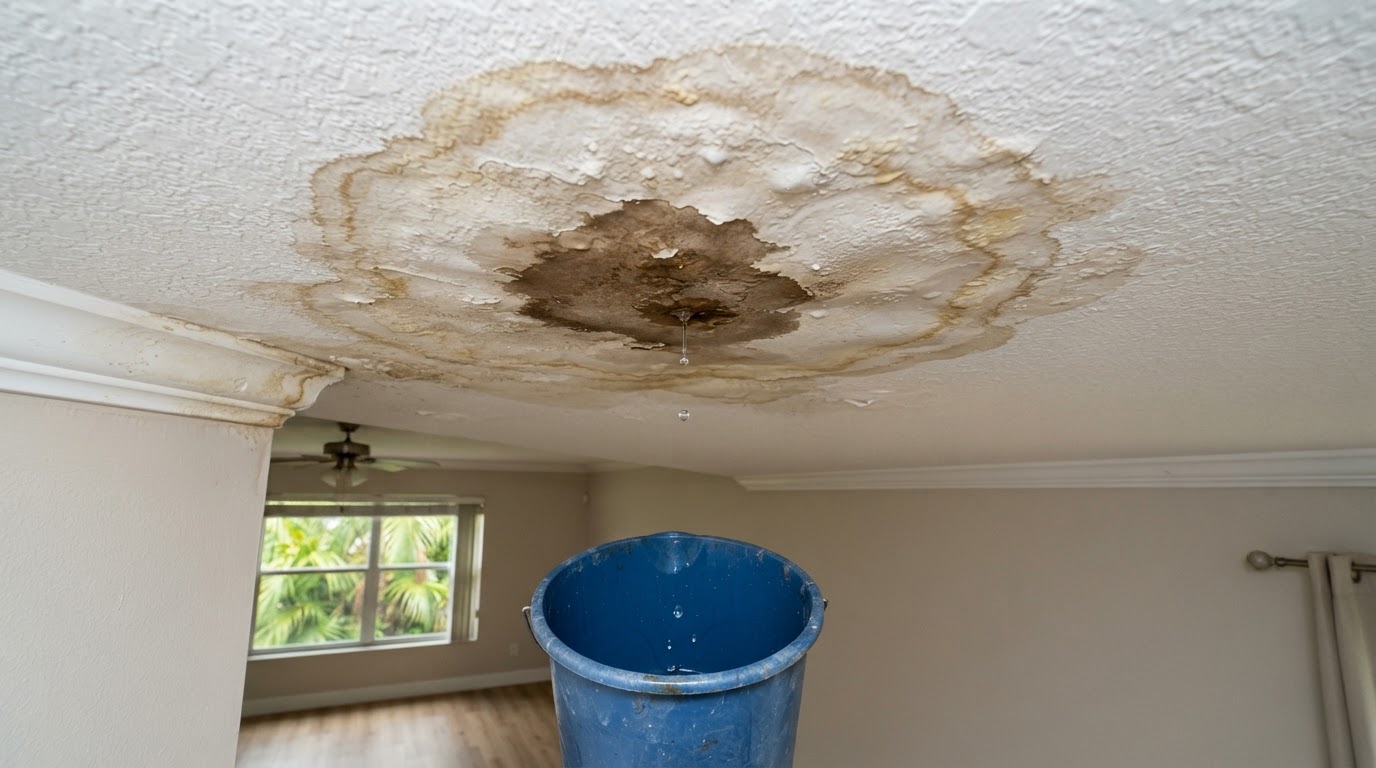
- Water stains on ceilings, especially under tile roof valleys and penetrations.
- A musty smell when the AC turns on.
- Damp or discolored baseboards and lower walls, especially near canals.
- Water stains on the ceiling or wall below the air handler.
- An AC that is 12–15 years old and showing condensate problems.
In a 1990s planned community, the failures arrive on schedule: the AC, the tile roof underlayment, and the canal-adjacent slab. Catching the moisture early is what keeps cleanup small.
The canal network and stormwater management
Pembroke Pines is laced with canals that manage stormwater across a large, flat community. The canals do their job in a storm, but between storms they keep the local water table high, and homes backing onto them sit with saturated soil near the slab for much of the year. That is the structural backdrop for the canal-adjacent moisture that shows up as damp baseboards and lower walls — not a leak, but the water table itself.
Tile roof underlayment: the part you cannot see
Tile roofs look durable from the street, but the tile is only the top layer. Beneath it, an underlayment — the waterproof membrane that actually stops water — ages and eventually fails while the tile above it still looks fine. A cracked tile or failed flashing lets water reach the aging underlayment, and once the underlayment tears or pulls away, water wets the decking and travels down into wall cavities. This is why a tile roof can leak badly while appearing intact from the ground.
- The tile is decorative and impact-resistant; the underlayment beneath it is what actually waterproofs the roof.
- Underlayment on a 1990s tile roof is now decades old and may be at the end of its service life.
- After any storm that cracked or displaced a tile, have the underlayment below it checked before assuming the roof is fine.
When the AC and roof fail at the same time
In a 1990s community, the original AC systems and tile roof underlayment are aging out together, which means a single storm season can produce both a roof leak and a condensate failure on the same home. Two simultaneous moisture sources make mold more likely and harder to trace, because the symptoms overlap. An assessment that maps both the attic and the air handler separately can tell the roof moisture from the AC moisture and define the right cleanup for each.
Prevention for Pembroke Pines homeowners
- Service or replace aging AC condensate systems proactively.
- Have tile roofs inspected for cracked tiles and flashing before storm season.
- Check for slab-edge dampness if you live near a canal.
- Keep indoor humidity below 50%.
- Keep the condensate line clear with regular vinegar flushes.
When to test
- After any roof or AC leak.
- When baseboards or lower walls feel damp, especially near canals.
- Before buying a 1990s Pembroke Pines home with original AC and roof.
- Before closing up any repair on an aging system.
Frequently asked questions
Do tile roofs leak even when they look fine?+
Yes. Water enters under cracked tiles and at failed flashing, wetting the underlayment and decking beneath. The tile itself can look intact from the street while the roof leaks.
How long do 1990s AC systems last?+
Most last 12–15 years in South Florida's climate. Systems from the 1990s are now past that range, and condensate failures are common.
Does living near a canal increase mold risk?+
It can. Canals raise local water tables, and homes near them face seepage toward slab foundations in heavy rain, keeping lower walls damp longer.
Should I test before buying a 1990s Pembroke Pines home?+
Yes, especially if the AC and roof are original. First-generation systems are at end of life, and a pre-purchase inspection can find hidden moisture before you close.
Related resources
If you own or are buying a home in Pembroke Pines and suspect hidden moisture, connect with our recommended local mold testing provider for an assessment that checks the roof, the AC, and the slab.
Need professional mold testing in South Florida?
Connect with our recommended local mold testing provider, MoldXperts, for an independent assessment.
Looking for professional mold testing in Fort Lauderdale? Connect with our recommended local mold testing provider. We may receive compensation when you contact our featured provider.
About this article
This article is published by Best Mold Testing Fort Lauderdale as an independent educational resource. It is reviewed for accuracy and reflects publicly available guidance from agencies including the EPA, CDC, and Florida DBPR. It is not a substitute for professional advice specific to your property.
Get mold prevention tips in your inbox
The South Florida Mold & Healthy Home Newsletter — practical, no spam.