Scheduled article — publishes on April 3, 2027. Not yet visible on the public blog feed.
Mold Testing in Fort Lauderdale Riverfront Condos: The Venice of America's Water Risk
Fort Lauderdale's riverfront and canal-front condos face high water tables, salt air, and stacked plumbing. Here is what owners should watch for.
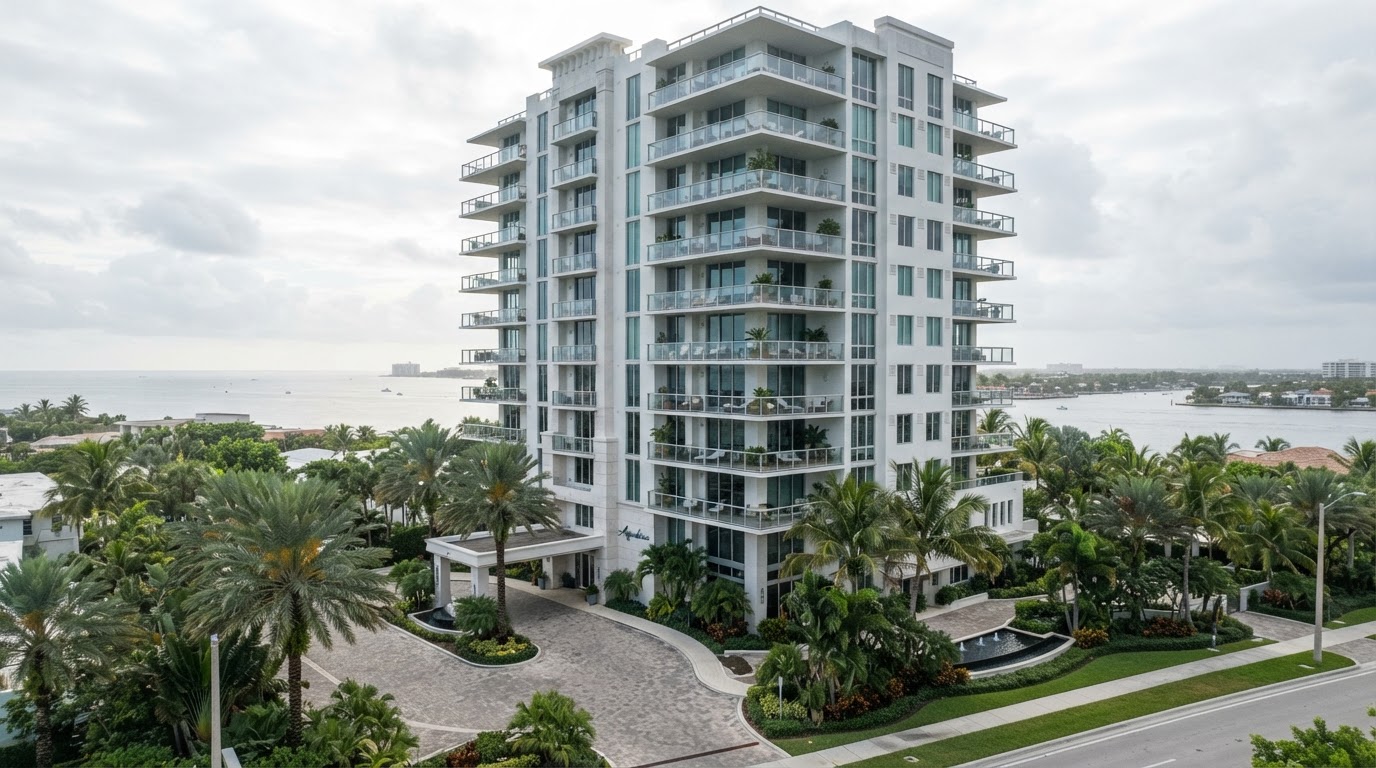
Fort Lauderdale's "Venice of America" nickname reflects its canal and river network — and that waterfront density defines its condo mold risk. High water tables, salt air, and stacked plumbing combine in the city's riverfront and canal-front buildings. This article explains what condo owners in these buildings should watch for and when testing makes sense.
High water tables and slab moisture
Riverfront and canal-front buildings sit close to the water table. Ground moisture can wick up through slabs and parking structures into lower units, especially during heavy rain and king tides. Lower-floor units are most affected, and damp baseboards are a classic waterfront sign.
Salt air and AC corrosion
Buildings near the water are exposed to salt-laden air that corrodes AC coils, condensate pans, and metal components faster than inland. Corroded pans crack and lines clog, making condensate failures the most common indoor moisture source in these buildings.
Stacked plumbing
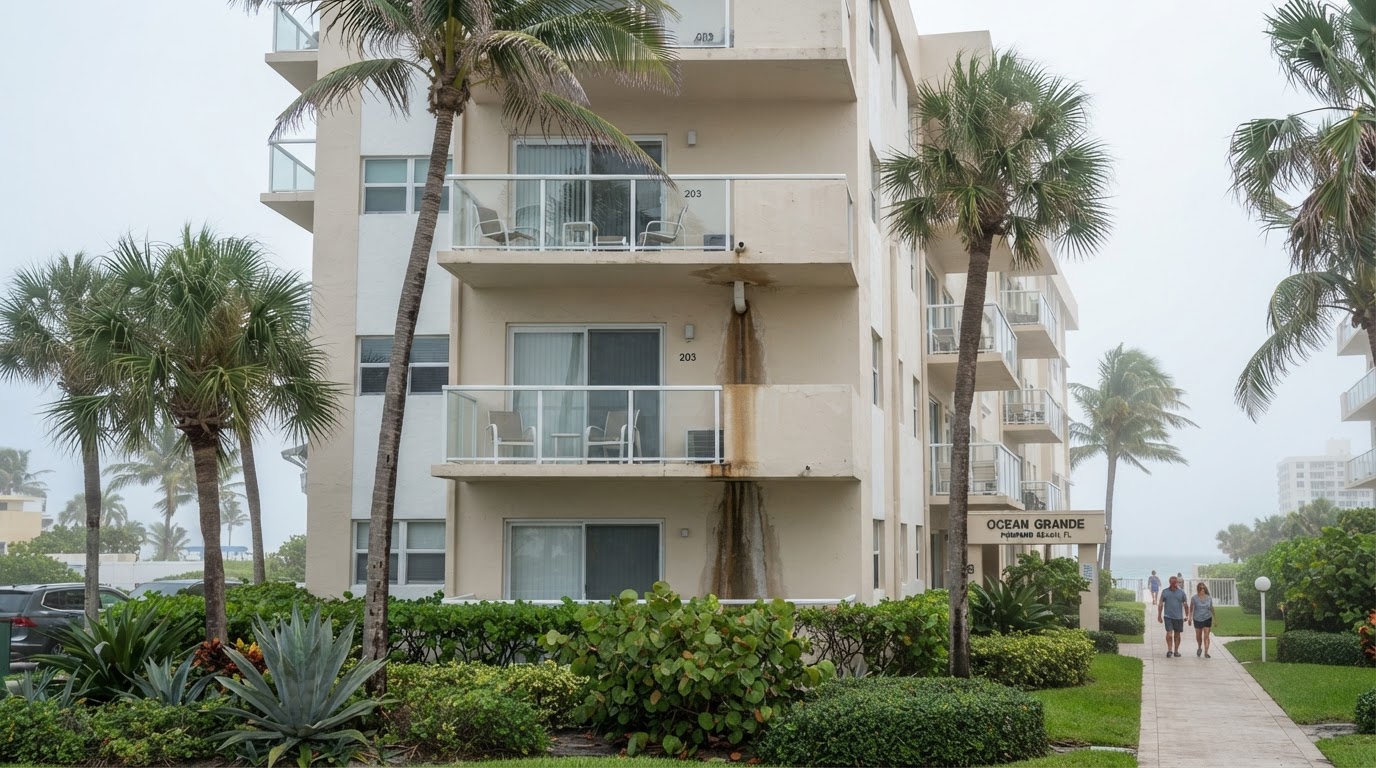
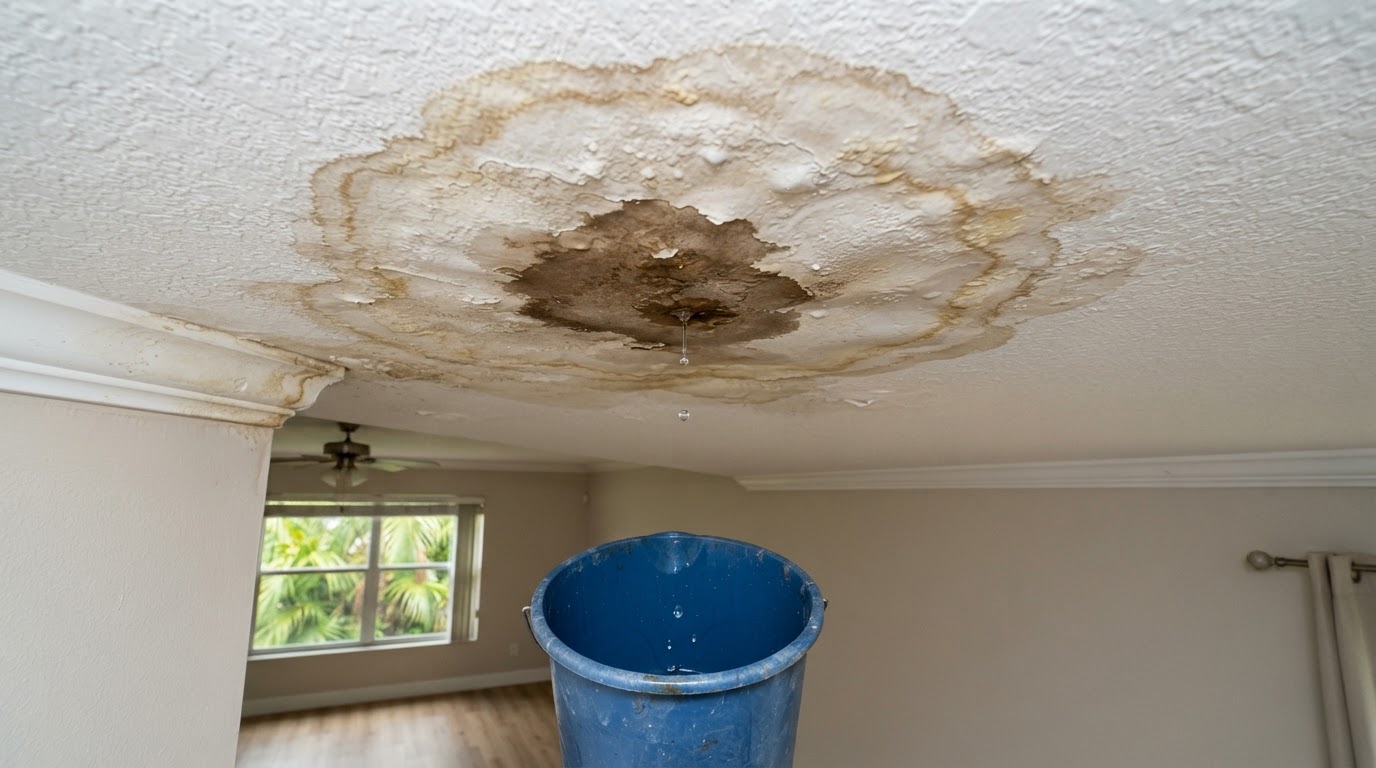
Plumbing risers run through shared walls from floor to floor, and a slow leak in a unit above can travel down and grow mold in your ceiling. In older riverfront buildings, aging risers make this pattern common.
Warning signs for riverfront condo owners
- Damp or discolored baseboards, especially in lower-floor units.
- Water stains on the ceiling below the unit above.
- A musty smell when the AC turns on.
- Visible corrosion on AC components.
- A musty odor that persists after AC service.
In the Venice of America, the water is not just the view — it is under the slab, in the air, and in the risers. Riverfront condo owners face all three moisture paths.
The New River, the canals, and the lower-floor unit
Fort Lauderdale's riverfront condo buildings sit along the New River and the city's canal network, and the lower-floor units in those buildings are the most exposed to water-table moisture. Ground moisture wicks up through the slab and — in buildings with parking structures — through the concrete podium below the residential floors, reaching the lowest residential units from below. During heavy rain and king tides the river and canals rise, the water table rises with them, and the lower-floor units see damp baseboards and lower walls that recur in the same locations each rainy season. If you own or are buying a lower-floor riverfront unit, the slab and lower-wall moisture is a primary concern that upper floors do not share. A moisture assessment can confirm whether lower-wall dampness is water-table driven rather than a leak, which changes the fix from roof or plumbing repair to dehumidification and drainage management.
- Lower-floor riverfront units are most exposed to water-table moisture wicking up through the slab and parking podium.
- Recurring baseboard dampness in a lower unit during the rainy season is often water-table driven, not a leak.
- King tides raise the river and the groundwater — lower-floor dampness during high-tide periods is a classic sign.
- If the source is the water table, the fix is dehumidification and drainage, not roof or plumbing repair.
The Intracoastal breeze and the aging facade
The riverfront and canal-front buildings near the Intracoastal face a breeze that carries salt from the ocean through the river and canal system, and that salt-laden air corrodes the building's exterior metal components — window frames, balcony rails, AC condenser grilles — faster than inland. In older riverfront buildings the facade seals and window gaskets age faster on the water-facing side, and the first moisture intrusion usually appears on the wall that faces the river or canal. If your riverfront condo's water-facing wall shows recurring condensation or seal degradation, the salt-air exposure is part of the cause, and that wall's seals need attention more often than the rest of the unit.
Prevention for riverfront condo owners
- Service AC condensate systems every six months near the water.
- Report ceiling stains to the association promptly and in writing.
- Check baseboards for dampness after heavy rain and king tides.
- Keep indoor humidity below 50% with the AC and, if needed, a dehumidifier.
- Know your unit's plumbing riser location.
When to test
- After a leak from the unit above or a condensate failure.
- When lower-floor baseboards feel damp after heavy rain or king tides.
- When a musty odor persists after AC service.
- Before buying a riverfront or canal-front condo.
Frequently asked questions
Are lower-floor riverfront units more at risk?+
Often, yes. Ground moisture can wick up through slabs and parking structures into lower units, especially during heavy rain and king tides when the water table is highest.
What is a king tide and why does it matter?+
King tides are exceptionally high tides that raise the water table and can push water toward foundations. In riverfront buildings, they keep lower walls damp longer.
Can mold from the unit above affect my condo?+
Yes. Plumbing risers run through shared walls, and a leak above can travel down and grow mold in your ceiling. A moisture inspection can trace the water path.
Should I test a riverfront condo before buying it?+
Yes. High water tables, salt air, and stacked plumbing all add moisture paths. A pre-purchase inspection is especially valuable in waterfront buildings.
Related resources
If you own or are buying a riverfront or canal-front condo in Fort Lauderdale, connect with our recommended local mold testing provider for an assessment that covers slab moisture, the AC system, and the unit above.
Need professional mold testing in South Florida?
Connect with our recommended local mold testing provider, MoldXperts, for an independent assessment.
Looking for professional mold testing in Fort Lauderdale? Connect with our recommended local mold testing provider. We may receive compensation when you contact our featured provider.
About this article
This article is published by Best Mold Testing Fort Lauderdale as an independent educational resource. It is reviewed for accuracy and reflects publicly available guidance from agencies including the EPA, CDC, and Florida DBPR. It is not a substitute for professional advice specific to your property.
Get mold prevention tips in your inbox
The South Florida Mold & Healthy Home Newsletter — practical, no spam.