Scheduled article — publishes on March 28, 2027. Not yet visible on the public blog feed.
Mold Testing in Fort Lauderdale Beach High-Rise Condos: Salt Air, Stacked Systems, Seasonal Vacancy
Fort Lauderdale's beach high-rises combine salt-air corrosion, stacked plumbing, and seasonal vacancy. Here is what condo owners should watch for.
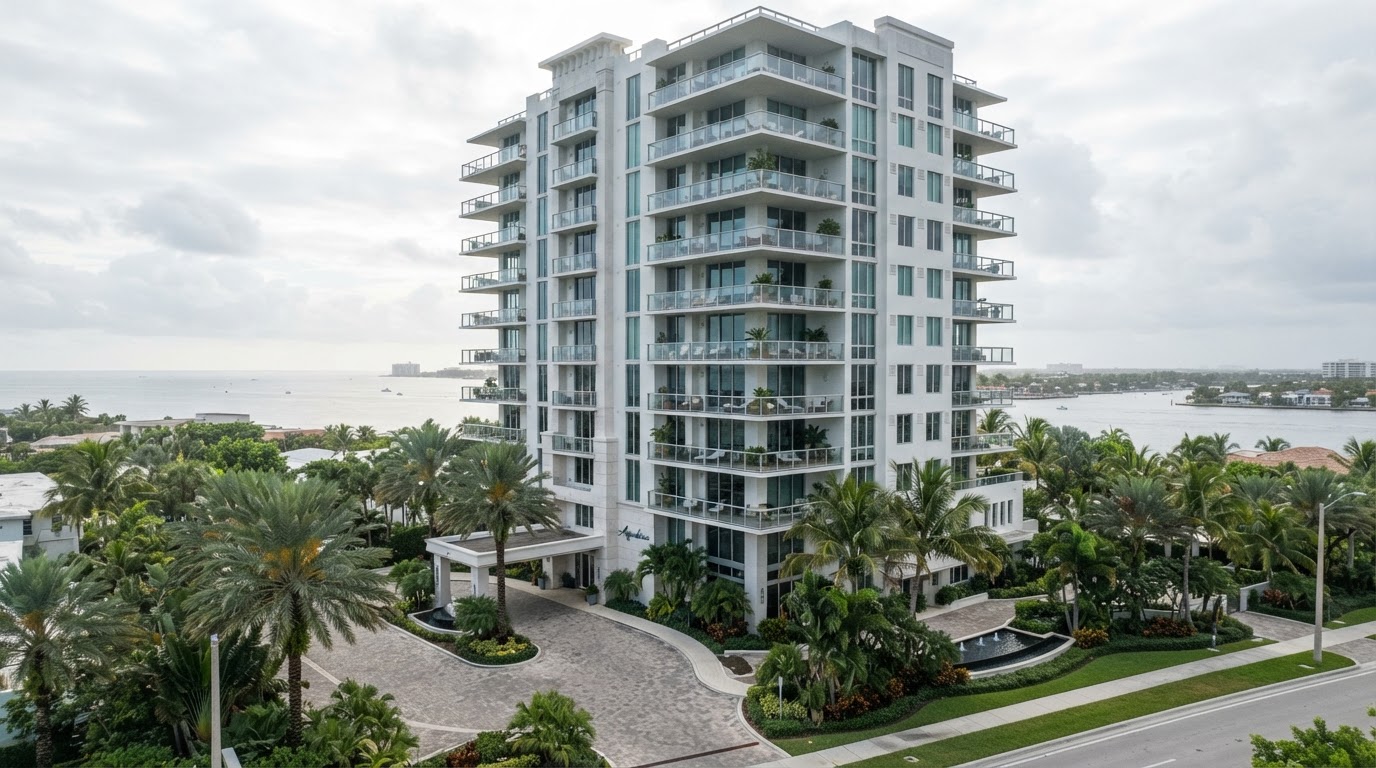
Fort Lauderdale's beach high-rise corridor combines three powerful mold drivers in one building type: direct salt-air exposure that corrodes AC components, stacked plumbing that transmits leaks between floors, and a heavily seasonal population that leaves units vacant for months. This article explains what condo owners in these towers should watch for and when testing makes sense.
Salt-air AC corrosion
Direct ocean exposure corrodes AC coils, condensate pans, and metal components faster than anywhere inland. Corroded pans crack, lines clog, and coils grow mold — and the corrosion cycle accelerates with every year of exposure. Condensate failures are the most common indoor moisture source in these buildings.
Stacked plumbing at scale
In a 20-plus-story tower, dozens of units share vertical plumbing risers. A leak floors above can affect units below through the shared wall cavity. In towers with complex floor plans, the water path can be indirect and hard to trace without professional moisture mapping.
Seasonal vacancy
Many beach units sit vacant for months. Without dehumidification, humidity spikes and condensation settles on every surface — including high-end finishes and contents. Vacancy-driven mold is the most common pattern in this market, and it often affects the entire unit.
Warning signs for beach condo owners
- A musty smell when you return to a vacant unit.
- A musty smell strongest when the AC first turns on.
- Water stains on the ceiling below the unit above.
- Visible corrosion on AC components.
- Discoloration on clothing, furniture, or finishes after a vacancy.
A beach high-rise stacks three mold drivers: the salt air outside, the risers in the wall, and the months your unit sits empty. All three are worth checking before you move back in.
The oceanfront facade and wind-driven salt
Fort Lauderdale's beach high-rises face the Atlantic directly, and the east-facing facades take the full force of onshore wind and salt spray in every storm and on every breezy afternoon. Window seals, balcony enclosure joints, and sliding-door tracks on the east face are the most common entry points for wind-driven moisture, and the salt in the air corrodes the metal components of those seals faster than any inland wall. A unit on the east face of a beach tower experiences a fundamentally different moisture environment than a unit on the west face of the same building — more wind, more salt, more condensation on the windows, and faster corrosion of any exposed metal. If your unit faces the ocean, plan to reseal windows and doors on the east face more often than the rest of the unit, and check the balcony door track for water intrusion after any storm with onshore wind.
- East-facing units in a beach tower take the full onshore wind and salt — more than any other face of the building.
- Window seals, balcony joints, and sliding-door tracks on the east face corrode and leak first.
- Check the balcony door track for water intrusion after any storm with onshore wind.
- Reseal east-facing windows and doors on a shorter cycle than the rest of the unit.
The riser leak that skips floors
In a 20-plus-story tower, a slow leak at a plumbing riser joint on an upper floor can travel down the shared wall cavity and wet the framing and drywall of units below — sometimes skipping floors as the water follows a stud bay or a conduit path. A ceiling stain on the 10th floor may originate on the 25th, and in a tower with complex floor plans the path can be indirect enough that the visible stain is far from the actual leak. Before you or the association commits to opening a ceiling, a professional moisture mapping assessment can read the wall cavities floor by floor to find where the water enters and where it stops. That mapping is what determines whether the source is your unit, the unit above, or a riser joint several floors up — and it matters for responsibility, repair scope, and insurance.
Prevention for beach condo owners
- Service AC condensate systems every six months — or more often this close to the ocean.
- If you leave seasonally, keep the AC running and humidity below 55%.
- Have someone check your unit monthly while away.
- Report ceiling stains to the association promptly and in writing.
- Leave interior doors open for airflow during vacancy.
When to test
- Before reopening a seasonally vacant unit if any odor is present.
- After a leak from the unit above or a condensate failure.
- When a musty smell persists after AC service.
- Before buying a unit in a Fort Lauderdale Beach tower.
Frequently asked questions
Why do beach high-rise AC systems fail more often?+
Salt-laden air corrodes coils, condensate pans, and metal components much faster than inland air. Corroded pans crack and lines clog, creating indoor moisture sources.
Can a leak floors above affect my unit?+
Yes. Vertical plumbing risers run through shared walls, and water can travel down the cavity affecting units below. Moisture mapping can trace the path.
How do I monitor a vacant beach unit remotely?+
Smart thermostats and hygrometers let you monitor temperature and humidity from anywhere. Set alerts for humidity above 60% so you can respond before mold establishes.
Should I test a beach high-rise condo before buying it?+
Yes. Salt-air corrosion, stacked plumbing, and possible vacancy history all add hidden moisture paths. A pre-purchase inspection is especially valuable in towers.
Related resources
If you own or are buying a condo in a Fort Lauderdale Beach high-rise, connect with our recommended local mold testing provider for an assessment that includes the AC system, the unit above, and vacancy-related humidity.
Need professional mold testing in South Florida?
Connect with our recommended local mold testing provider, MoldXperts, for an independent assessment.
Looking for professional mold testing in Fort Lauderdale? Connect with our recommended local mold testing provider. We may receive compensation when you contact our featured provider.
About this article
This article is published by Best Mold Testing Fort Lauderdale as an independent educational resource. It is reviewed for accuracy and reflects publicly available guidance from agencies including the EPA, CDC, and Florida DBPR. It is not a substitute for professional advice specific to your property.
Get mold prevention tips in your inbox
The South Florida Mold & Healthy Home Newsletter — practical, no spam.


