Scheduled article — publishes on January 21, 2027. Not yet visible on the public blog feed.
Mold Testing in Boca Raton Estates and Gated Communities
Boca Raton's estate homes have complex roofs, large footprints, and seasonal vacancy. Here is what owners of larger properties should watch for.

Boca Raton's gated communities and country-club estates represent some of the largest residential footprints in South Florida. That scale changes the mold risk profile: complex roofs with many valleys and penetrations, multiple AC zones, and seasonal vacancy in homes that sit empty for months. This article explains what owners of larger Boca Raton properties should watch for and when testing makes sense.
Complex roofs mean more leak points
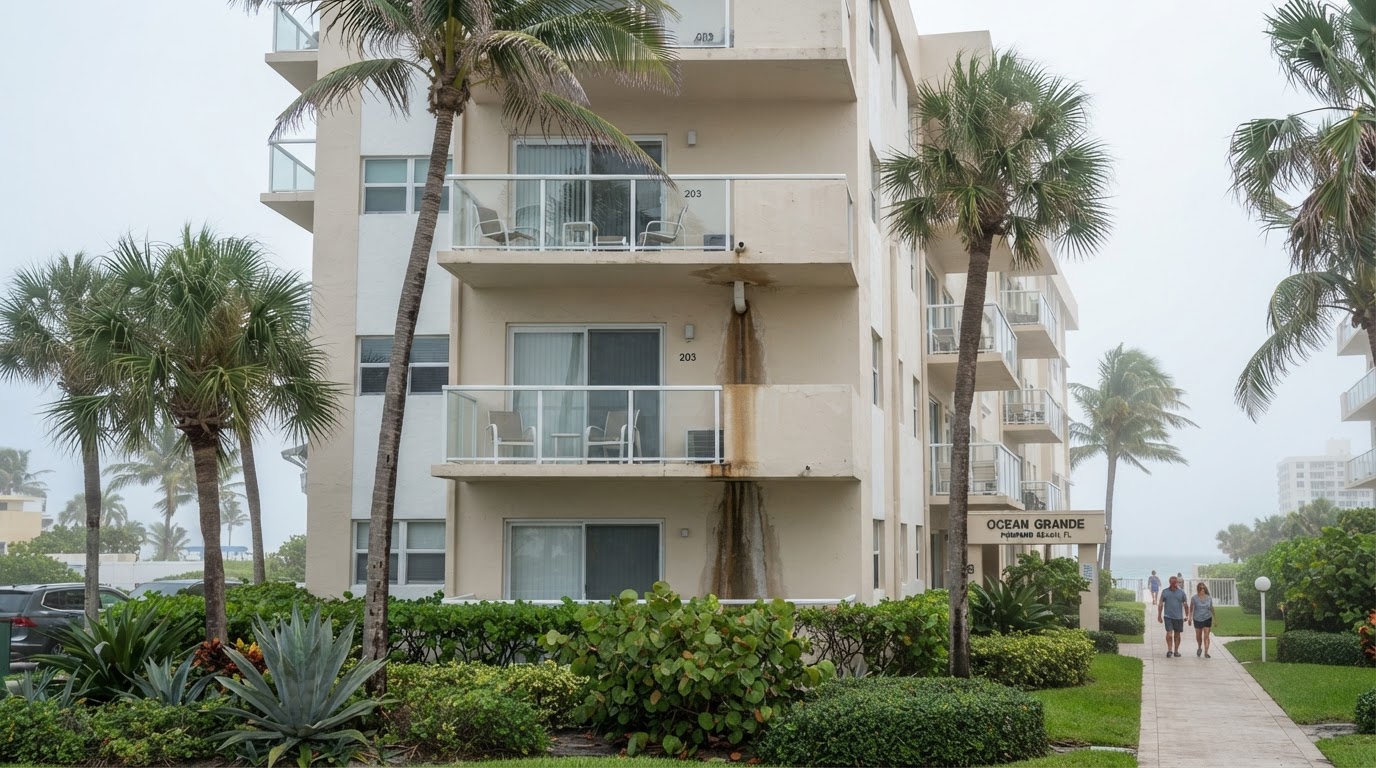
Estate homes have roofs with multiple valleys, skylights, chimneys, and penetrations. Each is a potential leak point, and complex roofs often leak at unusual locations that a casual inspection misses. A slow leak wets the attic and travels down wall cavities in a large home, where the affected area can be far from the visible stain.
Multiple AC zones mean multiple condensate systems
Large homes often have two or more AC zones, each with its own air handler, drain pan, and condensate line. Each is an independent mold risk. A condensate overflow in a second-floor air handler closet can soak drywall in a room nobody visits, growing mold for weeks before anyone notices.
Seasonal vacancy at scale
Many Boca Raton estates sit vacant for months while owners are away. Without dehumidification, humidity spikes throughout a large volume of air, and condensation settles on every surface — including contents, artwork, and finishes that are expensive to restore. Vacancy-driven mold in a large home is often extensive by the time it is discovered.
Warning signs in a large home
- A musty smell in a specific wing, floor, or room.
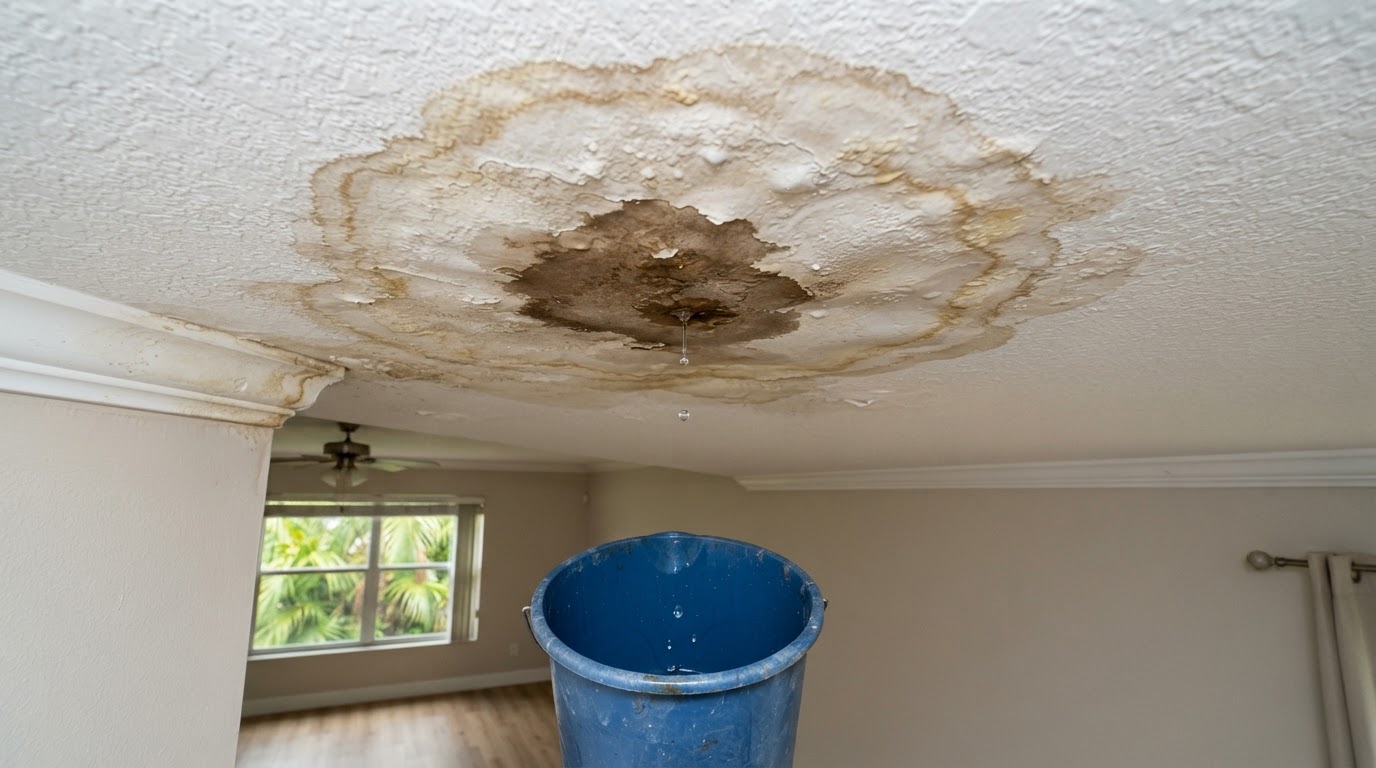
- Water stains on ceilings near roof valleys, skylights, or chimneys.
- A musty smell when a specific AC zone turns on.
- Water stains on the ceiling or wall below a second-floor air handler.
- Discoloration on contents or finishes after a vacancy.
In a large home, the distance between the moisture source and the visible sign can be an entire wing. Zone-based testing maps each AC system and roof section independently.
Country-club and gated communities: shared infrastructure
Boca Raton's gated communities and country-club estates often share infrastructure — clubhouse HVAC, irrigation that keeps the perimeter humid, and in some communities shared roof or wall assemblies in attached luxury construction. That shared infrastructure can move moisture between buildings the same way a condo's shared systems do, just at a larger scale. The mold risk in a gated estate is not only about your own systems but about how the community's infrastructure manages water around your home.
- Irrigation that runs against the home's foundation keeps perimeter soil and lower walls damp — adjust heads to direct water away.
- Attached luxury construction shares wall or roof assemblies that can transmit moisture between units.
- A mold source near the property line may trace to shared or community-maintained landscaping and drainage.
Monitoring a vacant estate with multiple zones
A large estate with several AC zones needs humidity monitored in each zone, not just the main living area, because a single zone with a failed dehumidification cycle can sit damp for months while the rest of the home stays dry. Smart thermostats and hygrometers that report each zone separately let you spot a problem in a guest wing before it spreads. For a seasonally vacant estate, per-zone monitoring is the difference between catching a humidity spike in a day and discovering mold across an entire wing in October.
Why large footprints need zone-based testing
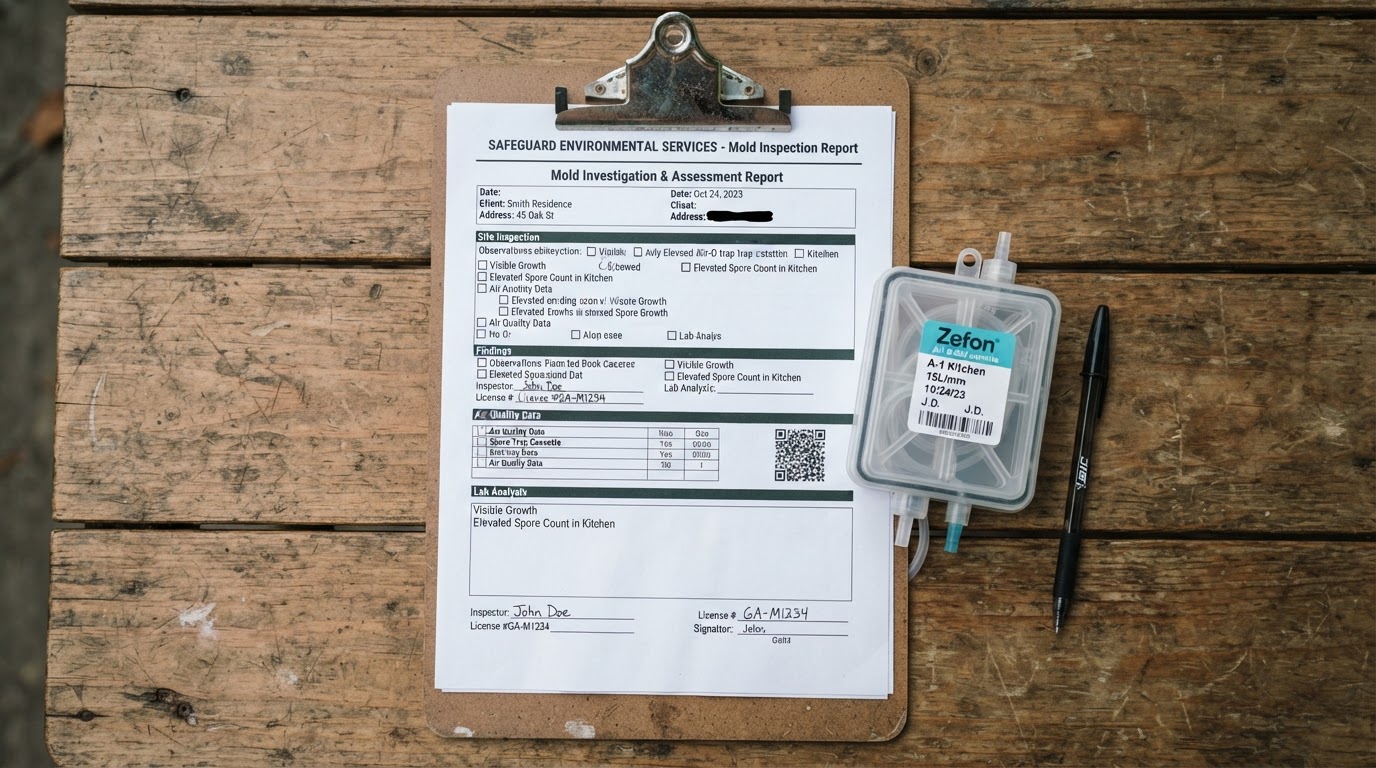
A single air sample does not represent a large home the way it represents a small one. Different zones — separated by floors, wings, or closed doors — have different air, and mold in one zone will not show in a sample taken in another. Zone-based testing places a sample in each zone and compares them, so a problem in a guest wing or a second-floor air handler closet is not missed because the main living area sampled clean.
- Each AC zone and each floor should be sampled separately so a local problem is not averaged away.
- A musty smell in one wing with a clean main floor is a classic sign that testing needs to be zone-based.
- Comparing zones also shows whether a problem is isolated or building-wide.
Prevention for estate homeowners
- Have every roof section — valleys, skylights, chimneys — inspected before storm season.
- Service every AC zone's condensate system, not just the main unit.
- If you leave seasonally, keep all zones running and humidity below 55%.
- Have someone check the home monthly while away, including less-used rooms.
- Use a hygrometer in each zone to monitor humidity remotely.
When to test
- After any roof leak, especially on a complex roof.
- After a condensate overflow in any AC zone.
- Before reopening a seasonally vacant estate if any odor is present.
- Before buying an estate home, given the number of independent systems.
Frequently asked questions
Why are estate homes more complex to test for mold?+
Larger footprints need more air samples to represent each zone, complex roofs have more leak points, and multiple AC systems each carry independent condensate risk. A proper assessment is zone-based.
Can mold grow in a room nobody uses?+
Yes. A condensate overflow in a second-floor air handler closet or a roof leak into a guest wing can grow mold for weeks before anyone notices, because the room is rarely visited.
How do I monitor a vacant estate remotely?+
Smart thermostats and hygrometers let you monitor temperature and humidity from anywhere. Set alerts for humidity above 60% so you can respond before mold establishes.
Should I test an estate home before buying it?+
Yes. With complex roofs, multiple AC zones, and possible vacancy history, a pre-purchase assessment is especially valuable on a large property.
Related resources
If you own or are buying an estate home in Boca Raton, connect with our recommended local mold testing provider for a zone-based assessment that covers every roof section and AC system.
Need professional mold testing in South Florida?
Connect with our recommended local mold testing provider, MoldXperts, for an independent assessment.
Looking for professional mold testing in Fort Lauderdale? Connect with our recommended local mold testing provider. We may receive compensation when you contact our featured provider.
About this article
This article is published by Best Mold Testing Fort Lauderdale as an independent educational resource. It is reviewed for accuracy and reflects publicly available guidance from agencies including the EPA, CDC, and Florida DBPR. It is not a substitute for professional advice specific to your property.
Get mold prevention tips in your inbox
The South Florida Mold & Healthy Home Newsletter — practical, no spam.