Scheduled article — publishes on December 19, 2026. Not yet visible on the public blog feed.
Hidden Mold in the Attic: A Sunrise Homeowner's Guide
Attics are one of the most overlooked mold sites in Sunrise homes. Roof leaks, poor ventilation, and AC ductwork all create hidden moisture overhead.

The attic is one of the most overlooked mold sites in a Sunrise home. It is out of sight, hard to access, and collects moisture from three sources: roof leaks, poor ventilation, and AC ductwork running through the space. By the time a stain appears on the ceiling below, the attic has often been damp for weeks. This article explains what causes attic mold in Sunrise homes and when testing is worth it.
Why attics grow mold
An attic combines everything mold needs: warm air, porous wood and insulation as a food source, and moisture from several paths. In South Florida's climate, the attic temperature and humidity can swing dramatically, creating condensation on the underside of the roof deck even without a leak. Add a slow roof leak or a sweating AC duct, and the conditions for mold are nearly guaranteed.
The three moisture sources
Roof leaks
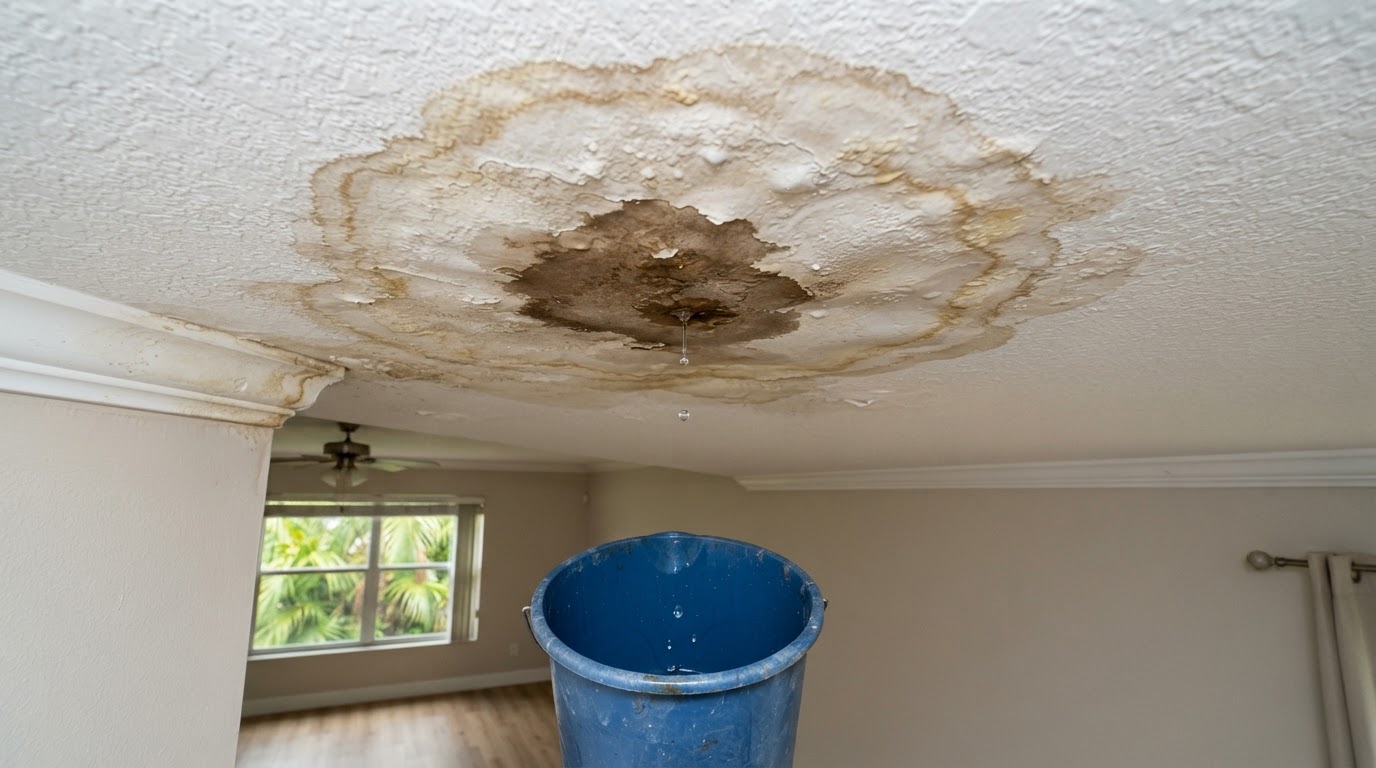
Water enters through roof vents, flashing, valleys, and skylights. It runs down the roof deck and rafters, wetting insulation and the top plates of walls. A slow leak can wet the same materials repeatedly for months before a ceiling stain appears below.
Poor ventilation
Attics need balanced intake and exhaust ventilation. When vents are blocked, insulation is pushed into soffits, or exhaust fans are missing, humid air gets trapped. In a Sunrise home, that trapped humidity condenses on the cooler underside of the roof deck at night, wetting the wood and growing mold.
AC ductwork
Many Sunrise homes have AC ductwork running through the attic. A poorly sealed duct joint or uninsulated duct in a hot, humid attic sweats, dripping condensation onto insulation and drywall below. A leak in the duct also dumps cold, damp air into the attic, raising local humidity.
Warning signs of attic mold
- A musty smell strongest in the upper floor or near the attic access.
- Dark staining on the underside of the roof deck or on rafters visible from the access hatch.
- Damp or compressed insulation in the attic.
- A ceiling stain on the upper floor with no obvious plumbing source.
- A musty smell that appears when the AC runs, suggesting a duct issue in the attic.
Attic mold is a three-source problem: the roof, the ventilation, and the ductwork. Finding which one is the cause is the first step to fixing it.
How testing finds attic mold
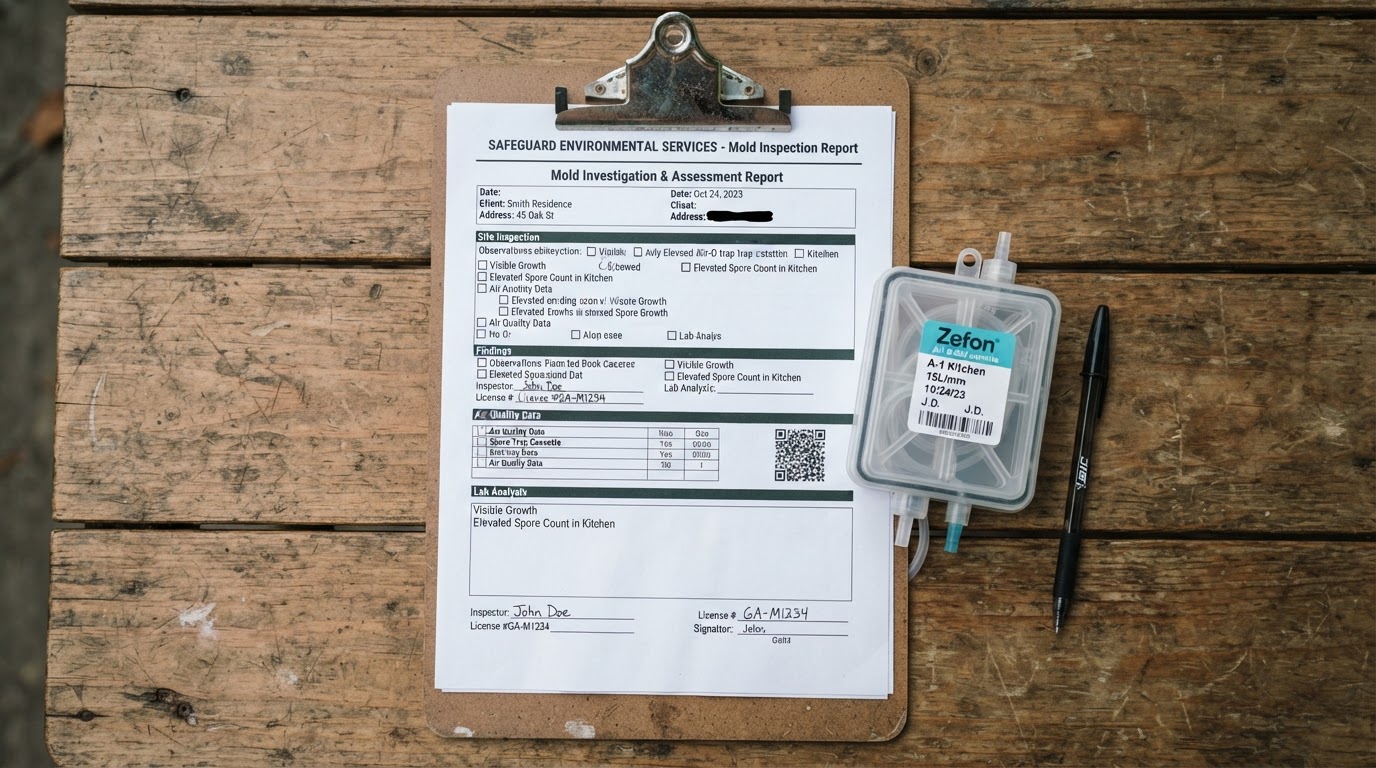
An independent assessor inspects the attic visually, uses moisture meters on the roof deck and rafters, checks ductwork for condensation and leaks, and takes air samples in the attic and the living space below. Comparing attic and living-space spore levels shows whether attic mold is affecting the air in the home, not just growing overhead.
When to test in a Sunrise home
- After any roof leak, especially a slow one.
- When a musty smell is strongest upstairs.
- If you see dark staining on the roof deck from the access hatch.
- Before buying an older Sunrise home with an aging roof.
- When AC ductwork runs through the attic and a musty smell appears when the system runs.
Frequently asked questions
Can attic mold affect the air in my living space?+
Yes. Mold spores from the attic can migrate through gaps around the attic access, recessed light fixtures, and ductwork penetrations. Air sampling in both spaces shows whether attic mold is affecting your indoor air.
Can attic mold grow without a roof leak?+
Yes. Poor ventilation traps humid air that condenses on the roof deck, and sweating AC ductwork adds moisture. Both can grow mold without any roof leak.
How do I know if my attic ventilation is adequate?+
Balanced intake (soffit) and exhaust (ridge or fan) ventilation is the goal. If insulation blocks the soffits or exhaust vents are missing, humidity gets trapped. An assessor or roofer can evaluate this during an inspection.
Should I test the attic before replacing my roof?+
If the old roof leaked, testing before replacement is wise. It tells you whether mold has colonized the deck or rafters so it can be addressed during the roofing project, not discovered later.
Related resources
If you suspect attic mold in your Sunrise home, connect with our recommended local mold testing provider for an assessment that includes the attic, not just the living space.
Need professional mold testing in South Florida?
Connect with our recommended local mold testing provider, MoldXperts, for an independent assessment.
Looking for professional mold testing in Fort Lauderdale? Connect with our recommended local mold testing provider. We may receive compensation when you contact our featured provider.
About this article
This article is published by Best Mold Testing Fort Lauderdale as an independent educational resource. It is reviewed for accuracy and reflects publicly available guidance from agencies including the EPA, CDC, and Florida DBPR. It is not a substitute for professional advice specific to your property.
Get mold prevention tips in your inbox
The South Florida Mold & Healthy Home Newsletter — practical, no spam.