Scheduled article — publishes on December 7, 2026. Not yet visible on the public blog feed.
AC Systems and Mold in Coral Springs: When Aging Cooling Becomes a Mold Source
Coral Springs homes built in the 1970s–90s often have original or end-of-life AC systems. Here is how aging cooling equipment creates mold and when to test.
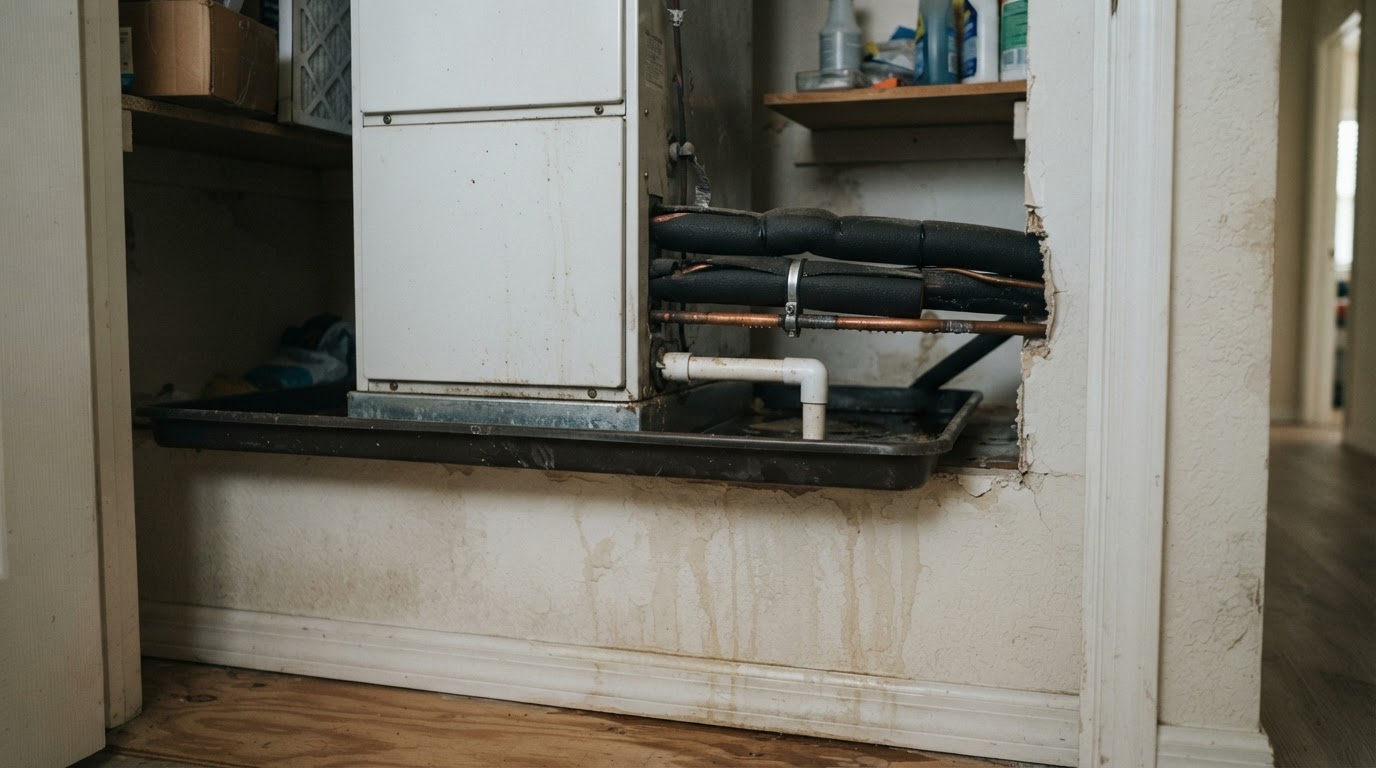
Coral Springs is a master-planned community with housing built largely in the 1970s–90s. That consistency means many homes reach the same age-related failure points at the same time — and one of the most common is the air conditioning system. Original or once-replaced AC units across the community are reaching end of life, and an aging AC is one of the most reliable mold sources in a South Florida home. This article explains how an aging AC creates mold and when testing makes sense for a Coral Springs homeowner.
Why an aging AC becomes a mold source
Your air conditioner is also your home's main dehumidifier. Warm, humid indoor air passes over the cold evaporator coil, and moisture condenses on it the way water beads on a cold glass. That water is supposed to drain out through a condensate line. In an aging system, the parts that manage that water fail: the drain line clogs, the pan cracks, the coil gets dirty, and duct seals leak. Each failure puts water where it should not, and mold follows within 24 to 48 hours.
- A clogged condensate line overflows the drain pan and soaks the drywall and insulation around the air handler.
- A dirty evaporator coil collects dust and moisture, growing mold that spreads into the airstream.
- Aging duct seals let cold air meet humid air, causing condensation inside the ductwork.
- A failing system that short-cycles cools without dehumidifying, leaving the home clammy and humid.
Where AC-related mold grows
- The drain pan and the drywall and insulation around the air handler, often inside a closet.
- The evaporator coil and the interior of the air handler cabinet.
- Inside supply ductwork at poorly sealed joints.
- Around supply vent registers, where condensation stains the ceiling.
Warning signs specific to aging systems
- A musty smell that is strongest when the AC first turns on.
- Water stains on the ceiling or wall below the air handler.
- The AC cools but leaves the air feeling damp or clammy.
- Visible dark growth on or around a vent register.
- The system runs constantly without reaching the set temperature.
- A unit that is 12–15 years old or older.
In Coral Springs, where so many homes were built in the same era, an AC reaching end of life is a community-wide pattern. The homes that catch it early avoid the mold that follows.
Prevention for Coral Springs homeowners
- Keep the condensate line clear — pour a small amount of vinegar through it regularly.
- Change filters on schedule so the evaporator coil stays clean and drains properly.
- Have the drain pan and line checked at every AC service visit.
- If your system is 12–15 years old, plan for replacement before it fails and leaks.
- Keep indoor humidity below 50% with the AC and, if needed, a dehumidifier.
When to test
If your aging AC has had a condensate overflow, if a ceiling stain appeared below the air handler, or if a musty smell persists after servicing, professional testing is worth it. An independent assessor can inspect the air handler and ductwork, use moisture meters to find damp materials, and take air samples upstream and downstream of the coil to determine whether the AC is distributing mold through the home.
Coral Springs neighborhoods and AC age
Because Coral Springs was built in waves, AC age clusters by neighborhood. If you know when your section was built, you can anticipate whether your system is in the high-risk window.
- The original 1970s subdivisions near the city center have the oldest housing stock; any original AC is long gone, but replacement units from the 2000s are now reaching end of life.
- 1980s–90s areas like Coral Springs Country Club and Maplewood have systems that are 15–25 years old — squarely in the failure window for condensate leaks and coil growth.
- Newer western communities have younger systems but tighter envelopes, so a small condensate problem traps moisture more than in an older, leakier home.
- Homes with the air handler in an interior closet are the highest risk — an overflow soaks the drywall and insulation in a confined space where it dries slowly.
Ductwork: the hidden half of the system
The air handler gets the attention, but the ductwork is where AC mold often hides longest. In a Coral Springs attic, flex duct runs through extreme heat and humidity. A poorly sealed joint or a duct with degraded insulation lets cold air meet humid attic air, and condensation forms inside the duct — out of sight, growing mold that the airstream then carries to every room. A musty smell that appears only when the AC runs is the classic sign. Duct inspection and upstream-versus-downstream air sampling can confirm whether the ductwork is the source.
Frequently asked questions
How long do AC systems last in South Florida?+
Most residential AC systems in South Florida last 10–15 years, often less in coastal areas with salt exposure. A system approaching that age is more likely to develop condensate leaks and coil growth.
Can mold inside my AC spread to the rest of the house?+
Yes. Mold on the evaporator coil or inside the ductwork is picked up by the airstream and distributed to every room the system serves. A musty smell when the AC turns on is a common first sign.
Will cleaning the ducts fix AC mold?+
Duct cleaning removes accumulated dust and debris, but if the moisture source — a clogged drain line, dirty coil, or leaking duct seal — is not fixed, mold will return. Address the moisture first.
Should I test for mold before replacing an old AC?+
If the old system leaked or you have noticed musty odors, testing before replacement is wise. It tells you whether mold has already colonized the air handler, ductwork, or surrounding drywall before the new system is installed.
Related resources
If your Coral Springs home has an aging AC and you suspect mold, connect with our recommended local mold testing provider for an inspection that includes the air handler and ductwork.
Need professional mold testing in South Florida?
Connect with our recommended local mold testing provider, MoldXperts, for an independent assessment.
Looking for professional mold testing in Fort Lauderdale? Connect with our recommended local mold testing provider. We may receive compensation when you contact our featured provider.
About this article
This article is published by Best Mold Testing Fort Lauderdale as an independent educational resource. It is reviewed for accuracy and reflects publicly available guidance from agencies including the EPA, CDC, and Florida DBPR. It is not a substitute for professional advice specific to your property.
Get mold prevention tips in your inbox
The South Florida Mold & Healthy Home Newsletter — practical, no spam.


