Scheduled article — publishes on December 25, 2026. Not yet visible on the public blog feed.
Seasonal Vacancy and Mold in Deerfield Beach: A Guide for Snowbird Homeowners
Leaving a Deerfield Beach home vacant for months with the AC off is a leading cause of mold. Here is how to prevent it and when to test before returning.

Deerfield Beach has a large share of seasonal residents who head north for the summer. That pattern — months of vacancy with the air conditioning off or set high — is one of the most reliable mold triggers in the city. Without dehumidification, indoor humidity climbs above the mold threshold and condensation settles on every surface. This guide explains how vacancy causes mold, how to prevent it, and when to test before you return.
Why vacancy causes mold
Your air conditioner is your home's main dehumidifier. When it is off or set to a high temperature for months, it stops pulling moisture from the air. In a Deerfield Beach home, ambient humidity is high for most of the year, and without the AC running, indoor relative humidity can exceed 70%. At that level, condensation forms on every cool surface — walls, ceilings, furniture, clothing, and the inside of cabinets — and mold begins to grow within days.
Where vacancy mold grows
- On clothing, shoes, and upholstered furniture in closets and rooms.
- On drywall, especially behind furniture where airflow is poor.
- Inside cabinets and pantries where air is trapped.
- On the back of artwork and behind wall hangings.
- Around windows where condensation collects.
Prevention steps before you leave
- Keep the AC running and set it to maintain humidity below 55%, not just a high temperature.
- If your AC cannot hold humidity, add a dehumidifier with a continuous drain or a pump.
- Leave interior doors open for airflow, or place small fans on timers to keep air moving.
- Move furniture a few inches away from exterior walls to allow airflow behind it.
- Have someone check the home for musty odors monthly while you are away.
- Consider a smart thermostat and hygrometer that lets you monitor humidity remotely.
- Close blinds to reduce solar heat gain, which reduces how hard the AC works.
The goal is not to cool an empty home — it is to dehumidify it. Setting the AC to 85° may feel thrifty, but if humidity climbs above 60%, you are trading a small cooling savings for a large mold risk.
Why Deerfield Beach snowbird homes are especially vulnerable
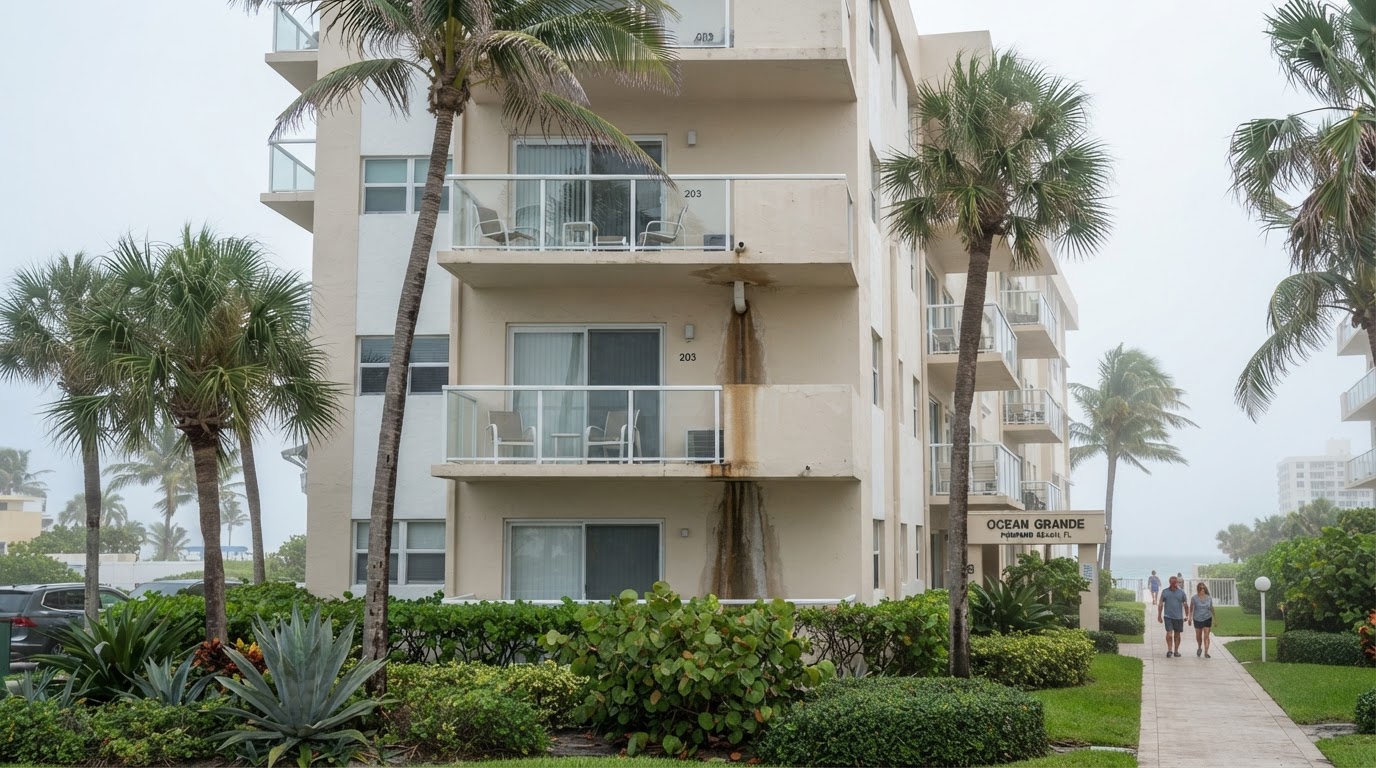
Deerfield Beach sits directly on the Atlantic, so ambient humidity stays higher than in inland Broward neighborhoods. That matters most when the AC is off, because humid outdoor air is never far from the living space. The city's housing also spans several eras, and each ages into a different vacancy risk.
- The barrier-island condos along A1A near the pier sit in the highest humidity band and often have shared rooftop HVAC that sits idle for the season, letting the whole stack stay damp.
- Post-war single-family homes inland from US-1 have original windows and framing that hold humidity once the AC stops pulling moisture out of the air.
- 1980s–90s properties in central Deerfield Beach have tighter envelopes than the older inland stock — efficient when the system runs, but quicker to trap vacancy humidity when it does not.
- Because the city is compact and coastal, even a short walk to the beach means a home sits in salt-tinged, moisture-laden air for much of the year.
The economics: running the AC versus remediating mold
Many seasonal owners turn the AC off to save on cooling, but the math rarely works out. The cost of running a single system at a modest setpoint through a South Florida summer is a small fraction of what it costs to remediate a humidity-damaged unit. Mold on drywall, contents, and finishes can require professional cleanup, material replacement, and sometimes temporary relocation during the work — and it can affect an entire unit rather than a single room.
- Run the AC at a setpoint that holds humidity below 55% — usually around 78–80°F with the fan on auto — rather than turning it off.
- If the AC alone cannot hold humidity, a portable dehumidifier with a continuous drain costs far less than a single remediation.
- A smart hygrometer that alerts your phone at 60% humidity catches a problem before it becomes a cleanup.
- Having a trusted local contact check the unit monthly for musty odors is the cheapest insurance against a large vacancy loss.
Documenting vacancy damage for an insurance claim
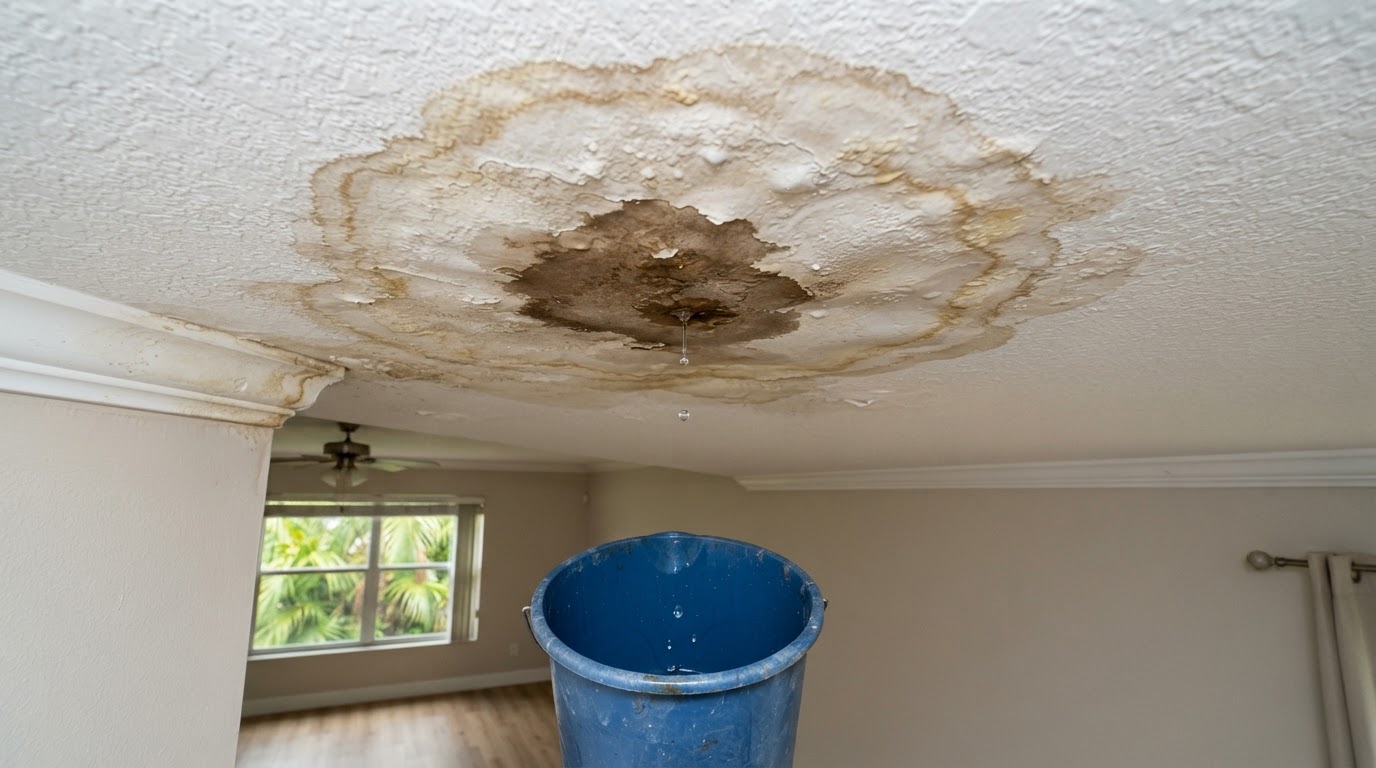
If you return to vacancy-driven mold, documentation shapes whether a claim is worth filing. Photograph the affected rooms and contents before you clean anything, and record the AC settings you left the unit at. Vacancy mold is harder to claim than sudden water damage because it develops slowly, so a written timeline — when you left, what the thermostat was set to, when you returned — helps an adjuster understand the loss.
- Photograph discoloration on walls, ceilings, and contents before any cleanup.
- Record the AC setpoint and whether the system was running when you left.
- Keep any smart-thermostat or hygrometer history that shows humidity readings over the vacancy.
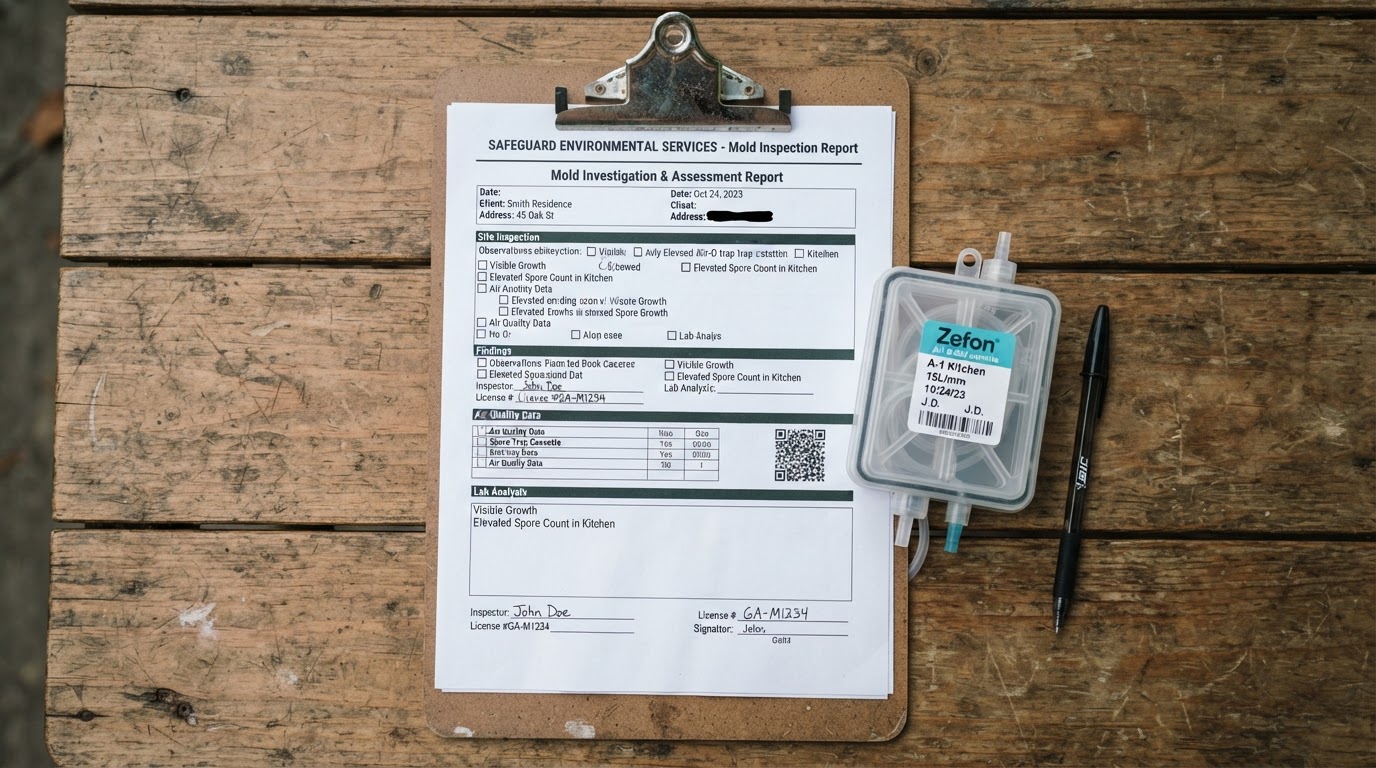
- If you hire testing, the written report with moisture readings and lab results is the documentation an adjuster can act on.
When to test before returning
If you return to a musty smell, visible discoloration on walls or contents, or condensation on windows, test before you start cleaning. Cleaning visible mold without addressing the source and confirming the extent can spread spores through the home. An independent assessment confirms whether growth is present, where, and how extensive — so you address it correctly.
What to do if you find mold on return
- Do not run the AC on high fan, which can spread spores, until the source is assessed.
- Photograph affected areas and contents.
- Have the home tested to confirm the extent before any cleanup.
- Address the humidity source first — confirm the AC and dehumidifier are working.
Frequently asked questions
What temperature should I set my AC to when I leave for the summer?+
The key is humidity, not temperature. Set the AC to maintain indoor humidity below 55%, which usually means a setting around 78–80° with the fan on auto. If humidity still climbs, add a dehumidifier.
Can mold grow on my clothes and furniture while I am away?+
Yes. When humidity stays above 60%, mold can grow on clothing, shoes, upholstered furniture, and even the back of artwork. Keeping humidity below 55% is the most effective prevention.
Should I turn off the AC to save money while I am away?+
No. Turning off the AC stops dehumidification and lets humidity spike, which can cause far more expensive mold damage than the cooling you save. Run the AC or a dehumidifier to hold humidity below 55%.
How do I know if my vacant home has mold before I return?+
Have someone check for musty odors monthly. If you use a smart hygrometer, watch for humidity above 60%. If either appears, schedule a test before you return and start cleaning.
Related resources
If you are returning to a Deerfield Beach home that was vacant and suspect mold, connect with our recommended local mold testing provider for an assessment before you start cleaning.
Need professional mold testing in South Florida?
Connect with our recommended local mold testing provider, MoldXperts, for an independent assessment.
Looking for professional mold testing in Fort Lauderdale? Connect with our recommended local mold testing provider. We may receive compensation when you contact our featured provider.
About this article
This article is published by Best Mold Testing Fort Lauderdale as an independent educational resource. It is reviewed for accuracy and reflects publicly available guidance from agencies including the EPA, CDC, and Florida DBPR. It is not a substitute for professional advice specific to your property.
Get mold prevention tips in your inbox
The South Florida Mold & Healthy Home Newsletter — practical, no spam.