Scheduled article — publishes on August 10, 2027. Not yet visible on the public blog feed.
Closet Mold in Plantation Bedrooms: Why Closed Spaces Grow Mold First
Closets in Plantation homes are often the first place mold appears. Here is why closed, unventilated spaces are mold incubators.
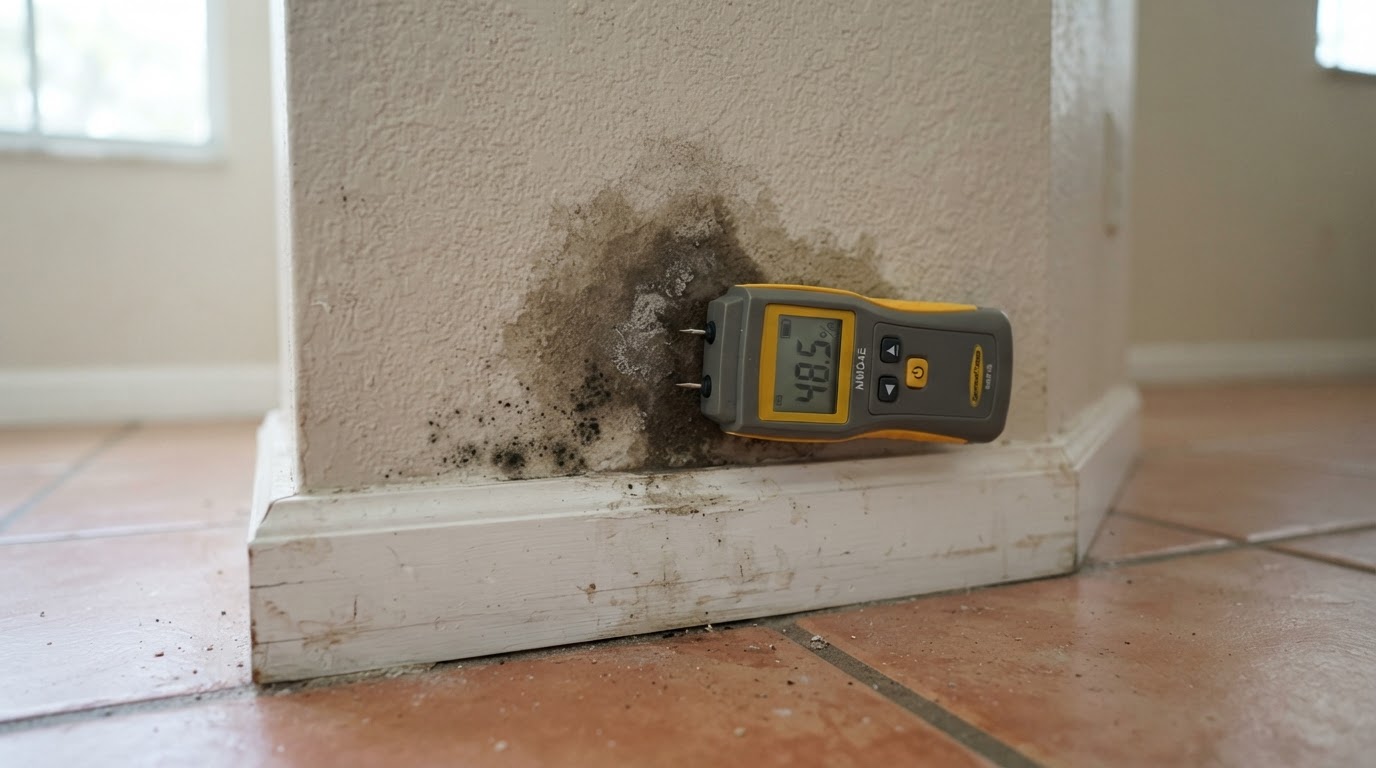
Ask any South Florida mold assessor where growth shows up first, and closets come up constantly. In Plantation homes, the bedroom closet — especially on an exterior wall — is a mold incubator: no airflow, cool surfaces, and a full rack of porous clothing. This article explains why and what to do.
Why closets are incubators
- No airflow: closed doors and packed racks mean stagnant air that never dries.
- Exterior walls: the closet often shares a wall with the outdoors, and that wall is the coolest surface in the room — a condensation magnet.
- Stored fabrics: clothing, linens, and leather are ideal mold food.
- No AC supply: many closets have no vent, so conditioned air never reaches them.
The condensation mechanism
Humid air reaches the cool exterior wall surface inside the closet and condenses. With no airflow to dry it, the surface stays damp for hours. Mold spores land on the damp drywall and on the clothing hanging against it, and growth begins — often visible first as discoloration on the wall behind the hanging clothes.
Prevention
- Leave closet doors open periodically, or install louvered doors.
- Avoid packing clothes tightly against exterior walls.
- Add a small vent or transfer grille if the closet has none.
- Keep room humidity below 55%.
- Check behind hanging clothes on exterior walls seasonally.
When to test
- Discoloration on the closet wall or ceiling.
- Musty odor from the closet.
- Mold spots on stored clothing or leather.
- Recurring condensation in the closet.
A closet is the one room in your home that never gets dried. On an exterior wall in South Florida, that makes it the first place mold wins.
Frequently asked questions
Why does mold appear in closets first?+
No airflow, a cool exterior wall that condenses humidity, and porous stored fabrics — a combination that stays damp for hours and never dries.
How do I prevent closet mold?+
Louvered doors or periodic airing, avoiding packed clothes against exterior walls, adding a vent if there is none, and keeping room humidity below 55%.
Is mold on stored clothing a sign of a bigger problem?+
It can be. Clothing mold means the closet's humidity is high enough for growth — check the wall behind the clothes and the room's overall humidity.
When should I test a closet?+
If there is discoloration on the wall or ceiling, musty odor, mold on stored items, or recurring condensation — testing confirms whether growth is in the wall too.
Related resources
If a closet in your Plantation home shows discoloration or musty odor, connect with our recommended local mold testing provider for an assessment that includes the wall behind the clothes.
Need professional mold testing in South Florida?
Connect with our recommended local mold testing provider, MoldXperts, for an independent assessment.
Looking for professional mold testing in Fort Lauderdale? Connect with our recommended local mold testing provider. We may receive compensation when you contact our featured provider.
About this article
This article is published by Best Mold Testing Fort Lauderdale as an independent educational resource. It is reviewed for accuracy and reflects publicly available guidance from agencies including the EPA, CDC, and Florida DBPR. It is not a substitute for professional advice specific to your property.
Get mold prevention tips in your inbox
The South Florida Mold & Healthy Home Newsletter — practical, no spam.