Scheduled article — publishes on February 5, 2027. Not yet visible on the public blog feed.
Mold Testing in Oakland Park: Older Homes, Slab Foundations, and Craftsmanship Era Housing
Oakland Park's mid-century homes have aging systems and slab foundations. Here is what local homeowners should watch for.

Oakland Park's housing stock is largely mid-century — homes built from the 1950s through the 1970s on slab foundations. These homes have character, but they also have aging roofs, original plumbing, and construction-era materials that hold moisture. This article explains what is specific about mold risk in Oakland Park and when testing makes sense.
Aging roofs and original plumbing
Many Oakland Park homes have roofs at or past their design life, leaking at seams and flashing. Original plumbing — including cast iron drain lines common in this era — can develop slow leaks inside walls and under slabs. Both feed hidden mold long before a visible stain appears.
Slab foundations and wicking
Slab-on-grade construction means the floor is the foundation. Ground moisture can wick up through the slab into bottom plates and lower drywall, especially in homes without a modern moisture barrier. Damp baseboards and lower walls are a classic sign in mid-century Florida homes.
Craftsmanship-era materials
Homes from this era often have plaster or older drywall, wood framing, and materials that absorb and hold moisture longer than modern equivalents. Once wet, they stay wet — extending the window for mold growth after any leak.
Warning signs for Oakland Park homeowners
- Damp or discolored baseboards and lower walls.
- A persistent musty odor you cannot trace to a visible source.
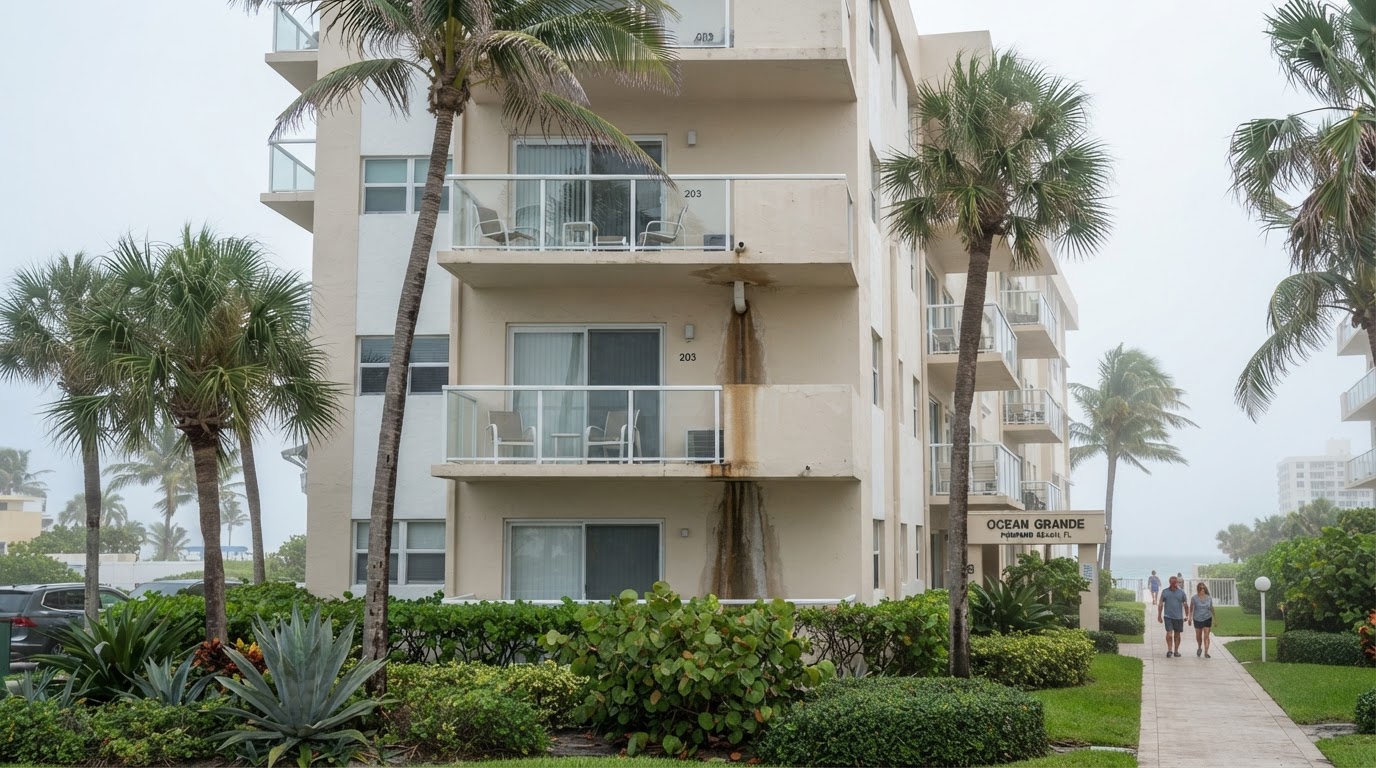
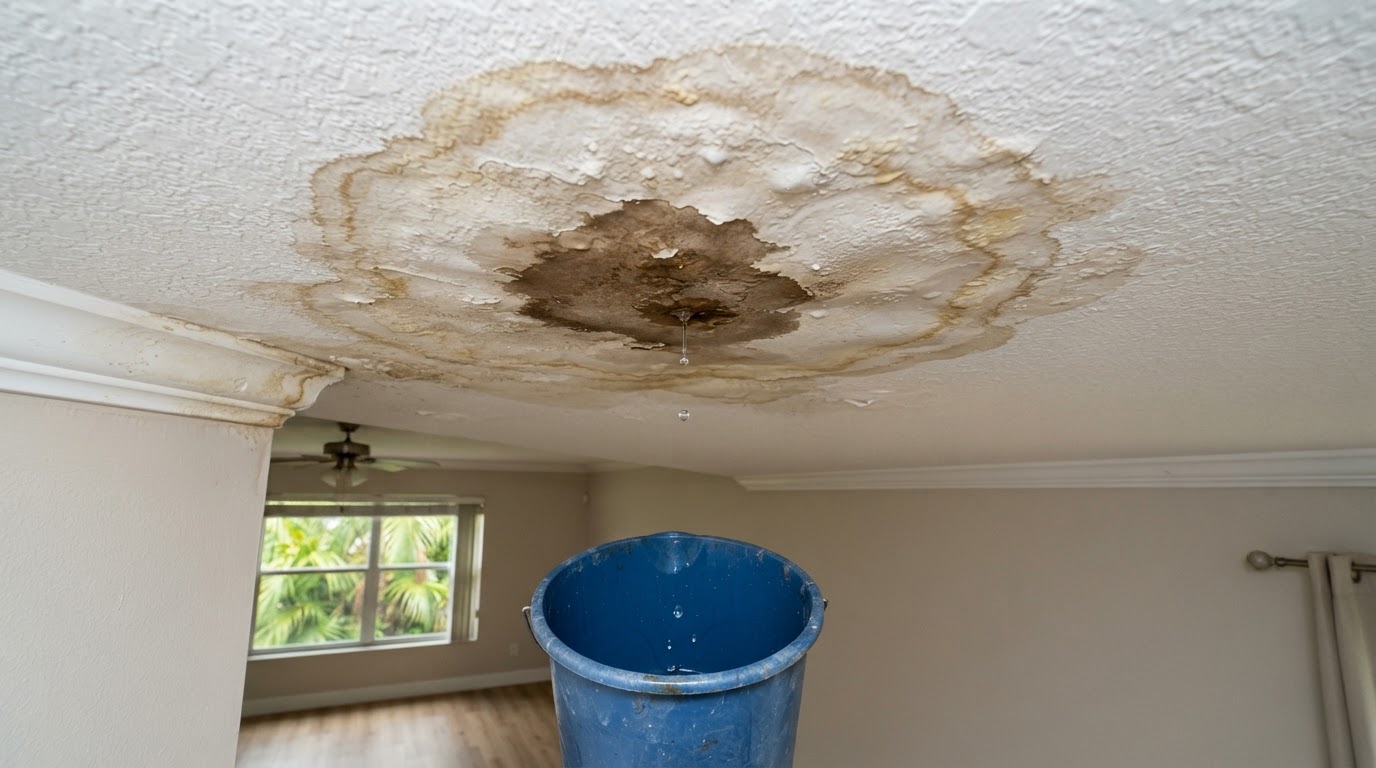
- Water stains on ceilings, especially after storms.
- Slow drains or recurring plumbing issues.
- A musty smell when the AC turns on.
In a mid-century slab home, moisture does not always come from above. Ground moisture wicking up through the slab is one of the most common — and most overlooked — mold drivers.
Cast iron drain lines and the under-slab leak
Many Oakland Park homes from the 1950s and 1960s still have their original cast iron drain lines, which run under the concrete slab. Cast iron corrodes from the inside out over decades, and a pinhole leak under the slab can saturate the soil beneath the foundation and wick moisture up into the slab itself. The signs are subtle: a recurring drain smell, slow drains, or a damp patch of flooring near a bathroom or kitchen. Because the leak is under the slab, it is invisible until it affects the floor above. If your home has original cast iron drains and you notice these signs, a plumber's camera inspection and a moisture assessment of the slab and lower walls can confirm whether a hidden under-slab leak is feeding mold.
- Recurring drain odors or slow drains in a mid-century home often point to aging cast iron under the slab.
- A damp or discolored patch of flooring near a wet wall can signal an under-slab drain leak.
- A plumber's camera inspection locates the leak; a moisture assessment confirms whether mold has followed.
Slab wicking and the missing vapor barrier
Mid-century Florida slab homes were often poured without the modern polyethylene vapor barrier that newer construction includes. Without that barrier, ground moisture moves up through the porous concrete into the bottom plates of the walls and the lower drywall. The result is baseboards and lower walls that feel damp or look discolored even when there is no leak anywhere in the home. This is a construction-era condition, not a single event, so it tends to recur unless the moisture load is managed with dehumidification or, in severe cases, a retrofit moisture barrier. Testing can confirm whether the dampness in lower walls is slab wicking rather than a leak, which changes the fix entirely.
Renovations that sealed in the moisture
Original mid-century construction breathed — walls exchanged air with the outside, and moisture dried naturally. Decades of renovation in Oakland Park have added insulation, vapor barriers, and drywall that seal those assemblies tighter. When moisture enters a sealed wall cavity — from a slow leak, slab wicking, or high indoor humidity — it can no longer dry to the outside and stays trapped. A musty odor that appears after a renovation is a common pattern in these homes, and it means the wall assembly needs to be able to dry to at least one side. Before sealing an older wall tighter, confirm the cavity can still dry.
Prevention for Oakland Park homeowners
- Have older roofs inspected before storm season.
- Address slow drains and recurring plumbing issues promptly.
- Keep indoor humidity below 50% and monitor with a hygrometer.
- Check baseboards and lower walls for dampness after heavy rain.
- Keep the AC condensate line clear and filters changed.
When to test
- After any roof or plumbing leak.
- When baseboards or lower walls feel damp.
- When a musty odor persists.
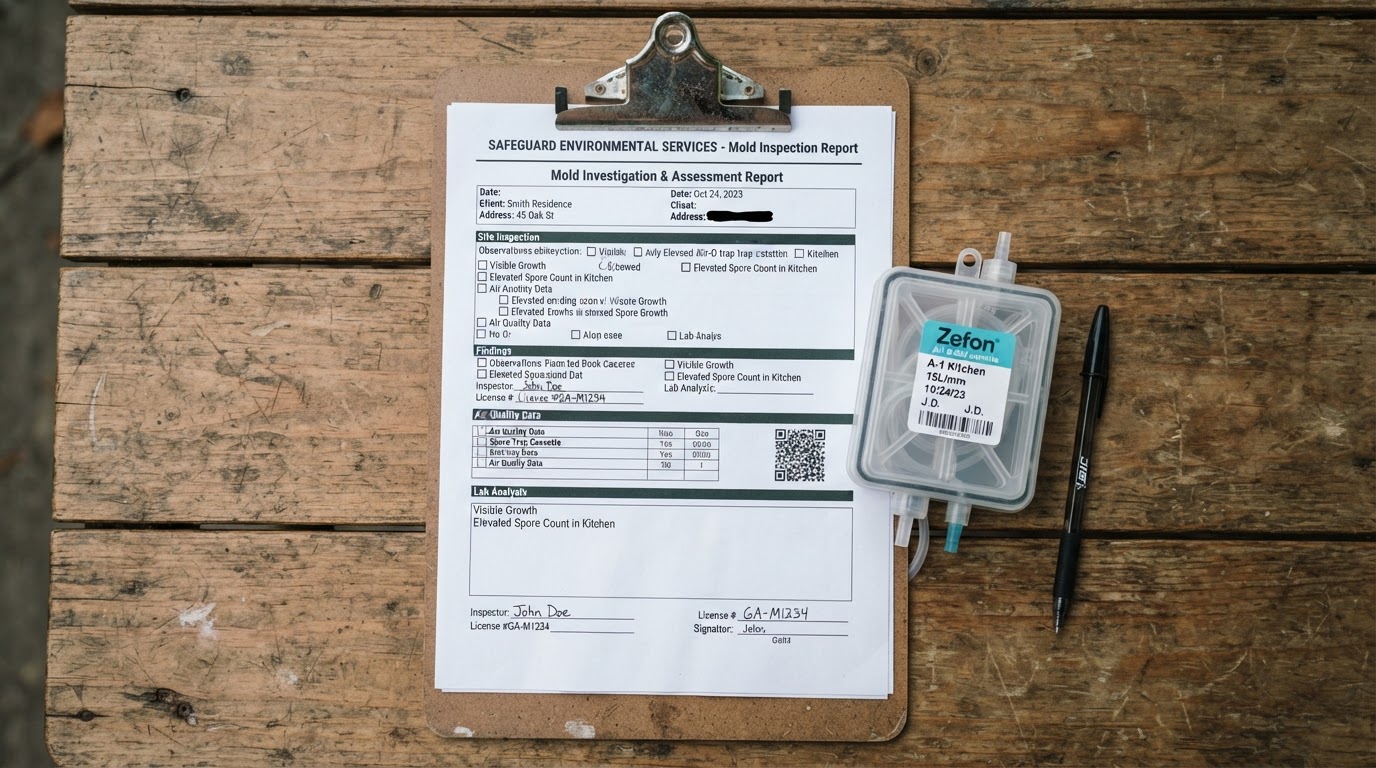
- Before buying a mid-century Oakland Park home.
Frequently asked questions
Why are mid-century homes more prone to mold?+
Aging roofs, original plumbing, and craftsmanship-era materials that hold moisture all increase risk. Slab foundations can also wick ground moisture into lower walls.
What is slab wicking and how does it cause mold?+
Ground moisture can move up through a concrete slab into bottom plates and lower drywall. Without a modern moisture barrier, this keeps lower walls damp enough for mold to grow.
Are cast iron drain lines a mold risk?+
They can be. Cast iron corrodes from the inside, and slow leaks under slabs or inside walls feed hidden mold. Recurring drain issues are worth investigating.
Should I test a mid-century home before buying it?+
Yes. Aging systems and slab construction add moisture paths. A pre-purchase inspection with moisture mapping can find hidden problems before you close.
Related resources
If you own or are buying a mid-century home in Oakland Park, connect with our recommended local mold testing provider for an assessment that includes slab-edge and wall-cavity moisture checks.
Need professional mold testing in South Florida?
Connect with our recommended local mold testing provider, MoldXperts, for an independent assessment.
Looking for professional mold testing in Fort Lauderdale? Connect with our recommended local mold testing provider. We may receive compensation when you contact our featured provider.
About this article
This article is published by Best Mold Testing Fort Lauderdale as an independent educational resource. It is reviewed for accuracy and reflects publicly available guidance from agencies including the EPA, CDC, and Florida DBPR. It is not a substitute for professional advice specific to your property.
Get mold prevention tips in your inbox
The South Florida Mold & Healthy Home Newsletter — practical, no spam.