Scheduled article — publishes on January 30, 2027. Not yet visible on the public blog feed.
Mold Testing in North Miami Beach: High-Rise Condos and Shared Systems
North Miami Beach's condo towers combine stacked plumbing, shared HVAC, and coastal humidity. Here is what condo owners should watch for.
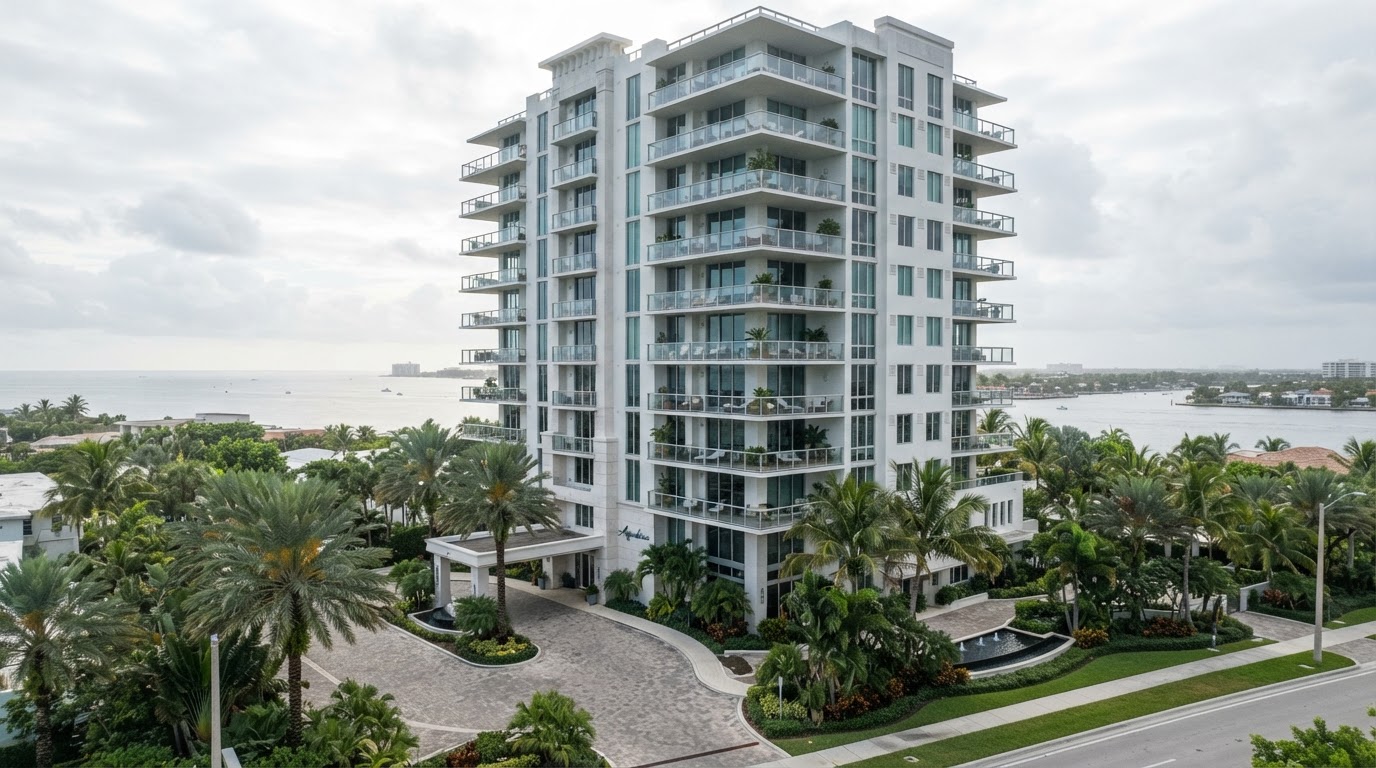
North Miami Beach's residential landscape is dominated by mid-rise and high-rise condominiums, many built in the 1970s–90s. These buildings combine the mold drivers of coastal South Florida with the shared-system risks of vertical construction. This article explains what condo owners in North Miami Beach should watch for and when testing makes sense.
Stacked plumbing in older towers
In a high-rise, plumbing risers run through shared walls from floor to floor. A slow leak in a unit above can travel down through the shared wall cavity and grow mold in your ceiling — even though the source is not yours. In older towers, aging risers and fixture seals make this pattern common.
Shared HVAC and ductwork
Buildings with central HVAC distribute air — and any mold in the system — to multiple units. Mold on rooftop coils or in shared ductwork can affect units far from the source. Testing can compare air upstream and downstream of the coil to determine whether the building's system is a contributor.
Coastal humidity and AC load
North Miami Beach's position near the coast keeps ambient humidity high, and the AC runs nearly year-round. Condensate systems work constantly, and failures — clogged lines, cracked pans — are the most common indoor moisture source in these buildings.
Warning signs for condo owners
- Water stains on the ceiling below the unit above.
- A musty smell strongest when the AC first turns on.
- Visible dark growth around a supply vent or air handler closet.
- A musty odor that persists after the AC has been serviced.
- A soft or discolored patch of ceiling drywall near a vent.
In a high-rise, your mold problem may not be your mold source. Stacked plumbing and shared HVAC mean the assessment has to look beyond your unit's walls.
Tracing a leak that starts above your unit
When a ceiling stain appears in a North Miami Beach condo, the instinct is to look for a leak inside the unit. In a high-rise, the source is often one or two floors up. A toilet seal, a supply line, or a drain riser joint in the unit above can weep into the shared wall cavity and travel down along the path of least resistance — sometimes surfacing as a stain far from the actual leak. Before you open your ceiling, document the stain, note whether it grows after the unit above uses water, and report it to the association in writing. An independent moisture assessment can map the wet path upward and confirm whether the source is yours or your neighbor's, which matters for responsibility and insurance.
- Photograph the stain and note whether it worsens after the unit above runs water.
- Report ceiling stains to the association in writing so there is a record of when it appeared.
- A moisture meter reading on the ceiling drywall confirms whether the material is still wet or has dried.
- If the source is above, the association typically owns the repair; if it is inside your unit, you do.
Rooftop coils and the building-wide airstream
Buildings with central or rooftop HVAC push conditioned air through a shared duct system to many units. If the rooftop coil is damp and dirty, mold can colonize the coil and the spores travel through the airstream into units far from the mechanical room. A musty smell that appears in several units at once — or that persists after each unit's own AC has been serviced — is a clue that the source is the building system, not the individual unit. Air sampling taken upstream and downstream of the coil, and in the affected units, can confirm whether the building's system is the contributor and whether coil cleaning or duct remediation is needed.
Seasonal vacancy in a coastal tower
Many North Miami Beach condo owners are seasonal residents who leave units vacant through the summer. A unit with the AC off or set high in a coastal tower will see indoor humidity climb above the mold threshold within days, and condensation settles on every cool surface — windows, walls, contents, and the inside of cabinetry. Because towers share walls and systems, a vacancy problem in one unit can raise humidity in adjacent units as well. Running the AC to hold humidity below 55%, or adding a dehumidifier with a continuous drain, is the single most effective prevention step for a seasonally vacant condo.
Prevention for condo owners
- Keep the condensate line clear and filters changed.
- Report ceiling stains to the association promptly and in writing.
- Know your unit's plumbing riser location.
- Keep indoor humidity below 50% with the AC and, if needed, a dehumidifier.
- Ask whether the building's HVAC coils and ducts are cleaned on a schedule.
When to test
- After a leak in your unit or the unit above.
- When a musty smell persists after AC service.
- When the association reports mold in shared systems.
- Before buying a condo in an older tower.
Frequently asked questions
Can mold from the unit above affect my condo?+
Yes. Plumbing risers run through shared walls, and a leak above can travel down and grow mold in your ceiling. A moisture inspection can trace the water path.
Can the building's shared HVAC spread mold to my unit?+
Yes. Mold on rooftop coils or in shared ductwork can be distributed through the airstream. Air sampling can compare levels upstream and downstream of the coil.
Are older North Miami Beach towers riskier?+
Generally yes. Buildings from the 1970s–90s have aging risers, fixture seals, and HVAC components, all of which increase leak and mold risk.
Should I test a condo before buying it in North Miami Beach?+
Yes. Shared systems, stacked plumbing, and building age all add moisture paths. A pre-purchase inspection can find hidden problems before you close.
Related resources
If you own or are buying a condo in North Miami Beach, connect with our recommended local mold testing provider for an assessment that includes the unit above and the building's shared systems.
Need professional mold testing in South Florida?
Connect with our recommended local mold testing provider, MoldXperts, for an independent assessment.
Looking for professional mold testing in Fort Lauderdale? Connect with our recommended local mold testing provider. We may receive compensation when you contact our featured provider.
About this article
This article is published by Best Mold Testing Fort Lauderdale as an independent educational resource. It is reviewed for accuracy and reflects publicly available guidance from agencies including the EPA, CDC, and Florida DBPR. It is not a substitute for professional advice specific to your property.
Get mold prevention tips in your inbox
The South Florida Mold & Healthy Home Newsletter — practical, no spam.


