Scheduled article — publishes on December 28, 2026. Not yet visible on the public blog feed.
Mold Testing in Lighthouse Point Waterfront Homes: Canal Living and Moisture
Lighthouse Point's canal-front homes face high water tables, seawall seepage, and aging custom roofs. Here is what waterfront homeowners should watch for.
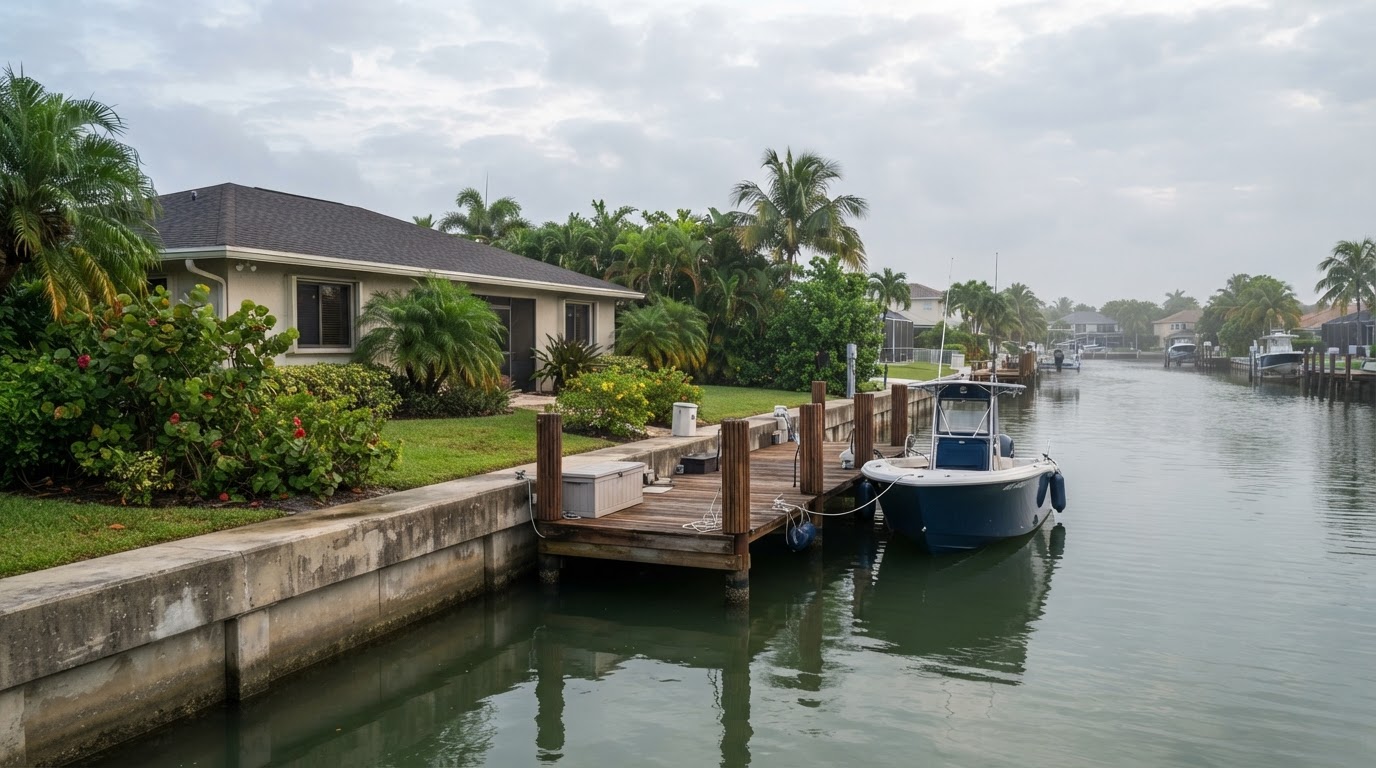
Lighthouse Point is a small waterfront community threaded with canals, with older custom homes and direct water access. Its canal geography creates a mold risk profile distinct from inland Broward: the highest water tables in the area, seawall-adjacent foundations, and custom roofs of widely varying age and condition. This article explains what waterfront homeowners in Lighthouse Point should watch for and when testing makes sense.
Why canal-front homes face higher mold risk
Homes directly on canals sit near saturated soil year-round. The water table is high, and during heavy rain, king tides, or storm surge, it rises further. That moisture pushes against slab foundations and seawalls, wicking into bottom plates, baseboards, and the lower drywall. Combined with coastal humidity and older custom roofs, the moisture paths multiply.
The three moisture paths in a canal-front home
Slab and seawall seepage
Water moves through soil toward the lowest pressure point — often the inside of your slab. During high water events, moisture wicks up through the slab edge and into bottom plates and drywall. Seawall-adjacent foundations are especially exposed. The result is damp baseboards and lower walls that look dry on the surface but stay wet inside.
Custom roof age
Lighthouse Point's older custom homes have roofs of varied design — tile, shingle, flat sections, valleys, skylights, and multiple penetrations. Each is a potential leak point, and custom roofs often leak at unusual locations that a standard inspection may miss. A slow leak wets the attic and travels down wall cavities.
Coastal humidity and AC corrosion
Canal-front humidity is high year-round, and salt-tinged air from the nearby intracoastal corrodes AC components faster than inland. Condensate leaks from corroded pans and clogged lines are a common indoor moisture source.
Warning signs for waterfront homeowners
- Damp or discolored baseboards and lower walls, especially after storms or king tides.
- A musty smell near the floor in rooms facing the canal.
- Water stains on ceilings near roof valleys, skylights, or penetrations.
- A musty smell when the AC runs, suggesting a condensate problem.
- Soft or warped flooring near exterior walls.
In a canal-front home, the moisture source is often below your feet or above your ceiling — not a visible leak in the middle of a wall. Testing maps both.
Seawall maintenance and the moisture path
On a canal-front lot, the seawall is the first line of defense between the canal and your foundation. A seawall with cracks, lost fill, or a failing cap lets water migrate toward the slab edge, and the moisture that reaches the foundation is what eventually wicks into bottom plates and lower drywall. Seawalls age, and many in older waterfront communities are decades past their design life. Inspecting the seawall for cracking, spalling, or soil loss behind it is part of managing canal-front moisture — not just a landscaping concern.
- Walk the seawall each season and look for vertical cracks, exposed rebar, or soil settling behind the cap.
- Standing water in the yard hours after a storm often signals that drainage near the seawall is failing.
- A seawall in poor condition keeps the soil behind it saturated, which feeds moisture toward the slab even between storms.
- If the seawall is failing, repairing it can reduce the chronic moisture that drives slab-edge mold.
King tides and the seasonal water table
South Florida's highest tides of the year — king tides — arrive each fall and temporarily raise canal levels and the surrounding water table by a foot or more. For a week or two each season, water sits closer to slab edges than at any other time of year. Lighthouse Point canal-front homes feel this directly: baseboards and lower walls may feel damp only during these tides and dry out afterward. Repeated tidal cycles, though, keep returning moisture to the same materials, and over a few seasons that recurring dampness is enough for mold to colonize behind the baseboard.
Custom roofs: more leak points than a standard roof
Custom homes in Lighthouse Point were often built with roofs designed to suit the architecture rather than a standard plan — mixing tile, shingle, and flat sections, with skylights, multiple valleys, and unusual penetrations. Each transition is a leak point, and custom roofs tend to leak at spots a standard roof does not have. A roof leak in a custom home can travel an unpredictable path down through the structure, surfacing as a stain far from where the water entered.
- Have every roof transition — valley, skylight, and penetration — inspected before hurricane season, not just the main field.
- A stain on an interior ceiling does not always sit below the roof leak; water can travel along framing before it appears.
- Custom roofs that mix materials fail at the transitions between materials first.
How testing helps waterfront homes
An independent assessor uses moisture meters on slab edges, baseboards, and lower walls to find wicking moisture, inspects the attic and roof for leaks at valleys and penetrations, checks the AC condensate system, and takes air samples to confirm whether mold has colonized any of the damp materials. This maps all three moisture paths in one visit.
When to test
- After any storm, king tide, or heavy rain that raised the canal level.
- When baseboards or lower walls feel damp or look discolored.
- After any roof leak, especially on an older custom roof.
- Before buying a canal-front home, given the combination of water tables and roof age.
Frequently asked questions
Can water wick up through a slab into my walls?+
Yes. In canal-front areas with high water tables, moisture can wick up through the slab edge into bottom plates and lower drywall. This keeps materials damp enough for mold to grow even without a visible leak.
Why do canal-front homes have more AC problems?+
Salt-tinged coastal air corrodes AC coils, condensate pans, and metal components faster than inland. Corroded pans crack and lines clog, creating indoor moisture sources.
Should I test before buying a Lighthouse Point canal-front home?+
Yes. The combination of high water tables, seawall exposure, and older custom roofs makes pre-purchase testing especially valuable. It can find hidden moisture before you close.
How often should I check for moisture after a storm?+
Check baseboards, lower walls, and slab edges within a few days of any storm, king tide, or heavy rain that raised the canal level. Early detection keeps cleanup small.
Related resources
If you own a canal-front home in Lighthouse Point and suspect hidden moisture, connect with our recommended local mold testing provider for an assessment that checks the slab, the attic, and everything between.
Need professional mold testing in South Florida?
Connect with our recommended local mold testing provider, MoldXperts, for an independent assessment.
Looking for professional mold testing in Fort Lauderdale? Connect with our recommended local mold testing provider. We may receive compensation when you contact our featured provider.
About this article
This article is published by Best Mold Testing Fort Lauderdale as an independent educational resource. It is reviewed for accuracy and reflects publicly available guidance from agencies including the EPA, CDC, and Florida DBPR. It is not a substitute for professional advice specific to your property.
Get mold prevention tips in your inbox
The South Florida Mold & Healthy Home Newsletter — practical, no spam.