Scheduled article — publishes on February 17, 2027. Not yet visible on the public blog feed.
Mold Testing in Lighthouse Point: Waterfront Homes and Intracoastal Humidity
Lighthouse Point's Intracoastal homes face salt air, high water tables, and constant AC load. Here is what waterfront homeowners should watch for.
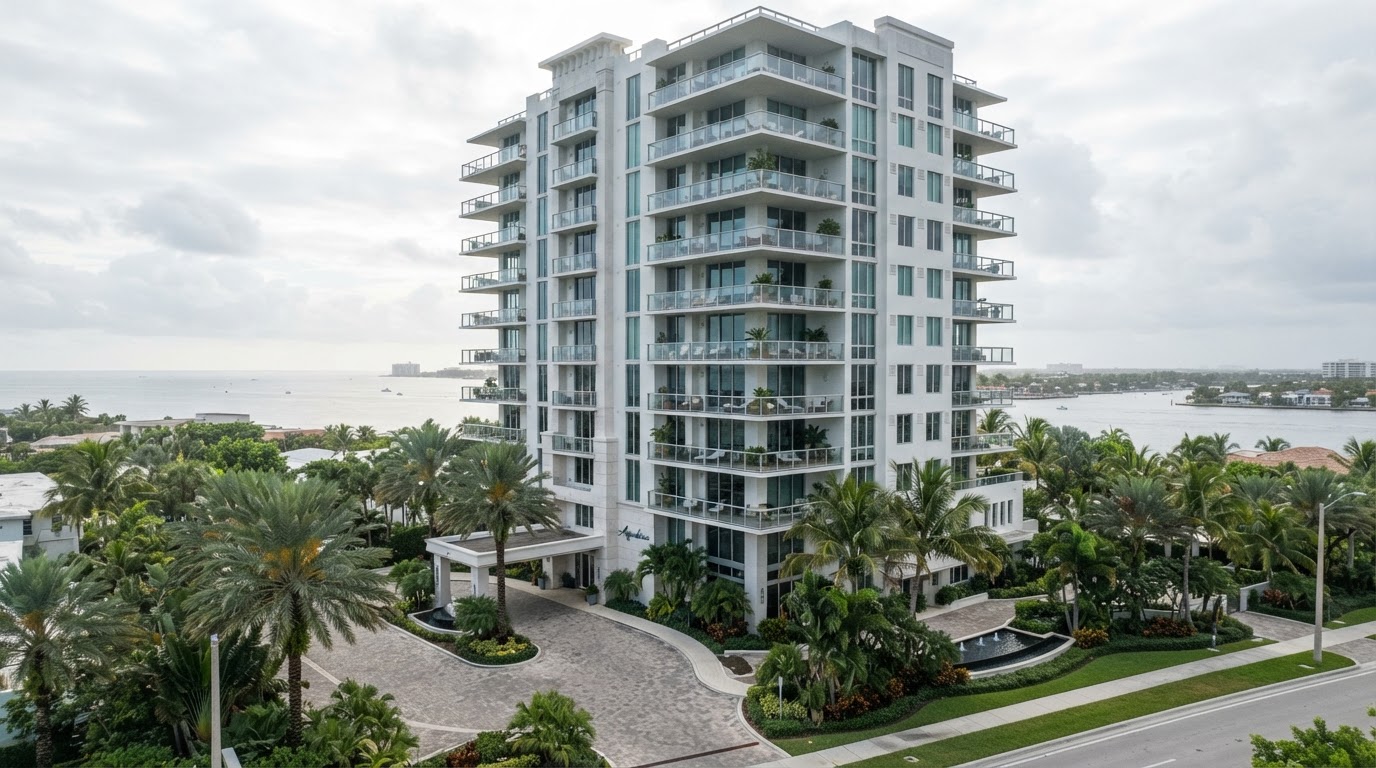
Lighthouse Point is a small, affluent city built around the Intracoastal Waterway, with canal-front and waterfront homes dominating its housing stock. Waterfront living brings specific mold drivers: salt air, high water tables, and the constant AC load that comes with coastal humidity. This article explains what is specific about mold risk in Lighthouse Point and when testing makes sense.
Salt air and AC corrosion
Homes close to the Intracoastal and the ocean beyond are exposed to salt-laden air that corrodes AC coils, condensate pans, and metal components faster than inland. Corroded pans crack and lines clog, making condensate failures the most common indoor moisture source in waterfront homes. Service intervals should be shorter than inland.
High water tables and slab dampness
Canal-front homes sit close to the water table. Ground moisture can wick up through slabs into bottom plates and lower drywall, especially during heavy rain when the canal network is full. Damp baseboards and lower walls are a classic waterfront sign.
Constant coastal AC load
Coastal humidity keeps the AC running nearly year-round. Condensate systems work continuously, and any failure is amplified by the constant operation. A condensate overflow in an air handler closet can soak drywall for weeks before anyone notices.
Warning signs for Lighthouse Point homeowners
- A musty smell when the AC turns on.
- Damp or discolored baseboards and lower walls.
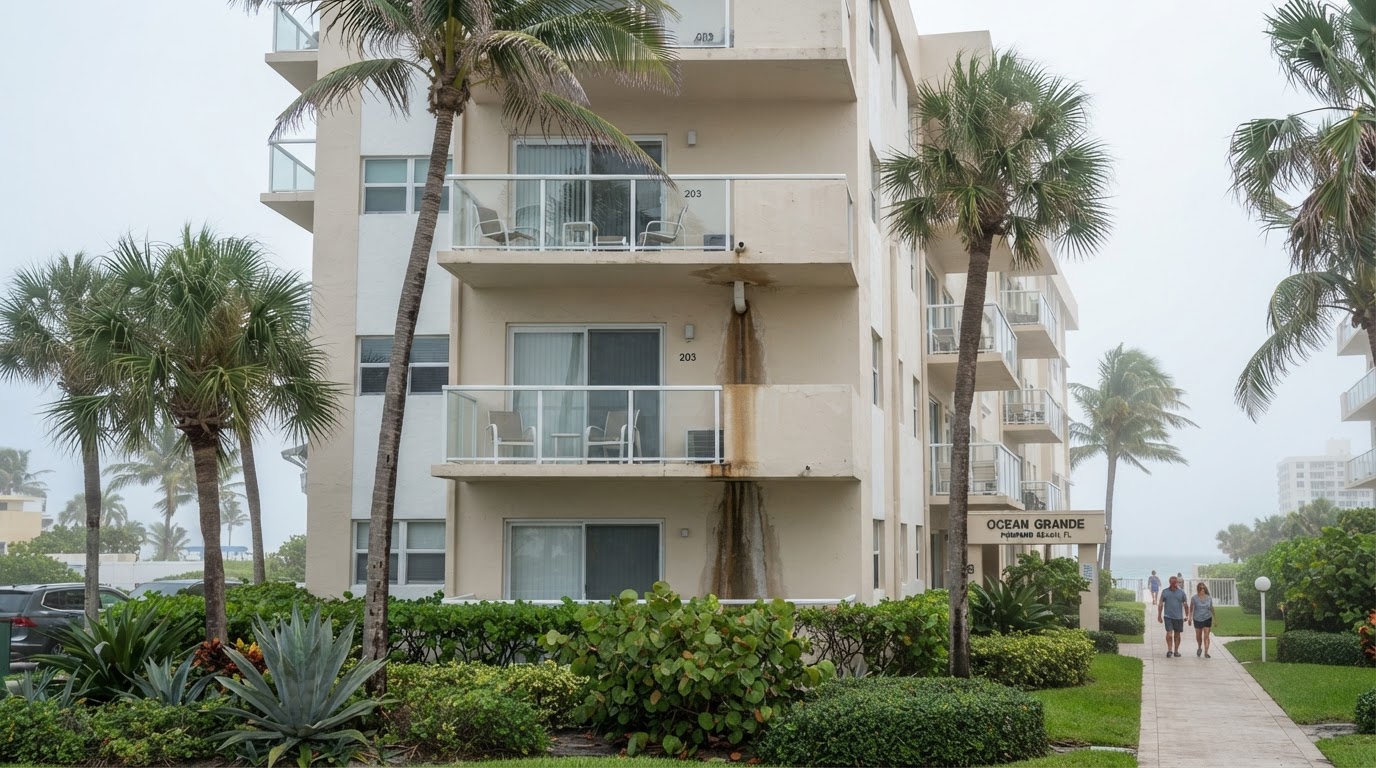
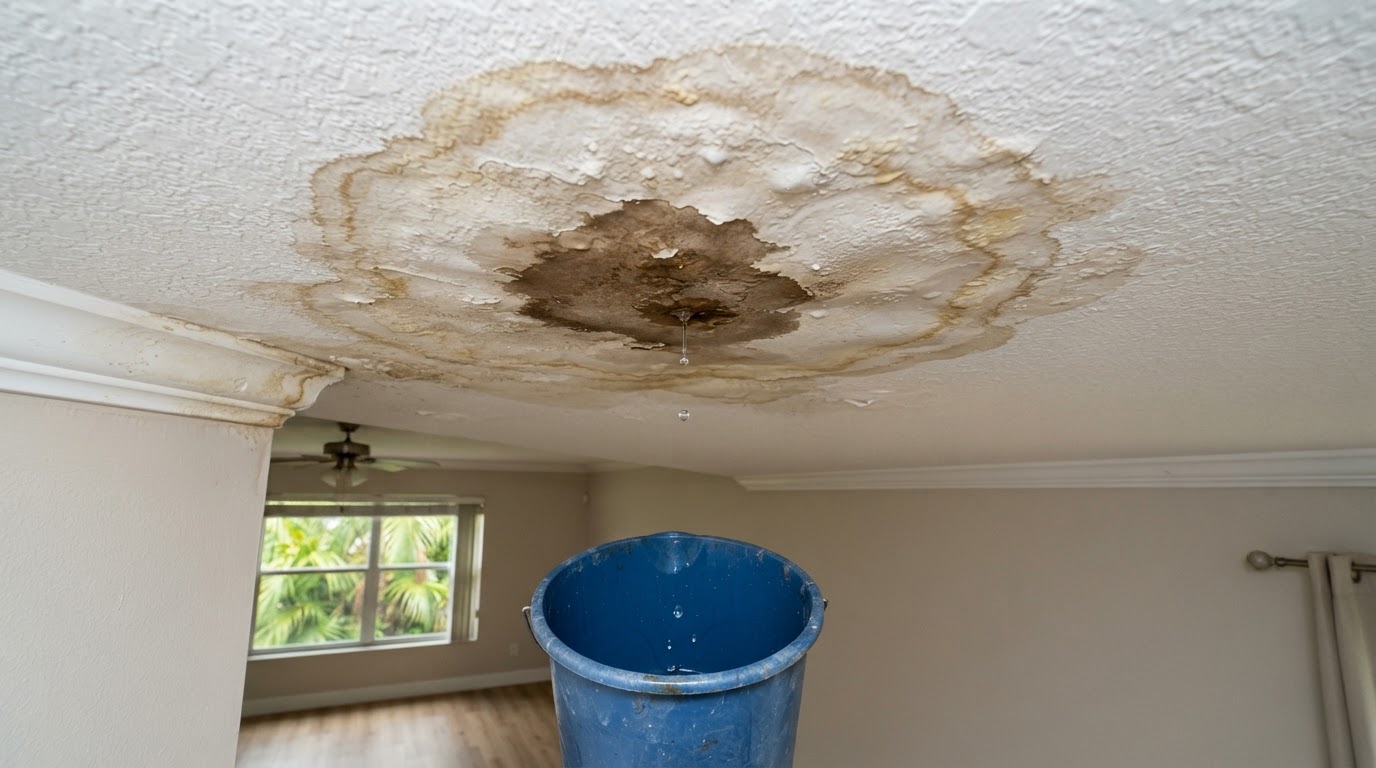
- Water stains on ceilings after storms.
- Visible corrosion on AC components.
- A musty odor that persists after AC service.
Waterfront living is a trade: the view for the salt air. The AC components corrode faster, the water table sits higher, and the humidity never lets up — all three feed mold risk.
Seawalls, bulkheads, and seepage at the foundation
Most Lighthouse Point waterfront homes sit behind a seawall or bulkhead that separates the yard from the canal or Intracoastal. A seawall in good condition holds the water back, but one that is aging, cracked, or losing its cap can weep groundwater toward the foundation — especially at high tide or after heavy rain when the water level on the canal side rises. That seepage saturates the soil against the slab and wicks moisture up into the foundation and lower walls. The first sign is usually baseboard or lower-wall discoloration on the side of the home facing the water, even when there is no roof leak and no plumbing issue. If your waterfront home has an older seawall, having it inspected by a marine contractor is as important to mold prevention as servicing the AC — because the water can come from the outside, not the inside.
- Discoloration on the water-facing wall's baseboards or lower drywall is often the first sign of seawall seepage.
- Seawall condition is a mold factor: a cracked or weeping wall lets groundwater migrate toward the slab.
- After a king tide or canal-high event, check the water-facing wall for new dampness.
- A marine contractor can assess seawall integrity; a moisture assessment can confirm whether the dampness has reached interior walls.
Docks, boat lifts, and equipment moisture
Many Lighthouse Point waterfront homes have private docks with boat lifts, and the electrical and mechanical equipment that runs them sits in a cabinet or enclosure near the water. That equipment is exposed to the same salt air and humidity as the home, and a corroded electrical box or a wet control panel can harbor mold that migrates toward the house on airflow. More commonly, the dock area itself — wet boards, ropes, and stored gear — supports mold that releases spores near the home's water-facing doors and windows. Keeping dock equipment in a sealed, ventilated cabinet and storing absorbent gear in a dry location reduces the spore load near the home's entry points.
Wind-driven rain on the waterfront facade
Waterfront homes in Lighthouse Point take the full force of prevailing winds off the Intracoastal, and during storms that wind drives rain horizontally against the facade. Window seals, sliding-door tracks, and stucco cracks on the water-facing wall are the most common entry points for wind-driven rain, and the moisture that gets past them settles into the wall cavity — out of sight. A wall that dries within a day after a storm is usually fine; one that stays damp or shows a recurring musty smell after storms may have water trapped in the cavity. The water-facing wall is always the one to inspect first after any storm with wind from the east or southeast.
Prevention for waterfront homeowners
- Service AC condensate systems every six months near the water.
- Keep indoor humidity below 50% and monitor with a hygrometer.
- Check baseboards and lower walls for dampness after heavy rain and king tides.
- Inspect roof flashing and window seals before storm season, especially on the water-facing wall.
- Keep the condensate line clear and filters changed.
- Have older seawalls inspected by a marine contractor for cracks and seepage.
When to test
- After a condensate overflow or any leak.
- When lower walls feel damp, especially on the water-facing side after heavy rain.
- When a musty odor persists after AC service.
- Before buying a waterfront home, given the corrosion and water-table exposure.
Frequently asked questions
Why do waterfront AC systems fail more often?+
Salt-laden air corrodes coils, condensate pans, and metal components much faster than inland air. Corroded pans crack and lines clog, creating indoor moisture sources.
How often should a waterfront AC be serviced?+
Every six months is reasonable near the water, versus annually inland. The condensate pan, line, and coil should be checked at every service.
Can a seawall affect indoor mold?+
Yes. A cracked or weeping seawall lets groundwater migrate toward the slab, and that moisture can wick up into lower walls. The water-facing wall is the first place to check.
Does living on a canal increase mold risk?+
It can. Canal-front homes sit close to the water table, and ground moisture can wick up through slabs into lower walls, especially during heavy rain.
Should I test a waterfront home before buying it?+
Yes. Salt-air corrosion, high water tables, seawall condition, and constant AC load all add moisture paths. A pre-purchase inspection is especially valuable on waterfront property.
Related resources
If you own or are buying a waterfront home in Lighthouse Point, connect with our recommended local mold testing provider for an assessment that includes AC corrosion, seawall-related seepage, and slab moisture checks.
Need professional mold testing in South Florida?
Connect with our recommended local mold testing provider, MoldXperts, for an independent assessment.
Looking for professional mold testing in Fort Lauderdale? Connect with our recommended local mold testing provider. We may receive compensation when you contact our featured provider.
About this article
This article is published by Best Mold Testing Fort Lauderdale as an independent educational resource. It is reviewed for accuracy and reflects publicly available guidance from agencies including the EPA, CDC, and Florida DBPR. It is not a substitute for professional advice specific to your property.
Get mold prevention tips in your inbox
The South Florida Mold & Healthy Home Newsletter — practical, no spam.