Scheduled article — publishes on February 26, 2027. Not yet visible on the public blog feed.
Mold Testing in Hollywood, Florida: Beachside Homes and the Broadwalk Climate
Hollywood's beachside neighborhoods face salt air and coastal humidity; inland areas face storm drainage. Here is what local homeowners should know.
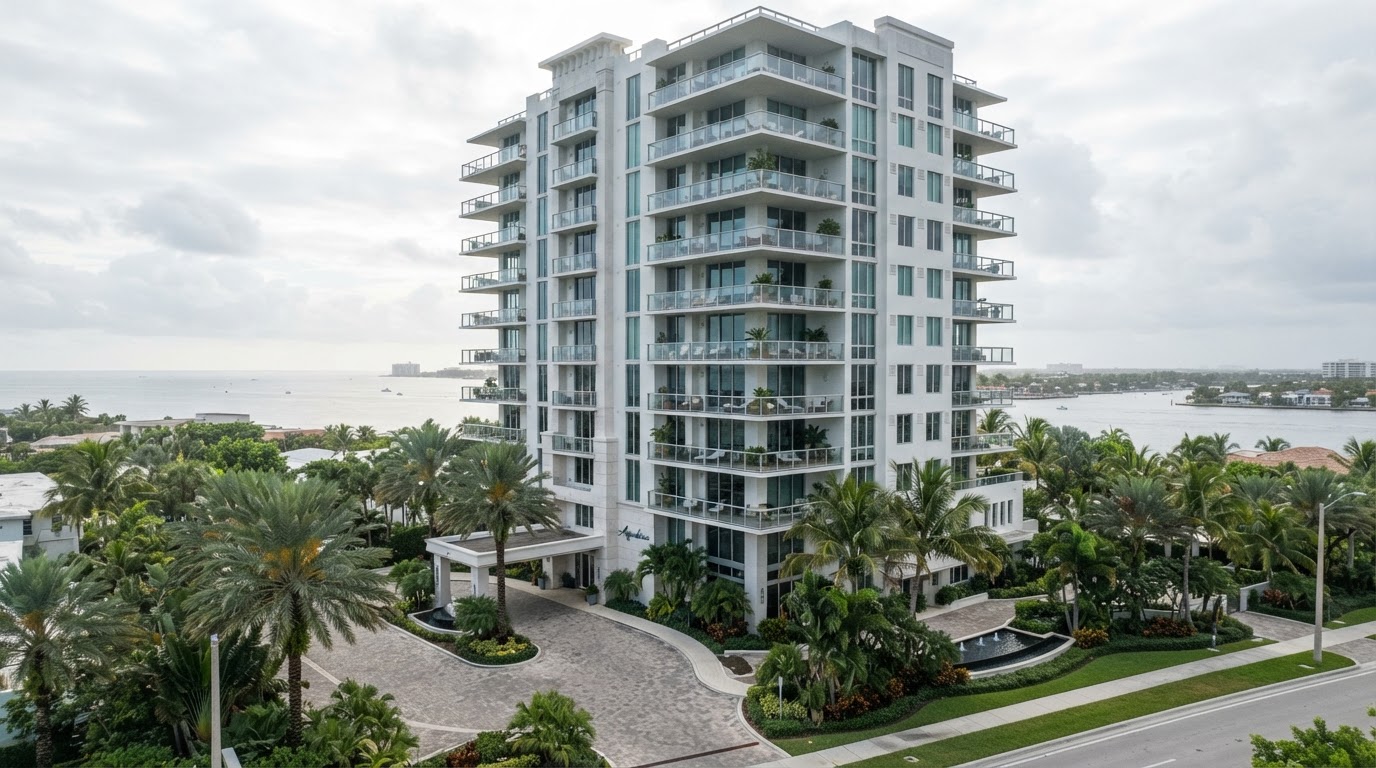
Hollywood spans from the beach and Broadwalk to inland neighborhoods near the Hard Rock corridor, giving it two distinct mold risk profiles in one city. Beachside homes face salt air and constant coastal humidity; inland areas face intense afternoon storms and drainage challenges. This article explains what is specific about mold risk in Hollywood and when testing makes sense.
Beachside: salt air and AC corrosion
Homes and condos east of A1A are exposed to salt-laden air that corrodes AC coils, condensate pans, and metal components faster than inland. Corroded pans crack and lines clog, making condensate failures the most common indoor moisture source in beachside properties. Service intervals should be shorter than inland.
Inland: storm intensity and drainage
Inland Hollywood gets intense afternoon thunderstorms that test roof flashing, window seals, and gutters. The city's canal network manages stormwater but keeps water tables high, and homes in lower-lying areas face seepage toward foundations in heavy rain.
Condo towers and shared systems
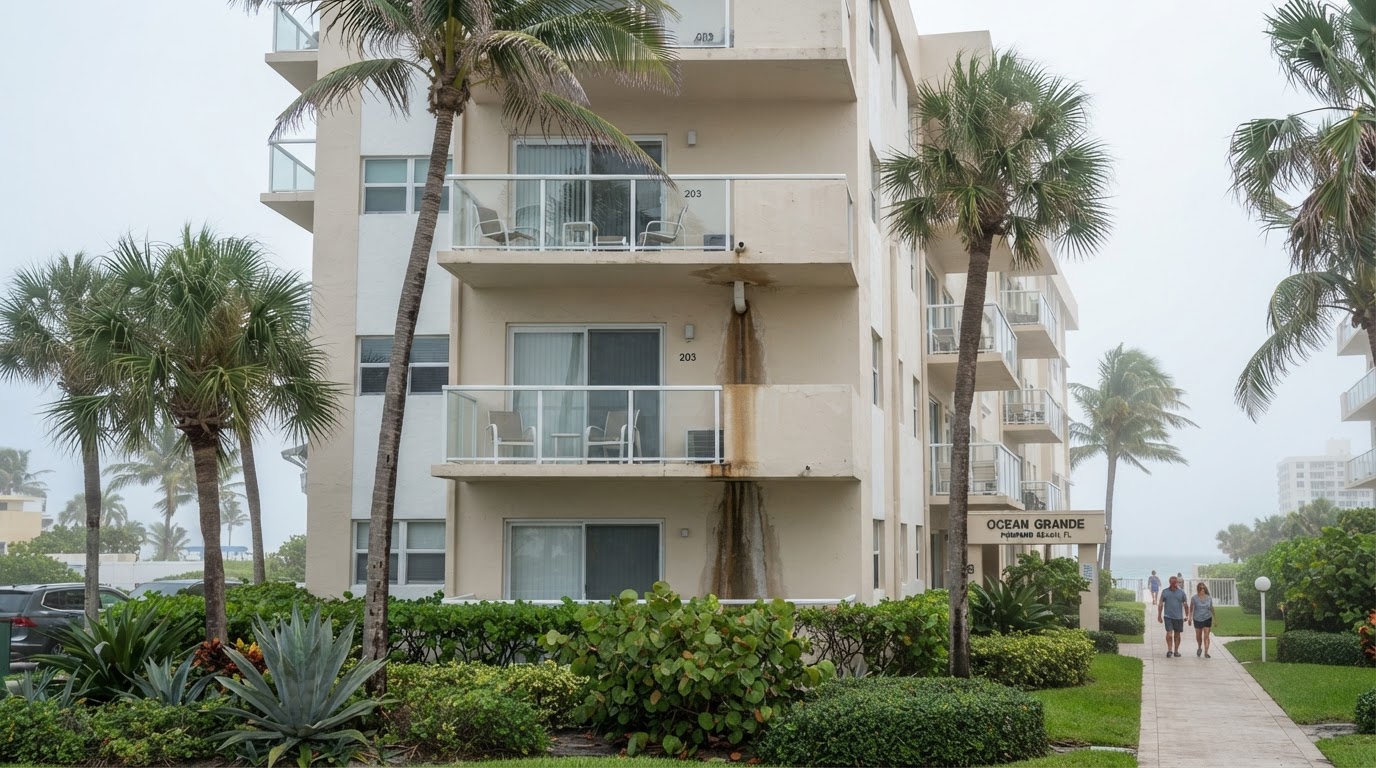
Hollywood's beachside condo towers share the stacked-plumbing and shared-HVAC risks of any vertical construction. A leak in a unit above can travel down through shared wall cavities, and building-wide HVAC can distribute mold from a single source to multiple units.
Warning signs for Hollywood homeowners
- A musty smell when the AC turns on.
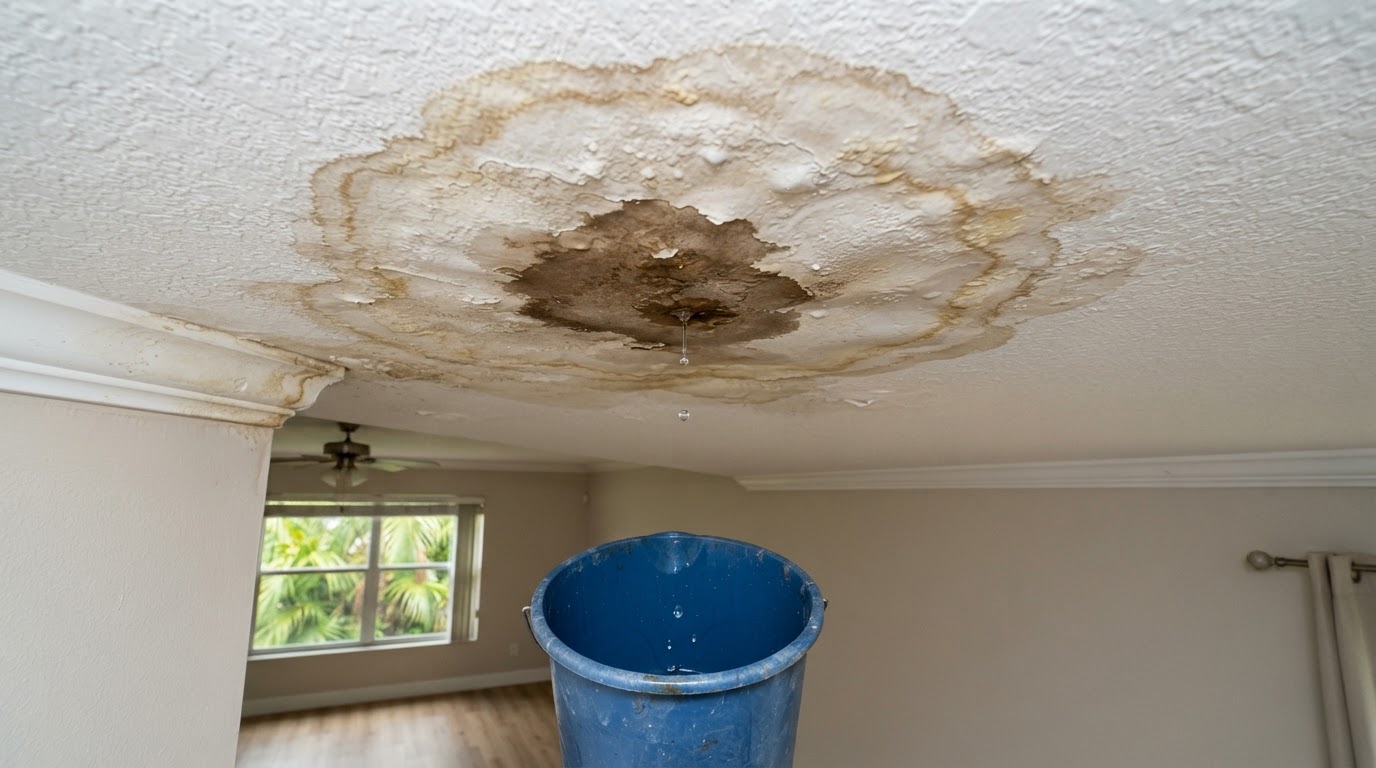
- Water stains on ceilings after storms.
- Damp or discolored baseboards and lower walls, especially inland.
- Visible corrosion on AC components, especially beachside.
- Water stains on the ceiling below the unit above in condos.
Hollywood has two mold climates in one city. East of A1A, salt air corrodes the AC; west of the beach, storms and drainage test the envelope. Know which profile your home faces.
The Broadwalk corridor and onshore wind
The Hollywood Broadwalk runs along the beach for nearly two and a half miles, and the homes and condos immediately west of it take the full force of onshore winds off the ocean. During storms and even on breezy afternoons, that wind drives humid, salt-laden air horizontally against the east-facing facades — the wall that faces the beach. Window seals, sliding-door tracks, and balcony enclosure joints on the east face are the most common entry points for wind-driven moisture, and condensation on the east-facing windows of a beachside condo is a daily occurrence for much of the year. The east-facing wall is the one to inspect first for moisture intrusion in any beachside Hollywood property, because it takes the wind and salt that the rest of the home is sheltered from.
- East-facing facades take onshore wind and salt — inspect them first for seal and flashing failures.
- Daily condensation on east-facing windows is normal, but recurring condensation that never dries is a warning sign.
- Balcony enclosure joints and sliding-door tracks on the beach side are the most common moisture entry points.
- A beachside AC that needs service twice a year is normal — the salt air is the reason.
Inland lakes, drainage swales, and the lower-lying pockets
Inland Hollywood has a network of lakes and drainage swales that manage stormwater, and the homes near those features sit in some of the city's lower-lying pockets. During the rainy season, the lakes and swales rise with runoff and the soil against the foundations in those areas stays saturated between storms. The pattern in these homes is baseboard and lower-wall dampness that appears when the rains start and lingers through the fall — not a roof leak, but the local water table. If your inland Hollywood home is near a lake or drainage swale and the lower walls dampen every summer, the source is likely the ground, not the roof, and the fix is grading, downspout management, and dehumidification rather than roof repair. Testing can confirm whether the moisture is slab wicking before you spend on the wrong fix.
The Hollywood Hills and older rooflines
Hollywood's older inland neighborhoods — Hollywood Hills, Liberia, and the historic districts — have some of the city's most characterful homes, with mature tree canopy and rooflines from the 1950s through the 1970s. The mature canopy shades roofs so they stay damp longer, drops debris into valleys and gutters that clogs drainage, and the older rooflines — many with original or near-original materials — leak at flashings and penetrations long before the interior shows a stain. A roof under heavy canopy that has not been cleaned in a year is a leak waiting for the next storm, and the moisture that gets past the flashing travels down the wall cavity before it appears on the ceiling. Before storm season, clear the valleys and gutters and have any roof under mature canopy inspected for flashing condition.
Prevention for Hollywood homeowners
- Beachside: service AC condensate systems every six months.
- Inland: check roof flashing, window seals, and gutters before storm season.
- Keep indoor humidity below 50% and monitor with a hygrometer.
- In condos, report ceiling stains to the association promptly.
- Keep the condensate line clear and filters changed.
- Clear roof valleys and gutters under mature canopy before storm season.
When to test
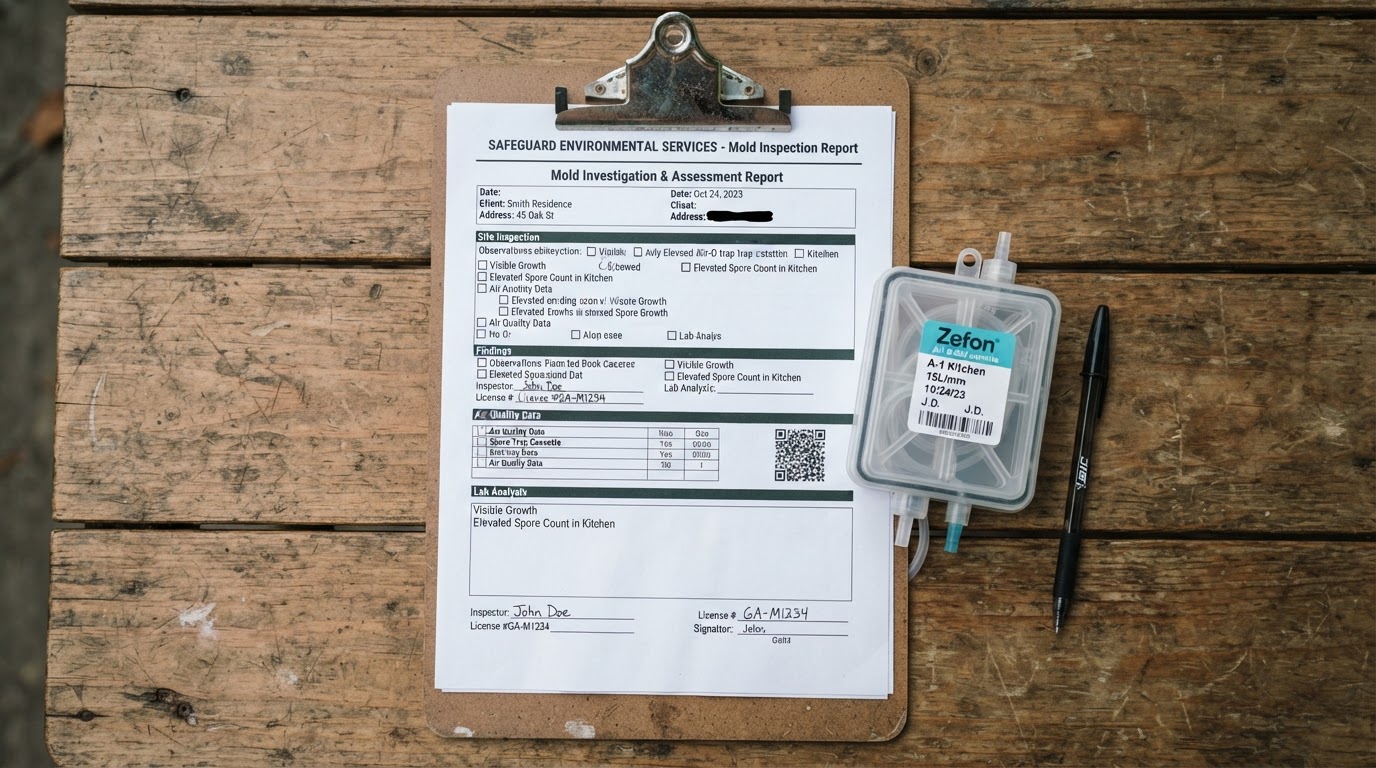
- After a condensate overflow or any leak.
- After storm-related water intrusion, especially on an east-facing beachside wall.
- When a musty odor persists after AC service.
- When lower walls dampen near lakes or drainage swales during the rainy season.
- Before buying a Hollywood home or condo, given the two distinct risk profiles.
Frequently asked questions
Is mold risk different beachside vs. inland in Hollywood?+
Yes. Beachside properties face salt-air AC corrosion and constant coastal humidity, especially on east-facing walls. Inland properties face intense storms and drainage-related moisture. Both climates keep humidity high.
How often should a beachside AC be serviced?+
Every six months is reasonable near the ocean, versus annually inland. The condensate pan, line, and coil should be checked at every service.
Can mold spread through a Hollywood condo building's shared HVAC?+
Yes. Mold on rooftop coils or in shared ductwork can be distributed through the airstream to multiple units. Air sampling can compare levels across the system.
Why do my lower walls dampen every summer even with no roof leak?+
Inland Hollywood has lakes and drainage swales that keep the water table high. Recurring seasonal lower-wall dampness near those features is often slab wicking, not a leak — the fix is drainage and dehumidification.
Should I test a Hollywood home before buying it?+
Yes. The two distinct risk profiles — salt air and storm drainage — are worth checking. A pre-purchase inspection can confirm moisture is managed before you close.
Related resources
If you own or are buying a home or condo in Hollywood, connect with our recommended local mold testing provider for an assessment matched to your property's beachside or inland risk profile.
Need professional mold testing in South Florida?
Connect with our recommended local mold testing provider, MoldXperts, for an independent assessment.
Looking for professional mold testing in Fort Lauderdale? Connect with our recommended local mold testing provider. We may receive compensation when you contact our featured provider.
About this article
This article is published by Best Mold Testing Fort Lauderdale as an independent educational resource. It is reviewed for accuracy and reflects publicly available guidance from agencies including the EPA, CDC, and Florida DBPR. It is not a substitute for professional advice specific to your property.
Get mold prevention tips in your inbox
The South Florida Mold & Healthy Home Newsletter — practical, no spam.