Scheduled article — publishes on June 17, 2027. Not yet visible on the public blog feed.
What a Waterfront Home Inspection Should Include in Fort Lauderdale
Waterfront homes in Fort Lauderdale face moisture paths that standard inspections miss. Here is what a proper waterfront inspection covers.
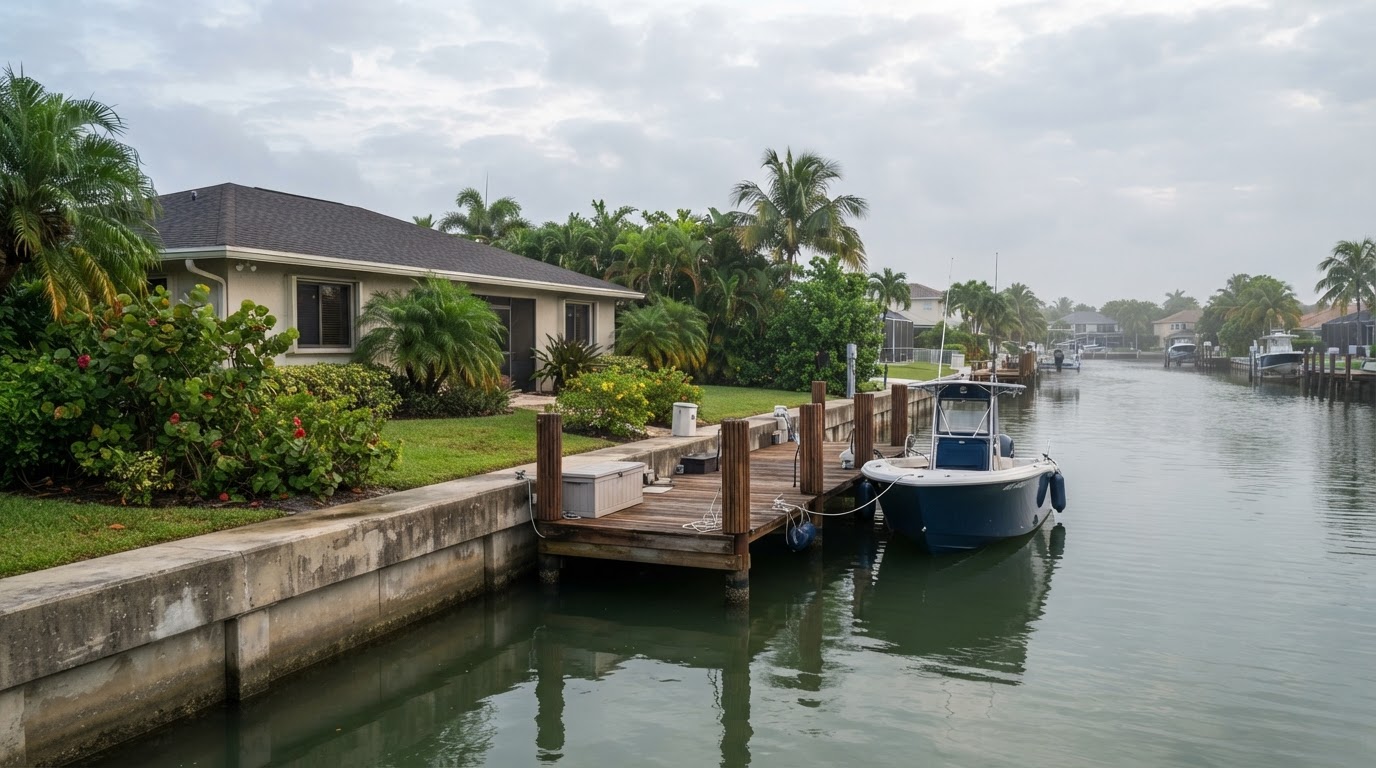
Waterfront homes in Fort Lauderdale — canal-front, riverfront, and Intracoastal — face moisture paths that a standard home inspection does not fully cover. This article explains what a proper waterfront inspection should include and when professional mold testing adds value.
Slab and lower-wall moisture
Waterfront homes sit close to the water table. Ground moisture can wick up through slabs into bottom plates and lower drywall, especially during heavy rain and king tides. A proper inspection includes moisture readings at the slab edge and lower walls — not just a visual check.
Salt-air AC corrosion
Homes near the water are exposed to salt-laden air that corrodes AC coils, condensate pans, and metal components faster than inland. The inspection should include the condensate pan, line, and coil — and note visible corrosion, which predicts future failures.
Seawall and dock proximity
Homes with seawalls and docks have additional moisture dynamics: water against the seawall keeps the adjacent ground saturated, and dock hardware can channel water toward the structure. The inspection should note the seawall condition and any moisture path from the water side.
What a standard inspection misses
- Moisture inside wall cavities (needs moisture meters and thermal imaging).
- Mold growth behind walls or under flooring (needs sampling).
- The extent of any existing contamination (needs lab analysis).
- Whether the moisture source is active or historical (needs professional assessment).
A waterfront home's moisture risk comes from below, outside, and above — the slab, the salt air, and the roof. A standard inspection checks one of the three.
When to add professional mold testing
- Any visible staining, musty odor, or damp lower walls.
- Visible AC corrosion or a history of condensate failures.
- The home has been vacant, especially with the AC off.
- Before closing, so findings can be negotiated.
Frequently asked questions
What does a waterfront inspection include that a standard one does not?+
Moisture readings at the slab edge and lower walls, AC corrosion assessment, seawall condition, and water-side moisture paths. Standard inspections are largely visual.
Why is slab moisture a waterfront concern?+
Waterfront homes sit close to the water table. Ground moisture wicks up through slabs into lower walls, especially during heavy rain and king tides.
Does salt air really affect AC systems?+
Yes. Salt-laden air corrodes coils, condensate pans, and metal components much faster than inland air, making condensate failures more common.
Should I add mold testing to a waterfront purchase?+
Yes, especially with any staining, odor, corrosion, or vacancy history. A pre-purchase assessment documents conditions before you close.
Related resources
If you are buying a waterfront home in Fort Lauderdale, connect with our recommended local mold testing provider for an assessment that covers the slab, the salt air, and the roof.
Need professional mold testing in South Florida?
Connect with our recommended local mold testing provider, MoldXperts, for an independent assessment.
Looking for professional mold testing in Fort Lauderdale? Connect with our recommended local mold testing provider. We may receive compensation when you contact our featured provider.
About this article
This article is published by Best Mold Testing Fort Lauderdale as an independent educational resource. It is reviewed for accuracy and reflects publicly available guidance from agencies including the EPA, CDC, and Florida DBPR. It is not a substitute for professional advice specific to your property.
Get mold prevention tips in your inbox
The South Florida Mold & Healthy Home Newsletter — practical, no spam.