Scheduled article — publishes on November 28, 2026. Not yet visible on the public blog feed.
Mold Testing After a Hurricane in Fort Lauderdale: A Homeowner's Checklist
Wind-driven rain and power outages make mold a race against the clock after a Fort Lauderdale storm. Here is what to check, in what order, and when to test.
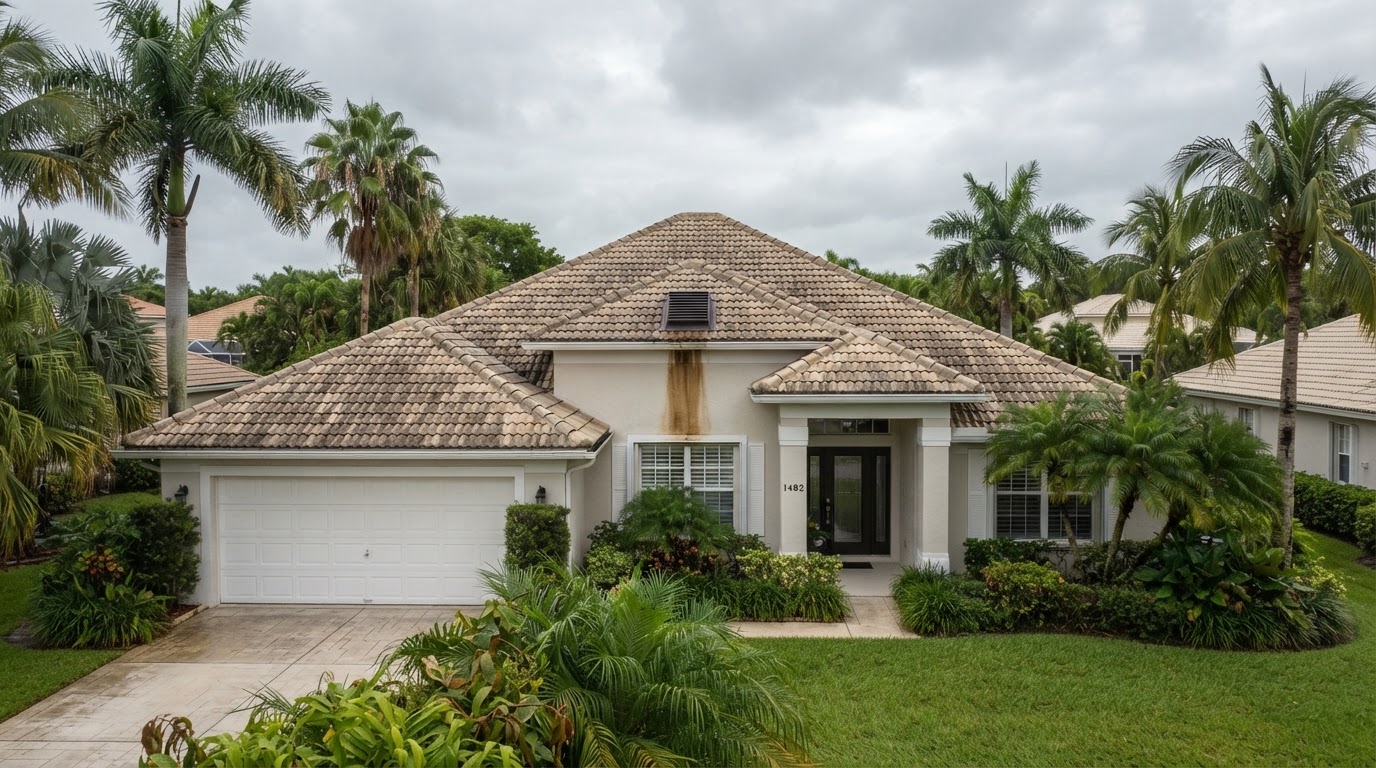
A hurricane does not have to flood your Fort Lauderdale home to create a mold problem. Wind-driven rain pushes water through roof vents, around windows, and through slab edges, and a power outage that shuts down your air conditioning lets indoor humidity spike within hours. What you do in the first few days after a storm often determines whether you face a small cleanup or a major remediation.
Why storms create mold risk even without flooding
Mold needs moisture, warmth, and a food source — and a South Florida home supplies all three the moment water gets in. The two storm-specific triggers are wind-driven rain intrusion and the loss of dehumidification when the AC stops. Either one can start the clock on mold growth within 24 to 48 hours.
The 72-hour post-storm checklist
0–24 hours: Find the water
- Walk the attic and check around roof vents, flashing, and the underside of the roof deck for new water staining.
- Inspect around windows and sliding glass doors for water tracks on the sill or drywall below.
- Check exterior walls and slab edges for signs of water entry, especially on the windward side of the home.
- If the power is out, open the home to airflow if outdoor humidity is lower than indoor, or run a generator-powered dehumidifier.
24–48 hours: Dry everything that got wet
This is the critical window. The EPA recommends drying water-damaged materials within 24 to 48 hours to prevent mold growth. Anything still damp at 48 hours is a candidate for professional attention.
- Pull wet carpet padding — it rarely dries in time and is usually discarded.
- Direct fans into any wall cavity, closet, or cabinet that got wet.
- Photograph every water stain and wet material before you remove it for insurance documentation.
- Once power returns, run the AC and dehumidifiers to pull indoor humidity back below 50%.
48–72 hours: Decide whether to test
If water sat in a wall cavity, soaked insulation, or you cannot confirm an area is fully dry, professional moisture mapping and testing is worth it before the problem spreads. An independent assessor can find damp materials behind the surface that a visual check misses.
The homes that avoid post-storm mold are the ones that dried wet materials within the first 48 hours. The ones that need remediation usually waited, or never found the water that got in.
The power-outage problem
When the AC is off for days, it stops dehumidifying. Indoor relative humidity can climb above 70% in a Fort Lauderdale home with no cooling, and condensation settles on every cool surface — walls, ceilings, furniture. Even with no water intrusion, a multi-day outage can trigger mold growth on contents and drywall. When power returns, run the AC continuously and verify humidity drops below 50% within a day.
Fort Lauderdale housing stock and storm vulnerability
Fort Lauderdale's housing spans several eras, and each ages into storm vulnerability differently. Knowing where your home falls helps you anticipate which failure points to check first after a storm.
- Mid-century homes in Rio Vista, Victoria Park, and Coral Ridge often have original or aging flat roofs and single-pane windows that leak at frames during wind-driven rain.
- 1970s–80s concrete-block homes common across the city reach the end of roof and AC life simultaneously — a double moisture source after a storm.
- Newer construction west of I-95 has tighter building envelopes that trap humidity if the AC stops, raising condensation risk during outages even without water intrusion.
- Canal-front and Intracoastal homes face storm surge and elevated water tables that push moisture up through slabs long after the storm passes.
Documenting damage for insurance
If you will file a claim, documentation is everything. Insurance adjusters work from evidence, and the more precisely you record the moisture source and timeline, the smoother the claim. Photograph every water stain, wet material, and damaged item before you remove it, and keep a written log of when the storm hit, when power was lost and restored, and when you found each issue.
- Photograph water intrusion at its source — roof vents, window frames, slab edges — not just the resulting stain.
- Keep receipts for dehumidifier rental, fans, tarps, and any emergency drying work.
- Note the date and time power was lost and restored; a long outage strengthens a humidity-damage claim.
- If you hire professional testing, request a written report with moisture readings and lab results — this is the documentation an adjuster can act on.
The homes that avoid post-storm mold are the ones that dried wet materials within the first 48 hours. The ones that need remediation usually waited, or never found the water that got in.
When to call for testing
- Water entered a wall, ceiling, or floor cavity you cannot fully dry.
- A musty odor appears in the days after a storm.
- The power was out long enough for humidity to spike, even without visible water.
- You are filing an insurance claim and need documentation of the moisture source and any resulting growth.
Frequently asked questions
Can mold grow after a storm even if my home did not flood?+
Yes. Wind-driven rain enters through roof vents, window seals, and slab edges, and a power outage that stops the AC lets indoor humidity spike. Both can start mold growth within 24 to 48 hours without any standing water.
How soon after a hurricane should I test for mold?+
If you find and fully dry all wet materials within 48 hours, testing may not be needed. If water sat in a wall cavity or you cannot confirm an area is dry, schedule testing within the first week, before growth spreads.
Does homeowners insurance cover post-storm mold testing?+
It depends on your policy and the source of the water. Damage from wind-driven rain during a covered storm is more likely to be covered than damage from long-term humidity. Document the cause thoroughly and check your policy.
Can a power outage alone cause mold?+
Yes. Without the AC dehumidifying, indoor humidity can rise above the mold threshold and condensation settles on surfaces. Running the AC and dehumidifiers as soon as power returns is the best prevention.
Related resources
If your Fort Lauderdale home took on water or lost power during a storm, connect with our recommended local mold testing provider for an independent post-storm assessment before the problem spreads.
Need professional mold testing in South Florida?
Connect with our recommended local mold testing provider, MoldXperts, for an independent assessment.
Looking for professional mold testing in Fort Lauderdale? Connect with our recommended local mold testing provider. We may receive compensation when you contact our featured provider.
About this article
This article is published by Best Mold Testing Fort Lauderdale as an independent educational resource. It is reviewed for accuracy and reflects publicly available guidance from agencies including the EPA, CDC, and Florida DBPR. It is not a substitute for professional advice specific to your property.
Get mold prevention tips in your inbox
The South Florida Mold & Healthy Home Newsletter — practical, no spam.


