Scheduled article — publishes on December 13, 2026. Not yet visible on the public blog feed.
Condo Mold in Hallandale Beach High-Rises: Shared Systems and Seasonal Vacancy
Hallandale Beach's high-rise towers face mold from shared HVAC, stacked plumbing, and seasonal vacancy. Here is what condo owners should watch for and when to test.
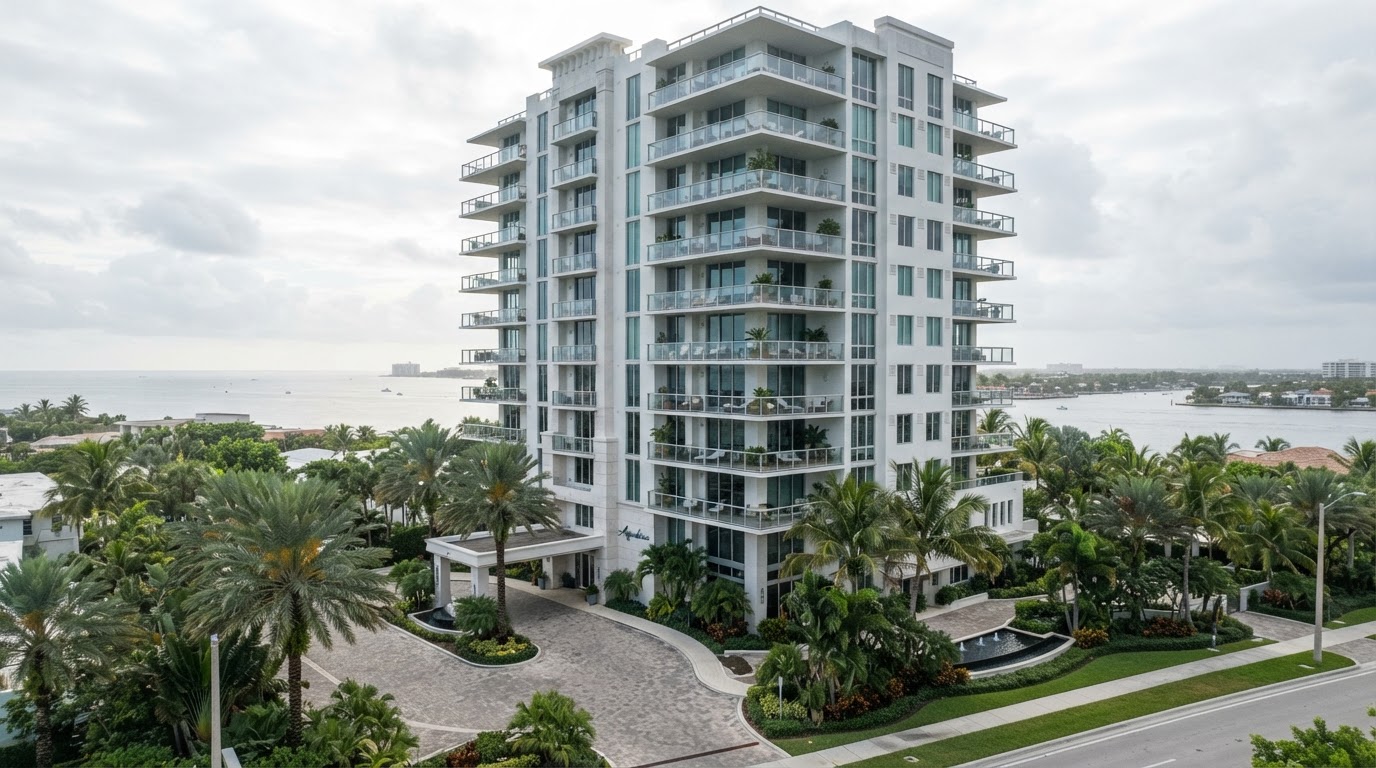
Hallandale Beach is dominated by high-rise condominium towers, many built in the 1970s–2000s and occupied seasonally. That combination — shared rooftop HVAC, stacked plumbing, and months of vacancy with the AC off — makes it one of the most mold-prone housing types in Broward County. This article explains what condo owners in Hallandale Beach should watch for and when testing makes sense.
The three mold drivers in Hallandale Beach condos
Condominium living multiplies mold risk because you share infrastructure with neighbors and depend on systems you do not fully control. In Hallandale Beach, three factors dominate.
Seasonal vacancy
Many owners leave for the summer with the AC off or set high. Without dehumidification, indoor humidity spikes above 70%, and condensation settles on every cool surface — walls, ceilings, furniture, and clothing. Mold can grow on contents and drywall even with no water leak. This is the single most common mold driver in this market.
Stacked plumbing
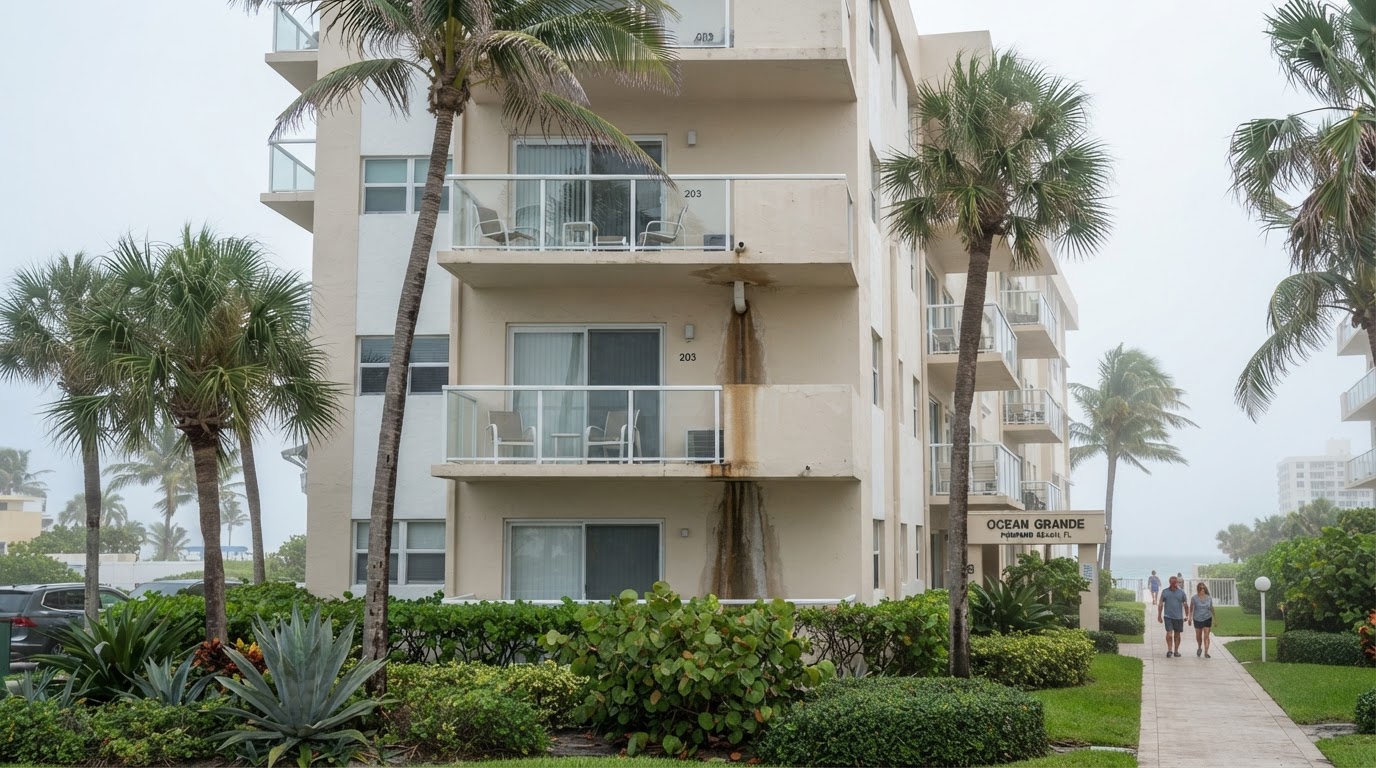
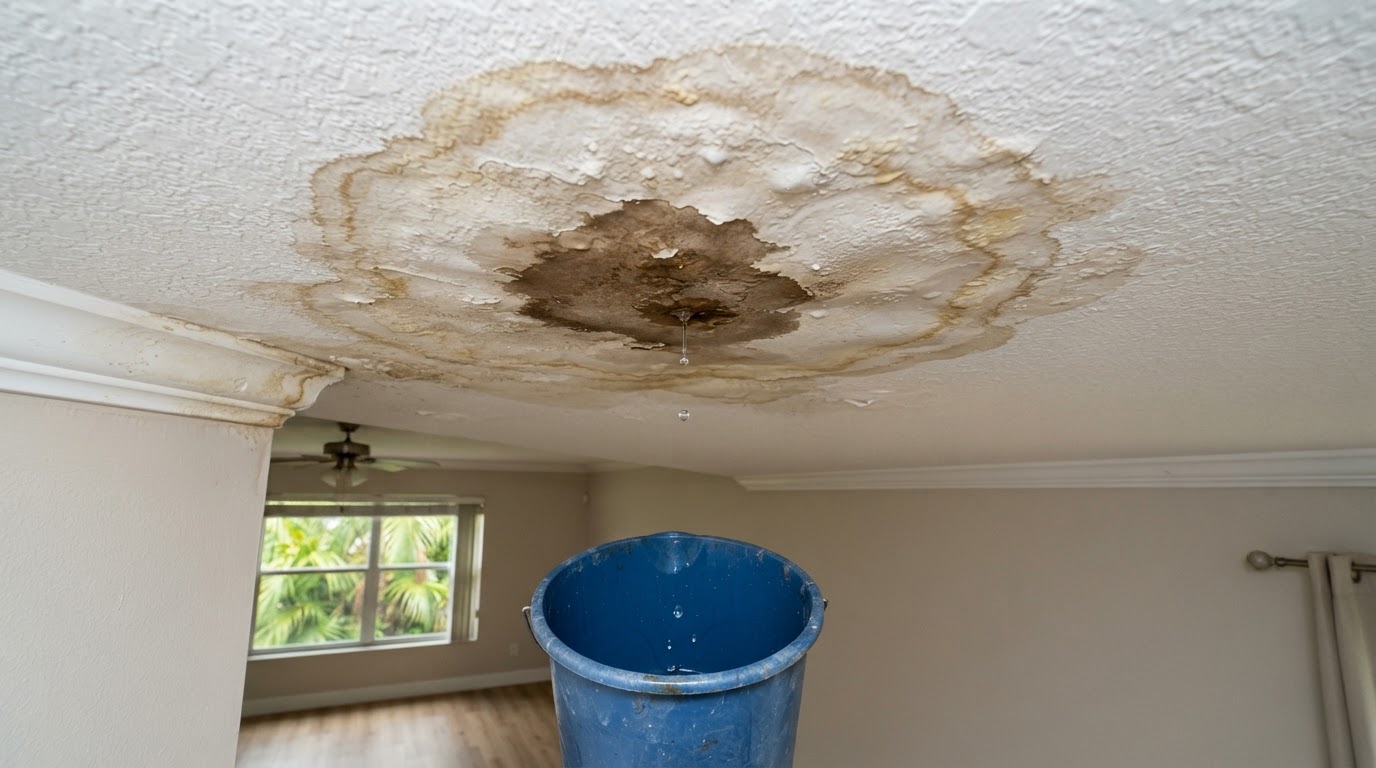
Plumbing risers run through shared walls from floor to floor. A slow leak in a unit above can travel down through the wall cavity and grow mold in your ceiling — even though the source is not yours. You may never see the water; you only see the stain or smell the odor.
Rooftop and shared HVAC
Older rooftop AC systems develop condensate clogs and coil growth, and shared ductwork can distribute mold from one source to multiple units. A problem in the building's system can become a problem in your unit's air.
Warning signs for condo owners
- A musty smell when you return to a seasonally vacant unit.
- Water stains on the ceiling below a bathroom or the unit above.
- Visible dark growth around a supply vent or on a closet wall near the air handler.
- A musty smell strongest when the AC first turns on.
- Condensation on windows, walls, or mirrors that persists.
- Discoloration on clothing, shoes, or furniture after a vacancy.
In a Hallandale Beach high-rise, the mold you find in your unit may not come from your unit. A moisture inspection can trace the water path — up, down, or through the building's systems.
Prevention steps for condo owners
- If you leave seasonally, keep the AC running and humidity below 55%, or use a dehumidifier with a drain.
- Have someone check your unit for musty odors monthly while you are away.
- Know your unit's plumbing riser location and report leaks fast.
- Keep the condensate line clear and change filters on schedule.
- Leave interior doors open for airflow, or place a small fan on a timer during vacancy.
When to test
- Before reopening a seasonally vacant unit if any odor is present.
- After a leak in your unit or the unit above.
- When a musty smell persists after the AC has been serviced.
- Before buying a condo that has been vacant.
Working with the condo association
In a Hallandale Beach high-rise, mold problems often cross unit boundaries, which means the solution often involves the association, not just you. Knowing how to navigate that boundary saves time and money.
- Review your association's governing documents to understand which components are owner responsibility versus common-element responsibility — typically, everything inside your unit walls is yours, and shared risers, rooftop equipment, and the building envelope are the association's.
- Document and report leaks from above or from shared systems in writing immediately; the association may be responsible for the source repair and sometimes the resulting damage.
- If the building's rooftop AC or shared ductwork is the source, request that the association address it — a problem in the building's system can affect multiple units and is rarely yours alone to solve.
- Keep records of all reports and responses; if a dispute arises over responsibility, a documented timeline is your strongest evidence.
Seasonal vacancy: the single biggest risk
Of the three mold drivers in Hallandale Beach condos, seasonal vacancy causes the most damage because it goes unchecked for months. An owner leaves in May with the AC off or set to 85°F, and by the time they return in October, humidity has been above 70% for weeks. Mold grows on clothing, shoes, leather, furniture, and drywall — not from a leak, but from the air itself. The fix is simple and inexpensive: keep the AC running at a setting that holds humidity below 55%, or install a dehumidifier with a continuous drain, and have someone check the unit monthly for musty odors. The cost of running the AC through the summer is a fraction of the cost of remediating a humidity-damaged unit.
Frequently asked questions
Can mold from a neighbor's leak affect my condo?+
Yes. Water from a leak in the unit above can travel down through the shared wall cavity and grow mold in your ceiling. A moisture inspection can trace the water path and confirm the source.
How do I prevent mold when I leave my condo for the summer?+
Keep the AC running and humidity below 55%, or use a dehumidifier with a continuous drain. Have someone check for musty odors monthly. Leaving interior doors open and running a small fan on a timer also helps.
Can the building's shared HVAC spread mold to my unit?+
Yes. Mold in rooftop equipment or shared ductwork can be distributed through the airstream to multiple units. A musty smell when the AC turns on is a common sign. Testing can compare air upstream and downstream of the coil.
Should I test a condo before buying it if it was vacant?+
Yes. A vacant condo, especially one left with the AC off, is at high risk for humidity-driven mold. A pre-purchase inspection can find growth before you close.
Related resources
If you suspect mold in your Hallandale Beach condo — from vacancy, a neighbor's leak, or the building's HVAC — connect with our recommended local mold testing provider for an independent assessment.
Need professional mold testing in South Florida?
Connect with our recommended local mold testing provider, MoldXperts, for an independent assessment.
Looking for professional mold testing in Fort Lauderdale? Connect with our recommended local mold testing provider. We may receive compensation when you contact our featured provider.
About this article
This article is published by Best Mold Testing Fort Lauderdale as an independent educational resource. It is reviewed for accuracy and reflects publicly available guidance from agencies including the EPA, CDC, and Florida DBPR. It is not a substitute for professional advice specific to your property.
Get mold prevention tips in your inbox
The South Florida Mold & Healthy Home Newsletter — practical, no spam.