Scheduled article — publishes on December 4, 2026. Not yet visible on the public blog feed.
Plumbing Leaks and Hidden Mold in Plantation, Florida
A slow plumbing leak behind a wall is one of the most common mold sources in Plantation homes. Here is how to spot the signs and when testing finds what you cannot see.
Plantation's established single-family homes, many built in the 1960s–90s, share a common mold source: slow plumbing leaks. Original or aging supply lines, fixture seals, and pipe joints develop small leaks that run for weeks or months inside wall cavities, under cabinets, and behind appliances — exactly where mold thrives unseen. This article explains how a plumbing leak becomes a mold problem and when testing is worth it in a Plantation home.
Why plumbing leaks are a leading mold source
Unlike a burst pipe, a slow leak is quiet. A small drip from a supply line under a sink, a weeping joint behind a wall, or a failing seal at a toilet base can release just enough water to keep drywall, insulation, and wood framing damp continuously. Mold needs only sustained moisture to colonize, and a slow leak provides exactly that — often for far longer than a sudden leak before anyone notices.
- Under-sink supply lines and drain connections that weep slowly into the cabinet floor and wall behind.
- Behind-wall pipe joints, especially at older copper or galvanized fittings.
- Toilet base seals that leak into the subfloor and behind the baseboard.
- Water heater connections and pan overflows in garages and closets.
- Slab leaks, where a supply line under the foundation wicks water up into bottom plates and drywall.
Signs of a hidden plumbing leak
Because the leak is hidden, you have to read the indirect signs. Any one is worth investigating; several together make testing a good idea.
- An unexplained increase in your water bill.
- A musty odor concentrated near a wall, cabinet, or appliance.
- Soft, warped, or discolored baseboards or cabinet flooring.
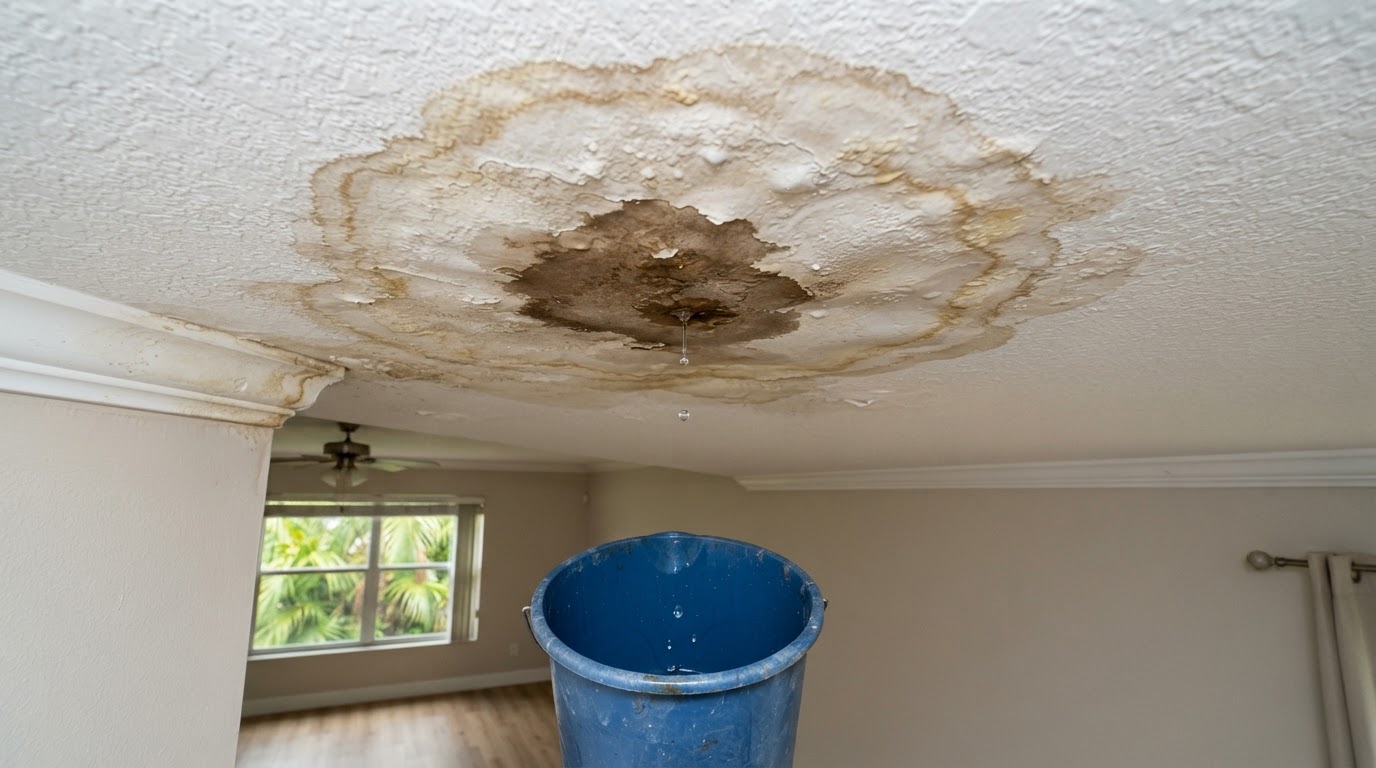
- Water stains on a ceiling below a bathroom or laundry.
- Bubbling or peeling paint on a wall that hides plumbing.
- A warm or damp spot on a floor near a slab leak.
A slow plumbing leak can feed mold for months before a stain ever appears. By the time you see it, the materials behind the wall have often been damp the entire time.
How testing finds plumbing-leak mold
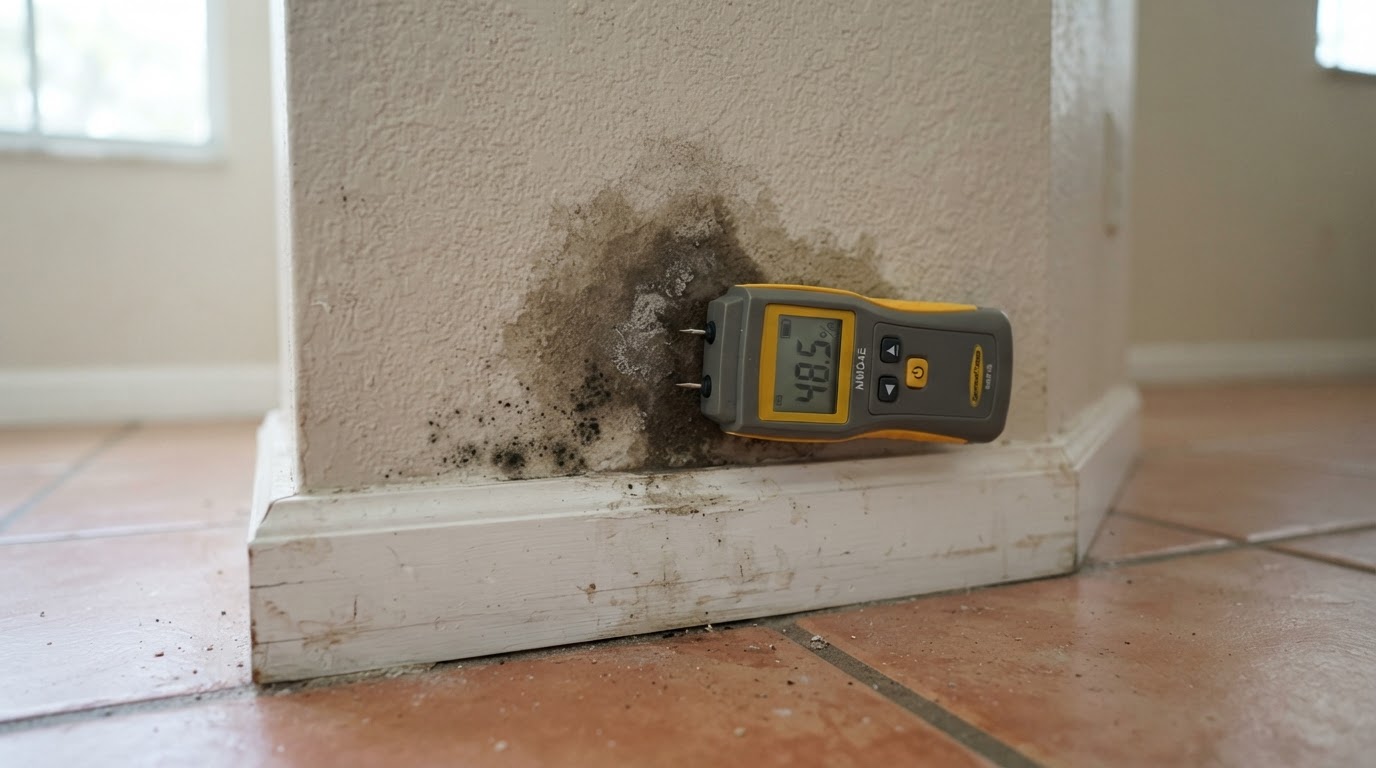
Professional assessors do not need to open a wall to find the problem. They use pinless moisture meters to detect elevated moisture in drywall and studs behind the surface, thermal imaging to show temperature differences from trapped water, and air sampling to detect elevated spore levels that point to a hidden source. Wall cavity sampling through a small access port can confirm growth directly.
Plantation housing and plumbing risk by era
Plantation's development spans decades, and the plumbing that came with each era fails in predictable ways. Knowing your home's vintage tells you where to look first.
- 1960s–70s homes near Plantation Central often have original galvanized or early copper supply lines that corrode and weep at joints behind walls.
- 1980s–90s construction across the city commonly uses braided supply lines under sinks and at toilets that fail with age — a leading cause of slow, hidden leaks.
- Larger homes with multiple bathrooms stack more plumbing risers, multiplying the number of hidden joints that can develop a slow leak.
- Homes on slab foundations can develop slab leaks, where a supply line under the slab wicks moisture up into bottom plates and the lower drywall — often misread as a landscaping or drainage problem.
Why a slow leak is worse than a burst pipe
A burst pipe is dramatic — you see it immediately and you fix it the same day, so materials rarely stay wet long enough for mold. A slow leak is the opposite: it runs quietly for weeks or months, keeping materials continuously damp, which is exactly the sustained moisture mold needs to colonize. By the time a stain or odor appears, the growth behind the wall is often well established. This is why plumbing-leak mold is one of the most common and most extensive problems assessors find in Plantation homes.
When to test in a Plantation home
- After any plumbing repair that involved a slow or hidden leak.
- When a musty odor or water stain appears near plumbing.
- Before buying an older Plantation home with original plumbing.
- When a water bill spikes without an obvious explanation.
Prevention for Plantation homeowners
- Have older supply lines and fixture seals inspected, especially in pre-1990 homes.
- Check under sinks and behind appliances periodically for dampness.
- Replace braided supply lines proactively; they fail with age.
- Keep indoor humidity below 50% so any small leak dries faster.
Frequently asked questions
Can a slow plumbing leak cause mold without any visible water?+
Yes. A small leak inside a wall cavity or under a cabinet can keep materials damp enough for mold to grow while the visible surfaces look completely dry. A musty odor or a soft baseboard is often the first clue.
How do professionals find mold from a plumbing leak without cutting walls?+
Pinless moisture meters detect damp materials behind the surface, thermal imaging shows temperature differences from trapped water, and air sampling detects elevated spore levels — all without demolition.
Should I test for mold before buying an older Plantation home?+
It is worth it for homes with original plumbing, a history of leaks, or any musty odor. A pre-purchase mold inspection can find hidden growth before you close, when you can still negotiate or walk away.
I fixed the leak. Is the mold gone too?+
Fixing the leak stops new moisture, but mold that already colonized wet materials remains until it is removed. Testing confirms whether growth is present and defines the cleanup scope.
Related resources
If you suspect a plumbing leak has caused hidden mold in your Plantation home, connect with our recommended local mold testing provider for an assessment that looks behind the surface.
Need professional mold testing in South Florida?
Connect with our recommended local mold testing provider, MoldXperts, for an independent assessment.
Looking for professional mold testing in Fort Lauderdale? Connect with our recommended local mold testing provider. We may receive compensation when you contact our featured provider.
About this article
This article is published by Best Mold Testing Fort Lauderdale as an independent educational resource. It is reviewed for accuracy and reflects publicly available guidance from agencies including the EPA, CDC, and Florida DBPR. It is not a substitute for professional advice specific to your property.
Get mold prevention tips in your inbox
The South Florida Mold & Healthy Home Newsletter — practical, no spam.