Scheduled article — publishes on August 1, 2027. Not yet visible on the public blog feed.
Under-Sink Mold in Pompano Beach Kitchens: The Slow Leak Nobody Sees
The cabinet under the kitchen sink is Pompano Beach's most common hidden mold location. Here is why and what to check.
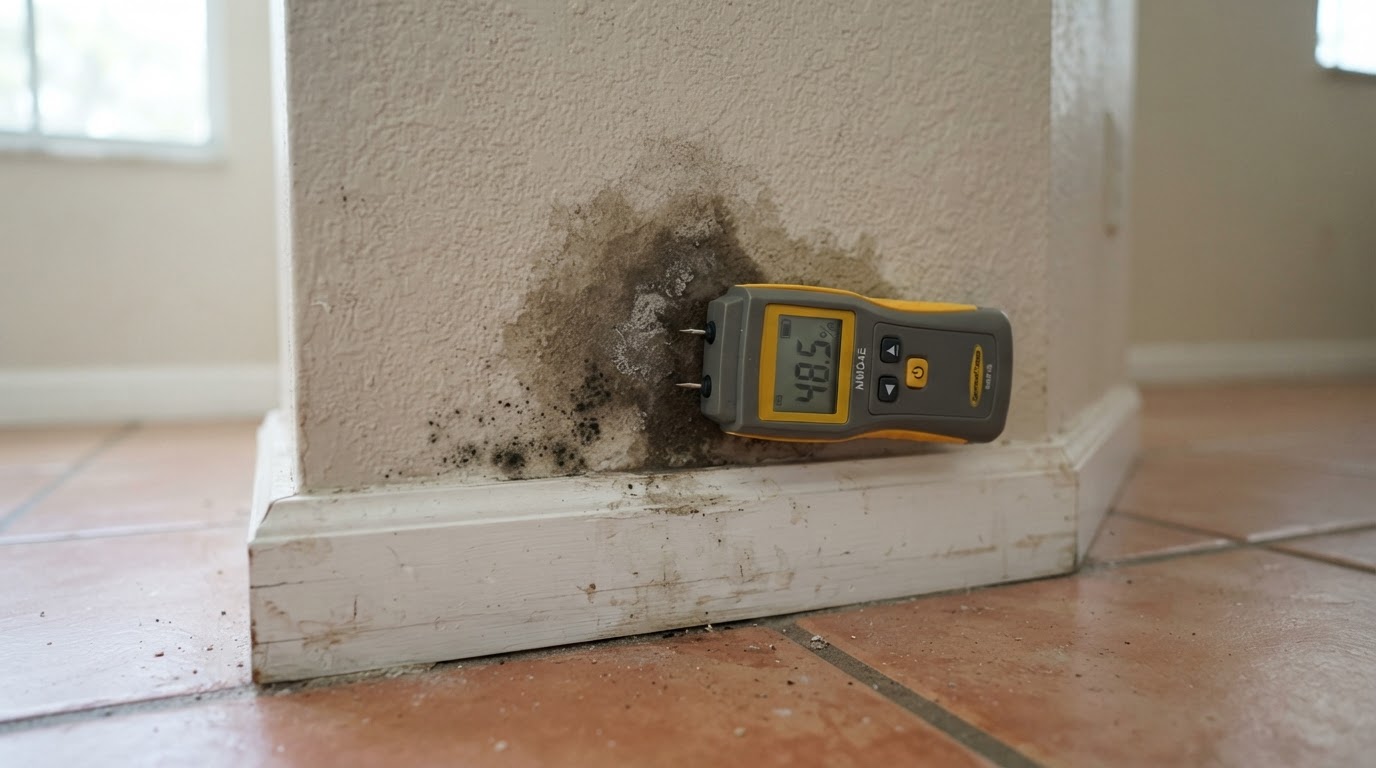
Open the cabinet under your kitchen sink. In Pompano Beach homes, this is the single most common hidden mold location: a slow drip from the drain connection, the supply line, or the disposal wets the cabinet floor, and the dark, humid, enclosed space grows mold for months before anyone notices.
The three leak sources
- Drain connections: slip nuts and gaskets loosen over time and drip with every use.
- Supply lines: braided stainless lines fail at the fittings, especially with age or over-tightening.
- Disposal and dishwasher connections: vibration loosens clamps and seals.
Why it grows for months unnoticed
The cabinet is dark, enclosed, and rarely opened. A drip that wets the cabinet floor evaporates slowly in South Florida humidity and keeps the particleboard damp — ideal mold conditions. By the time the smell reaches the kitchen, the cabinet floor and often the adjacent wall cavity are contaminated.
What to check monthly
- Feel the cabinet floor for dampness.
- Look for water stains, swelling, or discoloration on the cabinet floor and back wall.
- Run the water and watch the drain connections.
- Smell for mustiness after running the dishwasher.
When to test
- Any musty odor from the kitchen that cleaning does not resolve.
- Visible staining or swelling in the cabinet.
- After fixing any under-sink leak — to confirm the wall cavity stayed dry.
The most common mold location in a South Florida kitchen costs nothing to check and thirty seconds a month to inspect. Open the cabinet.
Frequently asked questions
Why is under the kitchen sink so mold-prone?+
Three common leak sources (drain, supply line, disposal), a dark enclosed space, and particleboard that stays damp — ideal conditions that go unnoticed for months.
How often should I check under the sink?+
Monthly. Feel the floor, look for stains, run the water and watch the connections. Thirty seconds a month catches a drip before it becomes a wall cavity problem.
Can an under-sink leak affect the wall behind the cabinet?+
Yes. A persistent drip can wick into the wall cavity, where mold grows unseen. After fixing a leak, testing confirms the cavity stayed dry.
What if I smell must but see no leak?+
The moisture may be inside the wall or under the flooring. A moisture meter and thermal imaging can find it without demolition.
Related resources
If your Pompano Beach kitchen smells musty or the under-sink cabinet shows staining, connect with our recommended local mold testing provider for an assessment that checks the wall cavity too.
Need professional mold testing in South Florida?
Connect with our recommended local mold testing provider, MoldXperts, for an independent assessment.
Looking for professional mold testing in Fort Lauderdale? Connect with our recommended local mold testing provider. We may receive compensation when you contact our featured provider.
About this article
This article is published by Best Mold Testing Fort Lauderdale as an independent educational resource. It is reviewed for accuracy and reflects publicly available guidance from agencies including the EPA, CDC, and Florida DBPR. It is not a substitute for professional advice specific to your property.
Get mold prevention tips in your inbox
The South Florida Mold & Healthy Home Newsletter — practical, no spam.


